Giving a Reality Check to “Reality Check”

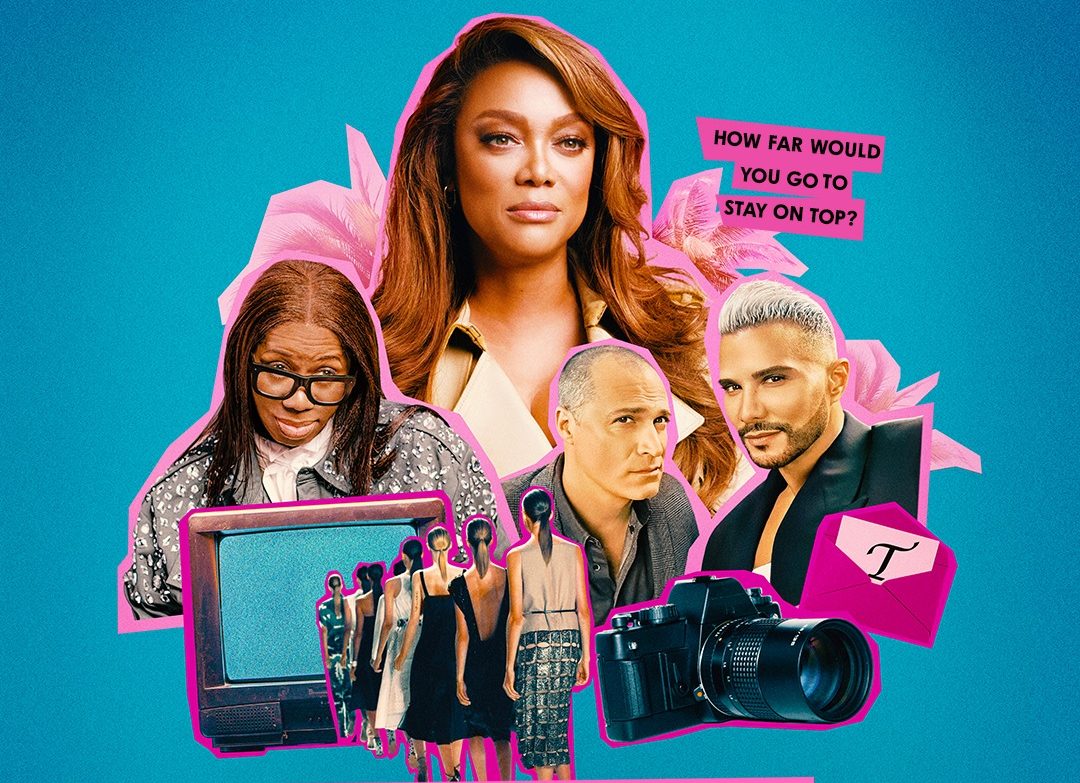
Last week, I finally sat down with the Netflix docu-series Reality Check: America’s Next Top Model, which purports to autopsy the many sins of America’s Next Top Model (ANTM). I went in expecting a nuanced dissection of a complex, often brutal industry. Instead, I found a project that feels less like a documentary and more like a performative exercise for a generation that mistakes moral grandstanding for critical analysis.

The series attempts to hold ANTM accountable for its problematic past, but in doing so, it fails to understand—or perhaps refuses to acknowledge—the context in which that show existed. It treats the symptoms while ignoring the disease. It turns Tyra Banks into a pantomime villain, suggesting she single-handedly invented the exploitation of young women, rather than acknowledging that she was merely holding up a mirror to an industry that was already deeply, structurally rotten.

I am uniquely positioned to comment on this, as I spent fifteen years as a model agent, operating at the highest levels of the food chain. I worked at Elite, Ford, and Trump Models; I negotiated contracts for international iterations of the Top Model franchise; and I managed careers ranging from iconic supermodels to girls just starting out. I didn’t just watch the industry; I was a cog in its machine.

When I started at the Marilyn Agency, I was sixteen. I was a child looking after children—models often starting at fourteen, sometimes twelve. I chaperoned them across the globe, served as their surrogate mother, their life coach, and their punching bag when the industry’s darker side inevitably took its toll. I worked for companies of legends like Eileen Ford and John Casablancas. I witnessed the glamour, certainly, but I also saw the harrowing reality: parents gambling away their daughters’ earnings, models surviving life-altering accidents, and the pervasive, casual cruelty that defined the “golden era” of fashion.

Reality Check criticizes ANTM for its manipulation and exploitation, and on those specific points, they are right. But they seem to believe these were ANTM inventions. They weren’t. They were industry standards, simply broadcast for public consumption.

I was complicit. Every agent, scout, and client was. We were the gatekeepers of a culture that prioritized a client’s desire over a human being’s dignity. If a model was assaulted on set, we advised silence to protect her career. We watched designers host drug-fueled parties and called it “networking.” We fostered environments where young girls were shamed, starved, and objectified, and we justified it as the cost of “the dream.” Eventually, the cognitive dissonance broke me; it led to a mental breakdown, a clinic, and the total loss of the career I thought defined me.

When the documentary attacks ANTM for its bizarre photo shoots, it misses the point. ANTM was merely aping the pages of Vogue or Harper’s Bazaar. Whether it was “homeless chic” or hanging models from high-rises, the show wasn’t pushing the envelope—it was reflecting the aesthetic choices of an industry that has always favored the sensational over the humane.

The documentary’s critique of the show’s failure to launch supermodel careers is equally misplaced. It wasn’t Tyra’s job to be a career mentor; it was the agencies’ responsibility to develop talent, but they treated these girls as disposable, gimmicky assets rather than investments.

We now live in a performative “post-Me Too” era, but let’s be honest: the industry hasn’t fundamentally changed; it has just learned to hire better PR. Today, agencies will sign a model in a wheelchair or a non-traditional beauty, capture the headlines, and then drop them once the virtue-signaling quotient is met. It is still a business of gatekeepers, elite standards, and exclusivity.

Ultimately, America’s Next Top Model wasn’t designed to fix the industry or empower a generation; it was a television product designed to manufacture a winner. It succeeded in that goal, and in doing so, it unintentionally functioned as a highly visible, often uncomfortable mirror of a world that was already functioning exactly that way.

We shouldn’t confuse the reflection with the source. If we find the behavior displayed on the show—the shaming, the pressure, the exploitation—to be unacceptable, that is a positive sign of our collective growth. But we must be careful not to mistake “calling out” a reality show for the actual work of industry reform. It is far easier to vilify a television host than it is to dismantle the systemic pressures of an industry that still favors exclusivity over humanity.
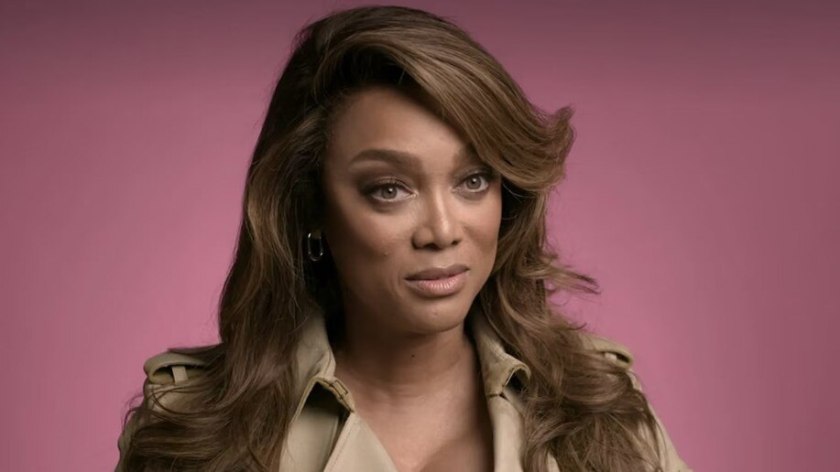
The industry has certainly changed in its optics; we see more diverse faces and a greater emphasis on professional safety than we did twenty years ago. Yet, the core mechanisms—the relentless pursuit of a narrow aesthetic, the commodification of personality, and the vast power imbalance between client and talent—remain largely intact.

Rather than using ANTM as a scapegoat for our past traumas, perhaps we should use that history as a compass. We can acknowledge that the people who lived through that era were often doing the best they could within a rigid, unforgiving system. The most productive way to honor those who suffered is not to endlessly debate the ethics of a reality show, but to continue the rigorous, often unglamorous work of demanding transparency and accountability from the institutions that still govern fashion today. The real change won’t come from a social media post or a documentary critique; it will come when we stop being satisfied with the industry’s performative gestures and start holding it to the same standard of dignity we expect for everyone else.

As someone who has navigated the extremes of this world—from the height of the agency system to the hard-learned lessons of its consequences—I’ve seen both the beauty and the wreckage.
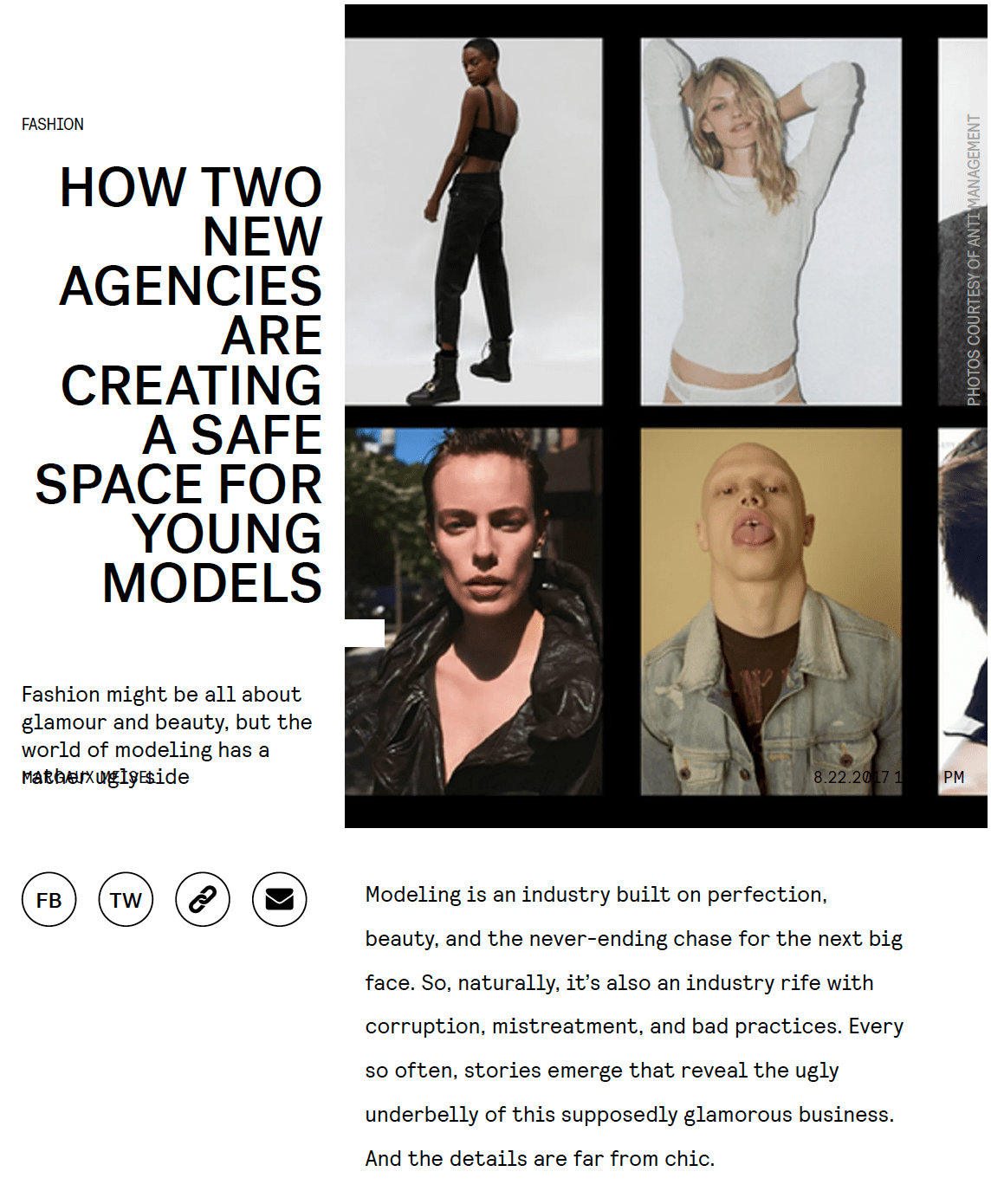

Nylon, 2017

HOW TWO NEW AGENCIES ARE CREATING A SAFE SPACE FOR YOUNG MODELS

Fashion might be all about glamour and beauty, but the world of modeling has a rather ugly side

MARGAUX MEISEL

Modeling is an industry built on perfection, beauty, and the never-ending chase for the next big face. So, naturally, it’s also an industry rife with corruption, mistreatment, and bad practices. Every so often, stories emerge that reveal the ugly underbelly of this supposedly glamorous business. And the details are far from chic.

“I was once shooting a lookbook where the stylist, helping me dress, used this chance to feel my body much more than necessary, and continued to do so throughout the entire shoot,” model Fernanda Ly revealed in March. And in another case, nearly 150 models were locked in a dark stairwell for hours at a time during a casting in February. There was also the time a Danish model was dropped from a show for having a “bloated stomach” and “bloated face” in May. Needless to say, mistreatment in the modeling industry is a tale as old as time. 

Even today, when it’s encouraged to be outspoken on social media about once-taboo topics, it’s difficult for models to expose the abuse they’ve weathered—especially if they want to continue to book profitable jobs. “Models, more than others, censor themselves in fear of losing critical jobs. As a result social media has become their soapbox, but many are still reluctant to voice their own frustrations,” Models.com wrote in an exposé that answered the question, “How Should a Model Be Treated?”

While there isn’t one simple answer to that complex question, there are a number of champions out there who have dedicated their careers to reforming the industry, one job at a time. There’s esteemed casting director James Scully, who uses his position to promote diversity and Sara Ziff, the founder of the Model Alliance, who fights for fair treatment and equal opportunity in the industry.  

Then there are agencies, the companies that models rely on as a point of communication between the fashion brands employing them—they handle money, negotiate contracts, and generally manage the careers of these runway regulars. One would assume that the business-minded agencies would have the best intentions for their clients, but that’s not always the case. Instead, agencies tend to focus on the financial interests of the agency itself.

“As the years passed and I learned more about the business, it became increasingly apparent that the scales were tipped,” explained Gabriel Ruas Santos Rocha, a former agent at the erstwhile Trump Model Management who left to start his own firm this spring. 

With years of experience on the management side, Rocha left the plagued agency founded by POTUS (which had become notorious for less than ideal treatment of its models, including illegal immigration practicesblatant financial exploitation, and cramped model apartments that were “like a sweatshop”) to start Anti Management. His intention was to overhaul the treatment of models, across the board, offering them a space where their careers could be fostered and their personalities could be preserved. That included addressing the way bookers treat models and improving the efficacy in which the men and women he represents get paid. 

Just a few months old, Anti Management is already garnering attention for not separating models into boards, the usual practice of dividing models into categories such as curvy, men’s, new faces, and so on. That means bookers at Anti work with all types of models, across all types of jobs, from commercial print to runway shows. Further, Anti doesn’t distinguish trans models from the rest; there’s no label signifying their change in gender, as they simply are who they are. As Rocha puts it, he wants all of his models to be treated equally.

He offered a simple example of how this organizational setup can benefit both his models and the fashion clients. “If Tommy Hilfiger calls in today needing 15 different types of models of all ages and races, they will only need to speak with one booker, and this one booker will offer them the whole set of possibilities.” 

Some of Anti’s biggest faces include two Brazilian top models Shirley Mallmann and Fabiana Saba, plus Madisin Bradley and the famously androgynous Elliott Sailors. The agency has also taken chances on models that don’t tick all the boxes of conventional beauty. Take Bice, for example. At only 5’8″, he’s far shorter than the average male model, but he also rocks an ethereal and otherworldly look, a result of alopecia universalis, an autoimmune disease which has left him entirely bald—including his eyelashes and eyebrows.

“[He] was turned away by every single modeling agency in and out of town, but Bice really showed us all how perseverance and talent stand out no matter how tall you are. InterviewHeroIris Covet Book, and Vogue are some of the editorials he’s booked since joining us at Anti,” Rocha boasted.

Rocha also encourages his talent to embrace their interests outside of modeling. Whether that’s honing a DJing skill, like Eric Chong, studying at Pratt Institute, like David Pesin, or chasing a passion for cooking with cannabis, like Fabio Nunes, he wants to make sure that the Anti Management models are a well-rounded bunch who can find fulfillment in all areas of their lives. 

But Anti Management isn’t the only agency making a difference. Across the pond, Linden Staubhas emerged as a mother agency (the firm that exclusively sponsors models and promotes them out to booking agencies) that takes the title of mother to heart. In fact, Tara Davies and Esther Kinnear Derungs have adopted a company-wide policy of empowering women, from their London office.

“In a nutshell, we see our models as human beings, not as a business commodity. We put our models’ welfare in front of our business targets, often investing in them financially and at the same time trying to keep their costs down because we do not feel it is right for a young woman to start her career with thousands of pounds’ worth of debt,” Kinnear Derungs told us. 

To maintain that promise, the models represented by Linden Staub are paid the day after a job is complete, regardless of when the client submits payment—which can often be months later. 

“Linden Staub models are empowered by financial independence. By knowing when they will be paid, they are able to lead more independent lives,” explained Kinnear Derungs. The two co-founders also make sure to educate their models with an accounting demo, teaching them how to navigate the world of payments, fees, and taxes, providing these young professionals with vital fiscal knowledge. 

The agency was started in March 2016 with just four girls; they now represent 11 international models, including Georgie Taylor and Lydia Atchison, and have 75 new faces in development. And though they’re small, the firm is mighty, having landed gigs for their girls at top brands such as Vivienne Westwood, Burberry, Gucci, Ralph Lauren, Dolce & Gabbana, and Michael Kors.

And similarly to Anti Management, they understand cultivating a model beyond her runway walk and her social media following. “Above all, we try to preach the importance of downtime, of doing things that feed your soul, not just your Instagram,” Davies said. 

Though there’s still plenty of reform to go, in terms of models being treated right, paid on time, and not discriminated against for their race or gender, at least a few members of the industry are stepping up. And that is one leap toward a healthier fashion industry that is pretty, inside and out. 

Check out the original post here.

500 Answers – Purpose in Life

What do you believe is your purpose in life?

When I turned 15 my stepmom’s gift was an astrological birth map. There were beautifully drawn charts filled with codes and symbols I could not understand. The package included two cassette tapes. We sat together on her bed and put the tapes on, carefully listening to the soothing voice of the astrologer, who along with my stepmom explained every piece of that delicate puzzle. This recording revealed, bit by bit, my entire life’s plan and journey according to the stars. I was impressed.

A lot of it rang true and sounded like I was on my way to making my dreams come true. There was one thing however that sounded odd. The astrologer told me I would have a successful career taking care of people and/or managing businesses.

    “This makes no sense, I would never do something like that, I wanna make movies

Well, making movies might have been what I wanted, but it wasn’t my path. At age 17 I was approached by a modeling agency to join their staff and hired on the spot. Lo and behold, I ended up managing careers, making them into businesses and looking after people for a living.

Truth be told, I had been doing that all my life, I just didn’t know it. I looked out for my friends in school and helped out anyone who needed assistance. That is still true for me today. Whether I am at work or not, I’m always looking out for my people. To me, there is no greater pleasure than lending someone a hand. Friends and strangers benefit from this quality – to different degrees, but they all do.

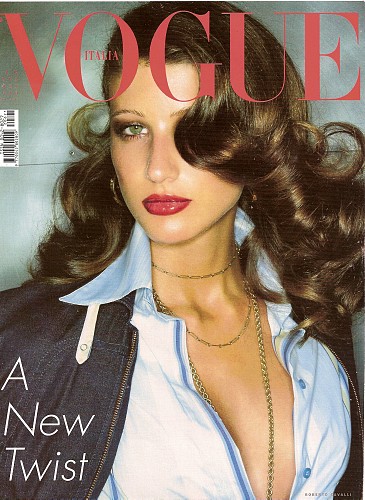
Michelle Alves for Vogue Italia shot by Steven Meisel

I will never forget when Michelle Alves, one of the first models I ever worked with, sent me a note right before Christmas. She thanked me for what I had done for her, and that was it. All I had done was to send her flight details via fax and pick her up at a fashion show. I was a young assistant then and this was the first time any model had ever thanked me for my work. That day I felt for the first time that I had a purpose; I felt for the first time that I could make a difference in someone else’s life.

How Models Taught Me it is OK to Miss Home

One of my assignments on fourth grade was to read a book about a girl who traveled abroad on an exchange student program. This was a thoroughly engaging tale of chasing independence, dealing with language barrier, new cultures and experiencing feeling homesick for the first time. After the class had read the book and turned in the essays, the school arranged for the author to come in to give a lecture. The girl was probably no more than ten years our senior and had attended our school. I had a transcendental experience, it was the first time I had met someone who had actually left home and gone some place else. Everything started to make sense to me. Everything, but the idea of feeling homesick.

“Why would she be crying just because she wasn’t home?” I didn’t get it. To me, getting out should feel more like a blessing than a curse. There was nothing wrong with my family or my upbringing, but I felt a longing for life abroad ever since I can remember. It made no sense and I could not explain it, I only knew how I felt.

A few years later, when I was eighteen, I finally got my first opportunity to go somewhere. I didn’t exactly make it out of Brazil but I was moving from Porto Alegre to São Paulo, which was significant. I was the first in my family to take such a big step and one of my first friends to go anywhere, for good. Think of it as moving from Charleston to New York. It was huge!

I remember dealing with models who were very young (but not much younger than I was), most of them between 14 and 16 years old. Many girls adjusted well to the life in the biggest metropolis of Brazil, pounding the pavement trying to make it in the world of modeling. A few others however, had terrible bouts of depression and loneliness and broke down quickly. Every now and then a girl would come into the office crying and desperate to get on the phone with her mother, just because she missed her parents or felt overwhelmed by the size of the city. I couldn’t relate with that feeling. I never cried, I never felt separated, I never felt distant. I was happy. What could be better than pursuing a career in one of the best modeling agencies in the world?

The first few months in my new city went by smoothly. I had to travel down south a couple of times to gather more of my belongings, so I still maintained a fairly close connection with my family. I didn’t have a place of my own, I was couch surfing with a friend of a friend until I figured things out. The distance from where I was staying to work was enormous. I had to take two buses and the journey could last anywhere from 45 minutes to an hour, and that’s not counting the late nights. The neighborhood was not only dangerous but the buses took longer than usual, as they ran more infrequently. As the challenges grew I began to understand, to a small degree, what some of those girls might have felt too.

Many years have passed since those first months in Sao Paulo. I now live in New York and find myself experiencing unique layers of emotional pain. It’s been three years since the last time I’ve been home. A series of events kept me from making the trip back from New York, including a break up, a green card and a new apartment. Life happened and before I knew it I found myself feeling anxious and irritable. I became an emotional wreck. I watch cartoons and I cry, the Lipitor commercials come on TV and I cry, I listen to music and I cry, heck, even Homeland has been making me cry. I have become a running joke among the people who know me.

I send Christmas cards with corny pictures of me and my cat, I write letters, I FaceTime. I used to denounce the holidays; now I love them. These days I celebrate tradition, and all I long for is a home of my own. For this person, who always believed in being independent and in belonging to the world, it’s quite a change. Could I be homesick?

Through a very painful process of shedding layers of pride and old resentments I believe I finally got to a point where I am able to accept my roots for what they are. I can finally admit that indeed I do miss home and all the drama that can be attached to it. My life may not be in the south of Brazil, but that doesn’t mean I have to abandon it all behind.

I’ve grown to admire and enjoy some of the traditions from my home country and state. I am proud of our beautiful sunsets, the tree-lined streets, the quality of life, the cultural vain that beats stronger than in most parts of that country. I celebrate the gaucho culture, our funny musical accent and even our orange (or is it red?) taxi cabs.

Being home is an opportunity to remember, recharge and reconnect. Going back gives me the chance to look at how far I’ve come and how capable I am of chasing dreams and goals that sometimes feel unsurmountable. When I’m homesick I realize that all those things were possible because of where I came from. The fact that I came from a reality so distant from the goals I was looking to achieve made me even more resilient. Home may be difficult, but it’s unlike any other place I’ve been to. Home is provincial, but it’s where some of my most special memories and connections are. As I age and experience life on life’s terms, I also realize that home is always going to be the place I turn to for reference and support, no matter where I end up.

Originally published in THE HUFFINGTON POST on Novemeber, 2015

How Models Taught Me it is OK to Miss Home

One of my assignments in fourth grade was to read a book about a girl who traveled abroad on an exchange student program. This was a thoroughly engaging tale of chasing independence, dealing with a language barrier, new cultures, and experiencing feeling homesick for the first time. After the class had read the book and turned in the essays, the school arranged for the author to come in to give a lecture. The girl was probably no more than ten years our senior and had attended our school. I had a transcendental experience; it was the first time I had met someone who had actually left home and gone somewhere else. Everything started to make sense to me. Everything, but the idea of feeling homesick.

“Why would she be crying just because she wasn’t home?” I didn’t get it. To me, getting out should feel more like a blessing than a curse. There was nothing wrong with my family or my upbringing, but I felt a longing for life abroad ever since I could remember. It made no sense, and I could not explain it; I only knew how I felt.

A few years later, when I was eighteen, I finally got my first opportunity to go somewhere. I didn’t exactly make it out of Brazil, but I was moving from Porto Alegre to São Paulo, which was significant. I was the first in my family to take such a big step and one of my first friends to go anywhere, for good. Think of it as moving from Charleston to New York. It was huge!

I remember dealing with models who were very young (but not much younger than I was), most of them between 14 and 16 years old. Many girls adjusted well to life in the biggest metropolis of Brazil, pounding the pavement trying to make it in the world of modeling. A few others, however, had terrible bouts of depression and loneliness and broke down quickly. Every now and then, a girl would come into the office crying and desperate to get on the phone with her mother, just because she missed her parents or felt overwhelmed by the size of the city. I couldn’t relate to that feeling. I never cried, I never felt separated, I never felt distant. I was happy. What could be better than pursuing a career in one of the best modeling agencies in the world?

The first few months in my new city went by smoothly. I had to travel down south a couple of times to gather more of my belongings, so I still maintained a fairly close connection with my family. I didn’t have a place of my own; I was couch surfing with a friend of a friend until I figured things out. The distance from where I was staying to work was enormous. I had to take two buses, and the journey could last anywhere from 45 minutes to an hour, and that’s not counting the late nights. The neighborhood was not only dangerous, but the buses took longer than usual, as they ran more infrequently. As the challenges grew, I began to understand, to a small degree, what some of those girls might have felt too.

Many years have passed since those first months in São Paulo. I now live in New York and find myself experiencing unique layers of emotional pain. It’s been three years since the last time I was home. A series of events kept me from making the trip back from New York, including a breakup, a green card, and a new apartment. Life happened, and before I knew it, I found myself feeling anxious and irritable. I became an emotional wreck. I watch cartoons, and I cry; the Lipitor commercials come on TV, and I cry; I listen to music, and I cry; heck, even Homeland has been making me cry. I have become a running joke among the people who know me.

I send Christmas cards with corny pictures of my cat and me, I write letters, I FaceTime. I used to denounce the holidays; now I love them. These days I celebrate tradition, and all I long for is a home of my own. For this person, who always believed in being independent and in belonging to the world, it’s quite a change. Could I be homesick?

Through a very painful process of shedding layers of pride and old resentments I believe I finally got to a point where I am able to accept my roots for what they are. I can finally admit that indeed I do miss home and all the drama that can be attached to it. My life may not be in the south of Brazil, but that doesn’t mean I have to abandon it all behind.

I’ve grown to admire and enjoy some of the traditions from my home country and state. I am proud of our beautiful sunsets, the tree-lined streets, the quality of life, the cultural vain that beats stronger than in most parts of that country. I celebrate the gaucho culture, our funny musical accent and even our orange (or is it red?) taxi cabs.

Being home is an opportunity to remember, recharge and reconnect. Going back gives me the chance to look at how far I’ve come and how capable I am of chasing dreams and goals that sometimes feel unsurmountable. When I’m homesick I realize that all those things were possible because of where I came from. The fact that I came from a reality so distant from the goals I was looking to achieve made me even more resilient. Home may be difficult, but it’s unlike any other place I’ve been to. Home is provincial, but it’s where some of my most special memories and connections are. As I age and experience life on life’s terms, I also realize that home is always going to be the place I turn to for reference and support, no matter where I end up.

Huffington Post, 2015

Gabriel Ruas Santos Rocha Spills What its Really Like to be a Model Agent

By Shawn Reinoehl, Contributor

Fashion Photographer With A New Approach To Fashion/Editorial Blogging.

10/20/2015 11:21am EDT 

New York, London, Milan and Paris; what do these cities have in common? They are the epicenter where fashion comes to life on the runways. Designers, models, editors, influencers, all come together to make it happen twice a year for fashion week. One of the key players that sets trends and pushes boundaries in the modeling business is the agent that represents models at top modeling agencies around the world.

Gabriel Ruas Santos Rocha is a senior agent at Trump Models and he has graced the fashion industry with his creative eye, sharp mind, and tenacity in the way he envisions what a model should envelop. If that means whether they’re tall, thin, curvy, or has that editorial look that hasn’t been seen before, Gabriel and other agents around the world have an influence on what is in, or out. I had the opportunity to ask Gabriel questions about fashion, modeling, trends, and what this whole process of fashion means to him and everyone else that can’t get enough of fashion.

Shawn Reinoehl What does fashion mean to you?
Gabriel Rocha Fashion is an art form, it is more than making clothes, it’s a way of expressing oneself, telling stories, showing personalities. Creating fashion is not just about putting out a dress on a runway.

SR How did you get involved with modeling agencies? 
GR A girlfriend of mine who was asked to meet with Marilyn Agency to be a model didn’t want to go by herself, so she asked me to tag along. I met the director of the agency and after that meeting we would occasionally run into each other. One day I got a call from her asking if I wanted to join their team; she said she felt my personality would be a good fit for the agency. I was intrigued, so I went for that meeting and 13 years later, I’m still in the business.

SR Of the models you’ve worked with, who are some of your favorites?
GR I have represented many great ones but I have to say some of the most inspiring models are probably Michelle Alves, Maggie Rizer, Julia Nobis, Shirley Mallmann and Caroline Ribeiro. Those girls are real muses to me.

SR Your favorite fashion era and why? 
GR Aesthetically I love the 70’s, there was so much going on at that time, from disco to glam rock and the looks were so elaborate and bold, it was a totally exciting time period for fashion in general. I also love where we are today, because it’s sort of a “best of” generation. We’ve been borrowing the best things from each previous decade and tweaking it to make it a little more modern and I like that. I like that pretty much everything is accepted, it’s all about embracing a look with confidence.

SR Who are your top three designers? 
GR At the moment Dries Van Noten, Givenchy and Celine. Ever, I would include McQueen, when he was still around and also John Galliano, he is an absolute genius!

SR How long have you been in the fashion industry? 
GR Thirteen years, but it feels like nothing!

SR In the fashion world, fresh is a must, what trends have you seen with the way models look?
GR when I started, the trend in beauty was between Brazilian and Russian models, very beautiful and sexy girls. Slowly after that the trend shifted a little bit more towards girls who looked a little bit like birds, meaning, big eyes, pointy nose, little chin, more of a round face, you know… Then it became a little bit more all American and pretty, like, the girl next door, reminding me a little bit of the 90’s when girls were just stunning and appeared more like someone you would want to be friends with. I particularly loved the grunge period in the late 90’s, I think fashion was very exciting at that time.

SR Are there super models today, or was that a product of the 90’s?
GR Yes, there are definitely supermodels today. The industry went through a period when there weren’t any, perhaps Gisele Bundchen was the only one around, for nearly a decade, but slowly they came back. I think at the moment some of the girls who could be compared with the original supermodels are Joan Smalls and Karlie Kloss.

SR Is skinny still in? 
GR Skinny is still in, very much so – but healthy too; skinny and healthy.

SR If a girl wanted to become a model what are some requirements she must meet in order to become one? 
GR 5’9 height, hips below 35 inches, good skin and good genes, self-confidence and patience, lots of patience.

SR What’s next in your career? 
GR I’d like to make bigger contributions to the industry and perhaps guide aspiring models and agents in a broader spectrum, away from the booking table and out in the universe.

SR If you could be on a TV show or reality show which show would it be? 
GR Oh, anything that Nigella Lawson could be involved in, I think she is absolutely fabulous!

SR What inspires you? 
GR Creativity and open-mindedness in others, that always gives me desire to do more and create new things.

SR Top three fashion photographers you adore?
GR I will stick with ones who are alive: Steven Meisel, Daniel Jackson, Lachlan Bailey and Ryan McGinley.

SR Where do you see fashion going in the next few years? 
GR Oh I haven’t a clue!

SR What projects are you working on?
GR At the moment I am working on a project that tells stories from the industry with a fresh perspective, should be out by next year.

SR When are you the busiest at your job? 
GR For me the most stressful times are the ones preceding the fashion season, when we have to make sure everything is organized for what’s about to take place, in line with strategy and brand development. 

SR What’s your favorite season?
GR Autumn, no doubt!

SR Do you see plus models replacing the thin girls on the runways? 
GR No, but I like that they’re more present each day.

You will find the original Huffington Post interview here.

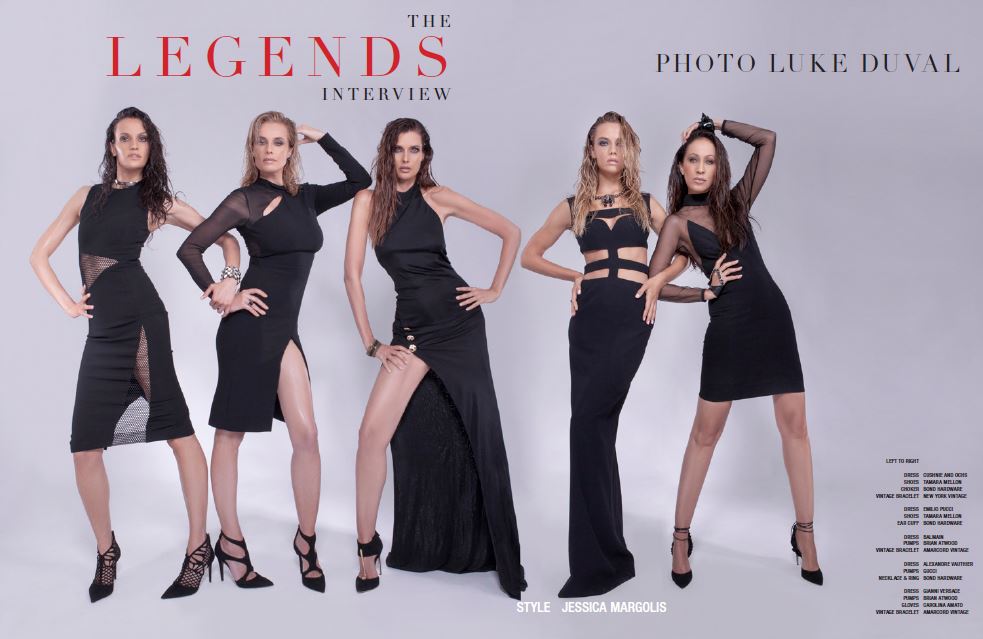
The Legends Interview

legend |ˈlejənd| noun

an extremely famous or notorious person, especially in a particular field.

Picture this: between Pat Cleveland (who’s career started in the 1970’s) and Hannah Ferguson (who started in 2012), there are five decades of legendary careers in the modeling industry. One would think that for some of these women, things would have slowed down, but they don’t ever stop working. Frederique Van der Wal runs the most successful floral business in the world, Carol Alt hosts a daily show on Fox News, Claudia Mason is about to embark on a book tour and Pat Cleveland is also writing a book of her own in between photoshoots and runway shows. Hannah Ferguson, while young in the business, had hardly any days off since she broke the internet in the infamous Carl’s Jr. commercial, alongside Paris Hilton.

The irony is that neither of these women seem to see themselves as legends. “I don’t know what a legend is” says Carol Alt while the makeup artist works on final touches before the shoot. Strangely, Ms. Alt is one of the models for which the term “supermodel” was created to describe. “To me, if the image stays long after the person is gone, that is legendary” she completes.

The aforementioned women may not be “gone”, but their images will forever linger. These careers surpassed the runways and magazine covers, occupying the movie screens, televisions and even theater stages around the world. Additionally, each of them has a hand in some sort of humanitarian work, paying all the good they received forward. Whether they care to admit it or not, they have all created a legacy of their own.

Relive the Glamorous Excess of the 1970s in a New Book

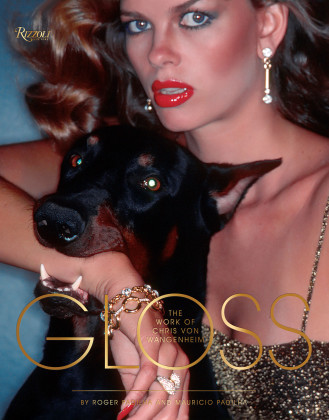
Authors Mauricio and Roger Padilha have a way of unearthing subjects. In their previous books, the duo brought to light the work of renowned artists Stephen Sprouse and Antonio Lopez, both legendary in their own right. Their most recent tome, GLOSS (Rizzoli, 2015), is no different. The monograph covers for the first time the work of photographer Chris Von Wangenheim, one of the terrible three, which included two other iconic names in photography: Helmut Newton and Guy Bourdin. Unlike Newton, who insinuated an action about to take place, or Bourdain, who captured a moment after it had happened, Chris caught the scene as it was unfolding in an unapologetic and, at times, shocking manner.

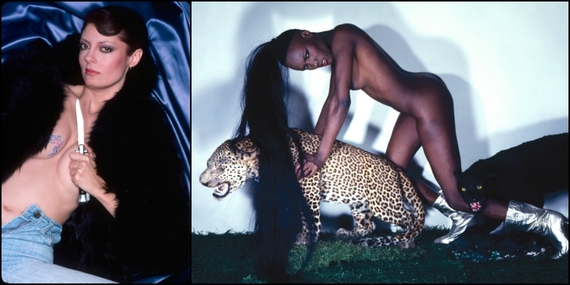
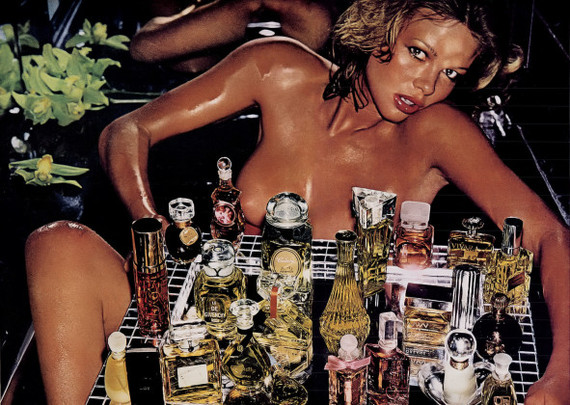
Mr. Von Wangenheim was perhaps one of the most provocative photographers of all time. From the late 1960’s all the way into 1981, when he died in a car accident, this artist captured the glam and excess of that era. Sex, violence, danger, and vice were caught by the lens of his camera and put on display on glossy pages of magazines as fashion editorials for VogueHarper’s Bazaar, or Interview. The photographer also imprints his vision in fashion campaigns for iconic brands such as Christian Dior, Valentino, and Calvin Klein.

The new book includes more than 200 images, some legendary, some unknown. The suggestive narratives are as inspiring now as they were then and continue to impress the industry. Almost every person who works in fashion is familiar with the iconic images of Lisa Taylor and Christie Brinkley being bitten by dobermans, or the singer Grace Jones posing semi-naked among panthers.

Mr. Von Wangenheim’s work might have faded with his passing, but it wasn’t forgotten. With this book, the Padilhas hope to bring back one of the most celebrated fashion photographers of the 1970’s and keep him in the forefront of fashion, a place from where he never should have left.

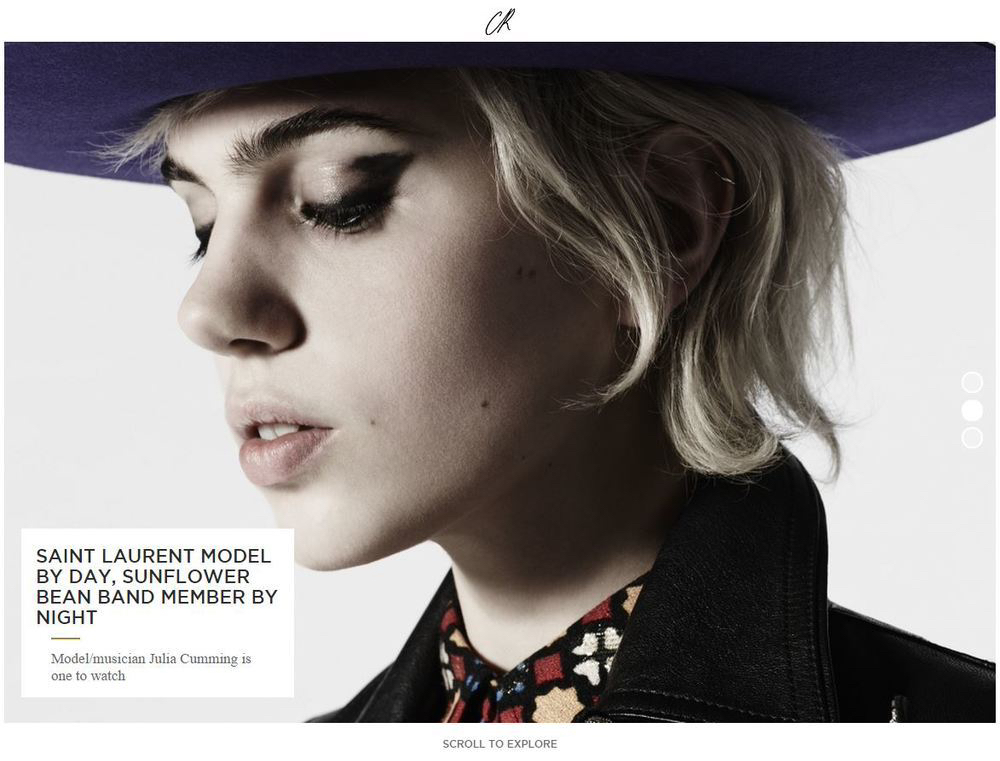
Model by Day, Rocker by Night

SAINT LAURENT MODEL BY DAY, SUNFLOWER BEAN BAND MEMBER BY NIGHT, MODEL/MUSICIAN JULIA CUMMING IS ONE TO WATCH.

PHOTOGRAPHY BY HEDI SLIMANE DURING THE FITTING IN SEPTEMBER 2014 IN PARIS

INTERVIEW BY GABRIEL RUAS SANTOS-ROCHA

Despite having just graduated from high school, model Julia Cumming already has two seasons as a Saint Laurent exclusive under her belt. As if that wasn’t already a success story on its own, her Brooklyn-based band, Sunflower Bean, is a beacon of hope for old-fashioned rock-’n’-roll. Music has always come naturally to Cumming (her parents met in a band and her father taught her how to play bass), which is likely why Hedi Slimane was prompted to tear her away from the stages of Brooklyn to walk in his Paris runway shows. “It has been pretty amazing working with Saint Laurent,” Julia reported. “Hedi Slimane’s interest in supporting musicians who are starting out is really cool, and brings a different kind of genuine energy into the world of fashion.”

We talked with Cumming about rock in the digital era, her perceptive views regarding the state of the music industry—and why she might like to travel back in time to the mid ‘70s.

What’s your band’s creative process like? Do you start writing new songs while you’re touring or is there a special time for that?

“For me and Nick and Jacob, playing is our favorite thing in the world to do. So we play together every day—rehearsing and writing when we find parts we want to expand on. Nick usually brings in some riffs and we all work with them, turning it into a collaborative thing.”

The internet has been a great vehicle for your music. Do you intend to move into more traditional formats in the future? Shall we expect an “album”? Maybe even Vinyl?
“The Internet is a gift and a curse (I could talk for years about that), but there is something really special about a physical release. We intend to release our first EP in the beginning 2015, hopefully on vinyl.”

As a young artist in the music scene, how do you view the industry today?
“The music industry has changed so much in the age of online piracy, and I think it’s trying to figure out how to survive in a world where it’s almost impossible to profit off of record sales. It just means that if you’re trying to be a musician now. you really have to do it for the love of it, because the days of huge advances and tour buses are just gone. But everything moves in cycles, and you have to be thankful and excited for the moment you’re in. As long as I’m surviving and making art that I’m excited about, it’s all good.”

Did you have an idea of what the music industry would be like—how was your perception different from the reality of the job?
“Everything seems more glamorous than it is. The music industry is a business, and a business is a business is a business!”

The video clip for “2013” was shot entirely with iPhones—we’re interested in the concept!
“My friend Kyle Hiedacavage is a totally amazing artist who I’ve always admired, and we basically sent him the song and he came back to us with the concept for the video. He wanted to shoot it all on iPhone cameras, which was perfect because we had no budget. I bought a fog machine for 100 bucks, and we just went for it. I think Kyle’s interpretation was spot on. It captures the moment, the year, how we were feeling at the time, all while kind of speculating about the future.”

The thought behind “2013”, of science expanding life and changing things at a fast pace, is a bit daunting. Would you want to be able to extend your life to be 1,000 years old?
“I don’t think I would want to extend my life to be 1,ooo years old. I guess it depends on what the quality of life would be like. It’s also nice that you have this kind of short moment where you are alive, you know? It forces you to make the most of it, and to take chances.”

One of our favorite Sunflower Bean tracks is, “I want you to give me enough time.” We’re curious to know what it’s about!
“This song means something different to me than it does to my bandmates. I feel like it’s talking about audience members in Brooklyn that go to shows and make up their minds really quickly about bands without really listening long enough to form opinions.”

 Does music influence your sense of style, fashion-wise? What is the connection between the two, in your opinion?
“I’ve always loved glam rock… Acts like Gary Glitter and T-Rex have been my favorite since I was a little kid. I used to have a tape with Alice Cooper music videos that I watched over and over again until it broke. So those images are burned into my brain and have affected my whole life—my style included. I love going a little overboard and trying to find where elegance and over-the-top meet, especially on stage. I feel centered when I’m wearing an outfit that I love and one that represents myself.”

Is there a period in fashion that you’re more interested in?
“I don’t know if I could name just one period, but I obviously love the early-mid seventies. I used to say that if I could exist at any time I would like to be 16 in 1973, living in London.”

How did modeling come about for you? Had it always been a desire of yours?
“I think modeling is a kind of performance and a form of expression in a way. When I became interested in clothes as an early teenager, fashion imagery started to mean more to me. But I never really thought it was something I could end up actually being involved in.”

Can you compare the experiences of being on stage performing with your band versus walking in runway shows?
“Playing in a band on stage and walking in a runway show are very different. Fashion and music are definitely intertwined, but an art form like rock-’n’-roll offers total freedom, asking you to dress up the parts of you that are ugly and weird and you put them on display.”

Judging by the different avenues that you’ve pursued throughout the years, it seems that you’re not afraid to try new things.
“I love to try new things. You only get one chance in this world (at least until we find out if we can live to be 1,000). I just really enjoy making art and want to try to explore it all the ways I can.”

Interview originally published on CR Fashionbook on Nov, 17th 2014 

Top Agent

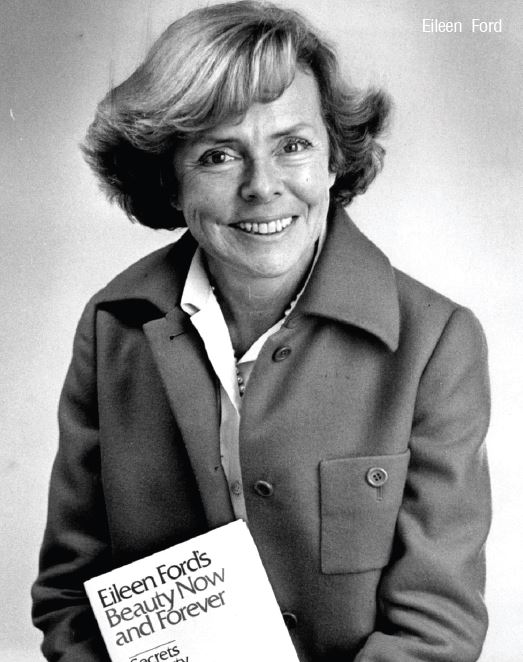
The visionary Eileen Ford created in 1947 the concept of the modeling agency as we know it today. Tough and workaholic, the businesswoman, who passed away this past July at the age of 92, had only one regret: not signing Grace Kelly to her agency

By Gabriel Ruas Santos Rocha

The designer Yves Saint Laurent once said that “a good model can advance fashion ten years”, but a good modeling agency and managing skills have proven to advance an entire industry. Eileen Ford, who passed away, last July at the height of well lived 92 years was the sole creator of the modern day modeling agency. Mrs. Ford’s modeling agency went on to become the biggest modeling agency in the world, representing a roster populated by some of the most famous and recognizable women in the world. Cheryl Tiegs, Christy Turlington, Jerry Hall, Verushka, Naomi Campbell, Twiggy and Christie Brinkley were only a few in that lucky list.

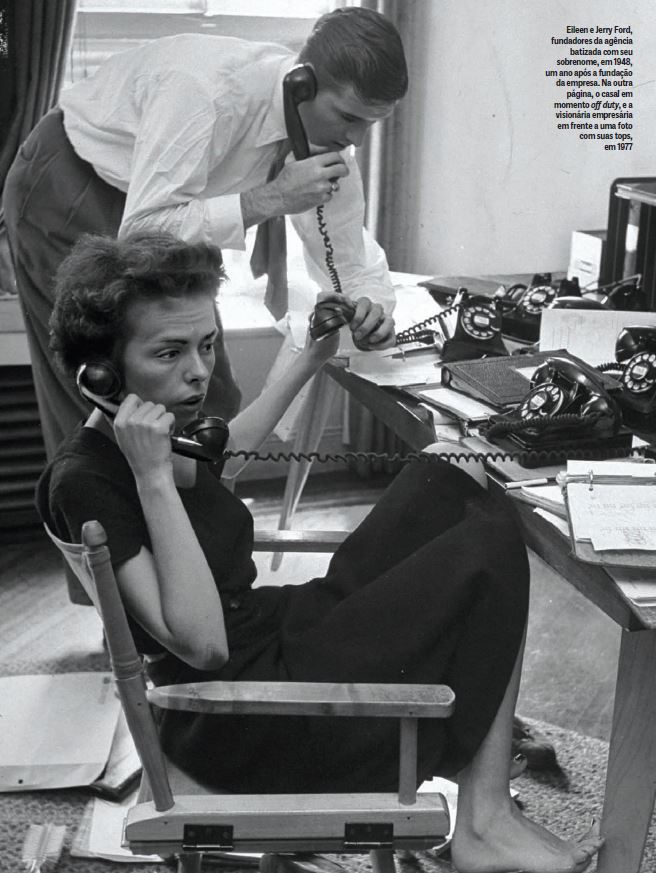
It all began when Eileen was Pregnant and unable to find someone who would hire her. Mrs. Ford began assisting some of her friends who were models in the mid-40’s as their secretary. Eileen organized their schedules, negotiated jobs, chased after payments and by word of mouth became an agency, at a time when modeling agencies weren’t really established. Modeling wasn’t viewed as a serious profession and Eileen Ford helped evolve modeling from a mostly part-time, poorly paid hobby into one of the world’s most glamorous occupations, turning girls next door into multimillionaire celebrity supermodels. When Eileen’s husband, Jerry Ford, returned from war and resume his studies for business at Columbia University he found great potential in what his wife was doing. Jerry cemented the business and took care of the business while Eileen managed and scouted the girls. They were a perfect fit and became an instant hit.

In their first year, the Ford’s accumulated over 250 thousand dollars and by 1966 Forbes reported they were making an average of 100 thousand dollars per week, becoming the most successful agency in the business. That did not happen by chance. Ford had introduced the voucher system, which would guarantee models their earnings even if the client hadn’t yet paid the agency. Models at that time were paid by the hour, at very low fees. Eileen argued that models should earn their paychecks per day, type of work and according to the extent their images were exploited by the clients. This new practice was the page turner, influencing the way advertising works and remains today the lifeline of the business.

The typical Ford model was tall, thin and predominantly blond, with wide-set eyes, beautiful eyebrows and long neck. Very rarely her girls were shorter than 5’7 a cut-off height which luckily included the gap-toothed Lauren Hutton. Ms. Hutton became the highest paid model in the 70’s and alongside Evelyn Kuhn, one of the first two Revlon contract models. In a recent interview with Eileen, she corrected me: “That was not the first contract”! She was firm, and sharp, referring to Yardley’s of London. That was the first ever exclusive contract, designed by Eileen and Jerry so that a model, in this case the iconic Jean Shrimpton, would exclusively represent and endorse a specific brand, securing higher fees and better exposure.

Beauty however, was not everything. Ford demanded the highest level of professionalism from her models, putting them on strict diets and firing those with a taste for partying. Eileen famously used to say “Models are a business, and they have to treat themselves as a business.” Mrs. Ford took models in to live with her and her family, in her home and was adamant about having all the girls sit with the family at the dining table. Models were required to do chores around the house and go to bed at specific times in order to learn about professionalism and respect. “It was my first experience with a dishwasher” Monique adds, “I had no idea how much soap to use, it ended up in disaster, the foam reached all the way to the dining room” she completes with giggles. Anne Anka, then known Anne de Zogheb, recalls how disapproving Eileen was of her relationship with the singer Paul Anka, who she was married with for 38 years. “She thought, ‘Show business, that’s trouble’, but I think she eventually came around.”

Eileen’s hospitality was the first sign of model housing, now largely established for every agency across the world. At the time however, it was a way for her to keep a closer watch at her girls and make sure they were behaving according to good moral standards and staying away from harms way. Supermodel Renee Simonsen recalls “They took me in and made me a part of their family, and I know that the protection of Eileen saved me a lot of [bad] experiences in the modeling business, she was a tough lady with high moral standards, but she had a big heart”.

Ford reigned the industry alone until the late seventies, when the ‘model wars’ ensued with the insurgence of John Casablanca’s Elite and Wilhelmina Models. These were some of the agencies that came on strong, attacking and luring away some of Ford’s top talents. Eileen would not stand and let her business be taken from her. To her defectors, Mrs. Ford would send copies of the bible with passages about Judas highlighted in red.

It was again, time to innovate. She opened offices across the globe, from Europe to Brazil and soon enough established the first worldwide model search. The ‘Ford Supermodel of the World’, became the largest scouting network and modeling competition, making Ford the biggest agency on the planet.

With that, the supermodel factor was born and many successful models owe their careers to this model search. Victoria’s Secret Angels Adriana Lima and Chanel Iman as well as the actress Malin Ackerman and top models Elsa Benitez and Liliane Ferrarezi are probably the most recognizable names from that group. This vast scouting network helped Ford to branch out and establish a more global look.

Mrs. Ford might have been tough as nails, as some will say, but all who worked for her share their memories with fondness. “They were so nice and decent, like a big family; we shared our good times and also went through difficult times together” explains Patty Sicular, who worked for the Fords as an agent for over three decades and currently runs the Legends board at Trump Models, current agency to most of those iconic Ford models who left with Patty after Eileen departed the business for retirement in 1995. “If you worked with Eileen and Jerry you were on your toes, and as hard as we worked, Eileen and Jerry always worked harder, they were in the office when we arrived and still there when we left.” Concludes Mrs. Sicular. “Eileen wielded her power towards the electrician that came in to repair a light switch to the CEO of General Motors” recalls Ms. Beverly Johnson, “I had never seen a woman with that much power and it was intoxicating to my young mind. Eileen is responsible for shaping me into the celebrated fashion model and savvy business woman I am today.” Concludes Ms. Johnson, the first African American model to appear on the cover of American Vogue, in 1974, and today owner of a hair care line.

Ms. Johnson’s first interview with Eileen did not go well. “’Too fat’, those were the two first words Mrs. Ford said to me.” But Ms. Johnson was determined to join the most powerful modeling agency of the time and came back two weeks later, this time she was in. Eileen however didn’t always made the right choices. Among names that were rejected throughout the years, Marisa Berenson and Grace Kelly stand out – she admitted publicly later that not signing the future Princess of Monaco was her biggest professional failure.

This article appeared originally in Vogue Brazil, September 2014

Pioneering an Industry

Many things have been said about modeling agencies over the years, but what most people don’t know is that it took one woman to create an entire industry. Eileen Ford, who passed away last July at the height of well lived 92 years, created along with her husband, the late Jerry Ford, the modern day modeling agency. Mrs. Ford’s modeling agency went on to become the biggest modeling agency in the world, representing a roster populated by some of the most famous and recognizable women in the world. Cheryl Tiegs, Christy Turlington, Kristen McMenamy, Jerry Hall, Verushka, Naomi Campbell, Twiggy and Christie Brinkley were only a few in that lucky list. Many of Eileen’s creations, whether they were models, beauty standards or forms of conducting business, remain in practice today. “Eileen Ford always made me think of the Queen of England… The fashion business was her Royal Court.” Shares Veronica Webb, one of Ford’s most successful models; who adds “She was a great businesswoman who created a dynasty.”

And the dynasty commenced when Eileen was Pregnant and unable to find employmemt. Mrs. Ford began assisting some of her friends who were models in the mid-40’s as their secretary. Eileen organized their schedules, negotiated jobs, chased after payments and by word of mouth became an agency, at a time when modeling agencies weren’t really established. “There were model agencies, but one of the owners would go to jail, and I thought a different kind of agency was needed – one you could trust” She told an interviewer in 1988. In the 40’s modeling wasn’t viewed as a serious profession and Eileen Ford helped evolve modeling from a mostly part-time, poorly paid hobby into one of the world’s most glamorous occupations, turning girls-next-door into celebrity supermodels. When Eileen’s husband, Jerry Ford, returned from war and resume his studies for business at Columbia University he found great potential in what his wife was doing. Jerry formalized the agency and took care of the business while Eileen managed and scouted the girls.

By 1966 Forbes reported they were making an average of 100 thousand dollars per week, becoming the most successful agency in the business. Ford introduced the voucher system, which would guarantee models their earnings even if the client hadn’t yet paid the agency. Girls were getting paid within sixty days after their jobs now, when before, they would not see their money until sometimes a year later, if they were lucky.

At that time girls were paid by the hour, at very low fees. Eileen argued that models should earn their paychecks per day, type of work and according to the extent their images were exploited by the clients. This new practice was the page turner, influencing the way advertising works and remains today the lifeline of the business.

Eileen Ford had an eye for what the industry clamored for. Ford Model Sheila Finn explains “When I walked in the [Ford] office for the first time, Eileen told me that in six months I would make enough money to pay for a Jaguar in cash”. And Mrs. Ford was right, as Ms. Finn went to become one of the most successful models in the 60’s. Eileen had the uncanny ability to see beyond the pretty girl who stood in front her and envision a star, it was her part to turn the plain girl into that phenomenon she envisioned. And she always did. She defined what the standards of beauty should be like based on what she believed to be the best form for a model. The typical Ford model was tall, thin and predominantly blond, with wide-set eyes, beautiful eyebrows and long neck. Evelyn Kuhn, one of the first two exclusive Revlon contract models, alongside Lauren Hutton is proof of that vision. “This contract changed and educated the whole industry” claims Ms. Kuhn. However, Revlon was not the first contract ever created; that was Yardley’s of London, created so that a model could exclusively represent and endorse a specific brand, securing higher fees and better exposure. Those contracts, created by the Fords, became and remain the most sought after deals in the industry by any model. The Revlon’s of today can be found in established brands such as Estee Lauder, Lancome, L’Oreal and most famously, the lingerie behemoth Victoria’s Secret. If you are a model and have a contract, you know you made it.

Eileen Ford demanded the highest level of professionalism from her models, putting them on strict diets and firing those with a taste for partying. Mrs. Ford took models in to live with her and her family at her home and was adamant about having all the girls sit with the family at the dining table. Models were required to do chores around the house and go to bed at specific times in order to learn about professionalism and respect. “It was my first experience with a dishwasher” Monique Chevallier explains, “I had no idea how much soap to use, it ended up in disaster, the foam reached all the way to the dining room” she completes with giggles.

Eileen’s hospitality was the first sign of model housing, now largely established for every agency across the world. At the time however, it was a way for her to keep a closer watch at her girls and make sure they were behaving according to good moral standards and staying away from harms way. Supermodel Renee Simonsen recalls “They took me in and made me a part of their family, and I know that the protection of Eileen saved me a lot of [bad] experiences in the modeling business, she was a tough lady with high moral standards, but she had a big heart”.

For several decades Eileen Ford represented the world’s most prominent models and raised the profile of the business, which also became a recruiting ground for Hollywood. Since the 50’s with Suzy Parker all the way through the 90’s, Ford launched the careers of some of the most successful actresses of today. Kim Basinger, Rene Russo, Brooke Shields, Sharon Stone and Ali MacGraw are some of the most successful cases, in which high profile modeling careers leveraged an even greater acting career.

Ford reigned the industry alone until the late seventies, when the ‘model wars’ ensued with the insurgence of John Casablanca’s Elite and Wilhelmina Models. These were some of the agencies that came on strong, attacking and luring away some of Ford’s top talents. Eileen would not stand and let her business be taken from her. It was again, time to innovate. She opened offices across the globe, from Europe to Brazil and soon enough established the first worldwide model search. The ‘Ford Supermodel of the World’, became the largest scouting network and modeling competition, making Ford the biggest agency on the planet.

With that, the supermodel factor was born and many successful models owe their careers to this model search. Victoria’s Secret Angels Adriana Lima and Chanel Iman as well as the actress Malin Ackerman are probably the most recognizable names from that group. This vast scouting network helped Ford to branch out and establish a more global look. Before that time there were only a shy few models that stood out, including Naomi Sims, Dalma Callado and Beverly Johnson, who became the first African American on the cover of Vogue. Ms. Johnson used to spend most of her time in between castings at the Ford office, observing everything. “I had never seen a woman with that much power and it was intoxicating to my young mind. Eileen is responsible for shaping me into the celebrated fashion model and savy business woman I am today” Ms. Johnson explains.

All who worked for Eileen share their memories with fondness. “They were so nice and decent, like a big family; we shared our good times and also went through difficult times together” explains Patty Sicular, who worked for the Fords as an agent for over three decades and currently runs the Legends board at Trump Models, current agency to most of those iconic Ford models who left with Patty after Eileen departed the business for retirement in 1995. “If you worked with Eileen and Jerry you were on your toes, and as hard as we worked, Eileen and Jerry always worked harder, they were in the office when we arrived and still there when we left.” Concludes Mrs. Sicular.

“They always say, ‘How did you make it as a woman?’” Eileen shared in an interview to the newspaper Women’s Wear Daily in 2010. “I never had any trouble doing anything as a woman. I did it because I had to, and it worked.”

Originally published in Harper’s Bazaar Thailand, September 2014

Ladies & Gents: Interview with Leilani Bishop

Leilani Bishop is a household name in the modeling industry. In the nineties she became known as that healthy, smiley, surfer girl that had the all American look which the all American designers had been looking for, for so long. She became a hit in campaigns for brands such as Tommy Hilfiger and graced the pages and covers of magazines such as Vogue and Allure. The model broke boundaries and even graced the cover of the top selling record Live Through This, by the grunge band Hole, fronted by none other than Courtney Love.

After enjoying years in the spotlight, traveling around the world and collecting experiences as a model, Leilani moved back home, to her native Hawaii, where she had the bright and unique idea of starting her own line of fragrances. Unlike most famed models, Leilani took the longer route, built the company from scratch, over much work and investigation.

Leilani Bishop Fragrances is now an established and unique business in a somewhat overcrowded industry. But that doesn’t seem to worry the model turned fragrance “designer”, she’s as calm about her business as she’s always been about her career as a model. Bishop tackles one task at a time, with an ease that can only be credited to a Hawaiian upbringing. Here, the entrepreneur shares a little of her story with us.

What brought you to the idea of creating your own fragrance line, versus putting your name on a mass-produced product, like most top models and celebrities have been doing lately?

I wanted to own and create something, I love to be involved and like being able to have a say in every aspect; control freak or entrepreneur, it is a fine line! I also wanted to capitalize on my own image and persona instead of yet again representing someone else’s company, and wanted to do it on my terms so if it worked I could build a company around the line.

How complicated was it to get from the idea to the actual development of a product? 

    It took longer then I thought it would. I also learned a lot about myself and the way I operate. I have streamlined myself quite a lot from the minute I started this project 8 years ago. I am much more efficient, but still was not easy breaking into a world that is very traditional in the way it operates.

I did some research on oil fragrances and it doesn’t seem like there are many, if any, of known brand options available, most known brands opt for alcohol based, spray fragrances. The companies that do make oil scents don’t have an appealing image and seem to try to mimic other known brand scents. Even though the idea to use oil as a fragrance is not a new concept; your entire concept is certainly innovative. From the bottle, to the roll-on, to the idea of making oil fragrances a more appealing and elegant item. Did you feel that lacking I mentioned and did those factors contribute in your decision making?

     Yes! All of those aspects were a huge part of what motivated me in my decision-making. I am slightly obsessed with the Victorian age, every little thing they used down to toothpicks were elegant and made of beautiful materials. I wanted a woman to have an experience not only with the scent but with the entire image the item represents, from the beauty of the package to the sensation of rolling it on and the clean light scent of the oil.

How extensive was your research when putting together the concepts for your company and about how much time did it take you from the first time you had the idea to your actual first bottle of your own fragrance?

    It was an extensive process that spanned from start to launch seven years. I was living in Hawaii when I conceptualized the idea and so that was probably why it had a slow start. It took a while to break into the trade side of everything as it is a small industry and not many cater to small companies. I did not do much research as to what was wanted or needed though; only research on how things were executed.

In your website you teach the customer how to apply your fragrance. One would think that wearing perfume would not require instructions, but after reading the points you make in the website we wonder how could we have gone all these years without that knowledge. Where did you learn such information and was this an important differential fact you wanted to offer your customers?

    It was a conversation that came about between me and a girl that was working with me, Piper. We were discussing the differences of oil versus spray, pros and cons, and the act of rubbing your wrist together came up. Piper has extensive perfume background and has worked at big perfume houses and she enlightened me on that myth; “rubbing it in” is really destroying the fragrance. It got me interested and so we thought the consumer should be enlightened as well have a sensibility about the elegance of wearing fragrance and how, if applied incorrectly can ruin the experience entirely!  Also if applied correctly can provide fun and intrigue from start to finish!

I know you took inspiration from sensorial memory to create these three scents. Are you interested in releasing more scents in the future and perhaps even expand to men’s fragrances too?

    Yes, I will be releasing more scents, these too will have sensorial memory but of a different vein, and yes I would love to develop a men’s scent. My husband keeps bugging me so it will happen for sure, I’m just not sure when.

Being a top model I am sure you are always aware of the latest fashion trends and how those ebb and flow over the years. Are there “fragrance trends”? And if so, would you be influenced by them in your business?

    Yes, there are definitely fragrance trends and since I am always reading and curious about other businesses and want to know what is working, I am sure I am probably influenced. Yet, I have in my mind several ideas for future products and do not really care if they are “on trend” as I am confident in my Brand.

You are currently working with single note scents; have you given thought to adding elements to those or combining new ingredients for future products? Or is the single note an important part of your company’s mission statement?  

    Single not scents are not part of my mission statement, yet they are the foundation of the company, I believe. I will definitely be mixing scents though and actually am doing a project that will be out next fall, which will combine a couple of my favorite scents.

Can you give us a hint of what that project entails?

This is a candle/scent project I am doing for a new boutique hotel in South Beach, which will be opening in the Fall of 2014.

What do you feel, differentiates you the most from the other major fragrance lines? What makes you proud about your product?

    It is a niche product that feels more like a high end fragrance brand, I love that it stands on it’s own and does not feel mass produced, it has a unique quality that intrigues people before they even get to the scent as well as being Made in America. I could go on…I am so proud of my product.

How did your modeling career influence your business?

    Do you mean did the contacts I made help??  For sure, I love being able to work within my industry and be supported by those I admire. [It is] such an amazing feeling. Also being self-employed all my life gave me the hustle I needed to start my own business.

Would you consider “designing” a fragrance for a big name brand in your own standards of making perfume?

    Absolutely…would be great to have those resources to work with!

Where would you like to see your company in ten years from now?

    I would like to have expanded my fragrance line to include more oils and high-end fragrances that include special projects and collaborations with artists as well as adding a line of skin/beauty products including candles and perhaps even a small capsule collection to go with each season. Ten percent of the net will go towards supporting women and special projects.

The Cultural Omnivore, 2014

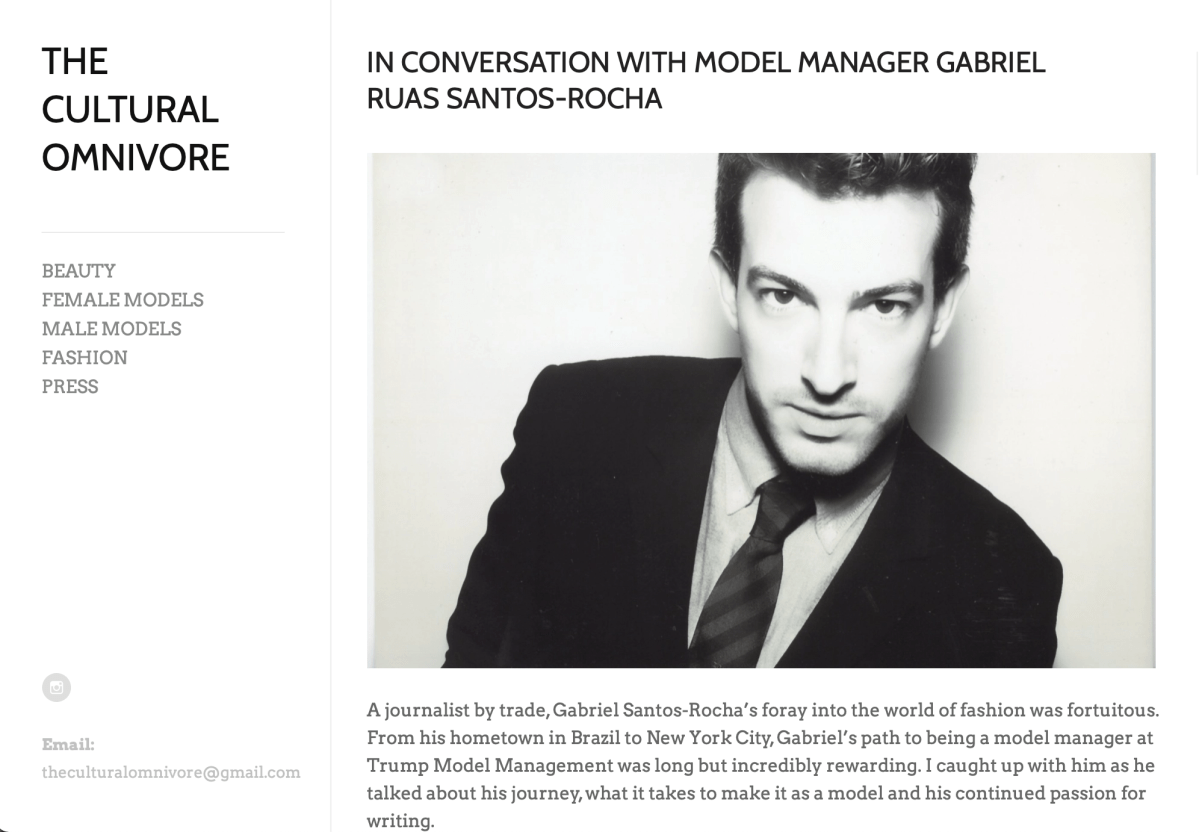
IN CONVERSATION WITH MODEL MANAGER GABRIEL RUAS SANTOS ROCHA

A journalist by trade, Gabriel Santos-Rocha’s foray into the world of fashion was fortuitous. From his hometown in Brazil to New York City, Gabriel’s path to being a model manager at Trump Model Management was long but incredibly rewarding. I caught up with him as he talked about his journey, what it takes to make it as a model and his continued passion for writing.

You studied journalism in your hometown of Porte Alegre, Brazil. How did you transition into scouting models for Marilyn?

That’s actually a funny story. One of my best girl friends was approached by Simone Lopes, who was a director at Marilyn in Brazil when we were out one night at a Madonna themed party. My friend asked me to come with her to the appointment. I knew nothing about the modeling industry. I was really into movies and music at that time, so I came, not thinking anything of it. A couple of weeks later my friend called me to say that Simone had asked her for my number, which we both thought was strange. It turned out that Simone had seen me around at parties and social functions and decided, for whatever reason, that I could be a good scout for them. So, I went in and realized that Marilyn was a fabulous opportunity and Simone and Zeca de Abreu, their President at the time in Sao Paulo, were unbelievably great people. We had a great time working together, they taught me so much, and still do. My girl-friend though, you might wonder, decided modeling wasn’t for her and is now a successful lawyer. She just visited me in New York last week.

After a successful run at Marilyn your talents caught the attention of Ford Models which eventually led to your position as Model Manager at Trump. Tell us about that journey.

You know, moving from Marilyn to Ford was one of the hardest things I ever did. I really felt like a part of a family at Marilyn, but making that move also meant growing up and taking actions toward building a career. At Ford I was given freedom to build something really cool with a very talented group of individuals, some of which ended up at other New York agencies like me and remain close friends and others have become very successful artists, like Andre Azevedo, etc. After a long run in Brazil, I owned my own company and was very successful in what I did there and that reflected a lot in my relationships in New York and Paris particularly, so it was only natural for me to make that move. I always wanted to live in New York, so I came here, and I had three very good offers, but the one I really wanted, which was Elite, was taking forever to get back to me. I went through a lot of my savings because I wanted to wait for them and had to pay the bills and I am glad I did. Elite was a phenomenal experience; I was able to work with some of the top agents in my field and learn many important lessons. Trump is an established company with a very experienced team of agents and somehow manages to maintain a family feel to it, which I love. We work hard here to build and nourish long-term careers and we are very selective with who we represent because we are smaller and we like it that way; we love that the girls walk in and feel like this can be an extension of their home.

What does a typical day look like for you?

There are many phone and email conversations and negotiations all day long. A typical day at the office is not nearly as exciting as one would imagine. We have a lot of interaction with the models who are constantly in and out of the office. Sometimes we go to their photo shoots. Many times we take clients or models out for lunches and dinners. If we’re lucky we get to go to a fun industry event after work every now and then, but trust me, we have a desk job like most people, it only involves a much more animated crowd with music playing in the background. And snacks, lots of snacks.

Modeling requires a certain physicality but beyond that what makes a great model?

A great model has to have a great personality, there’s no way around it. Some of the most successful models in the world are the ones who are playful, who understand fashion, art, etc. The girls who understand that they are a part of the creative process and make the best of their ability to collaborate in that process are the ones who succeed.

Tell us about the process of scouting a model to developing them to launching them.

Generally the scouting is all done by a specific team of people, in our case at Trump, Duane Gazi spearheads that team. Once he finds talent that he believes in and understands would be a great addition to our roster there is a process of development in which we work with the assets the girl already has from physicality to personality, to create a career plan and a path for each girl individually. Everyone is different and careers evolve according to each individual’s journey, that’s the fun part of the process. Sometimes girls need assistance in putting together their wardrobe, need a change in haircut or need English lessons, etc. Many times they don’t and it’s only a matter of tweaking their personal style to meet what the market is asking for at that particular moment. The team works together diligently to make sure that it all comes together for the time when the girl is put in front of the client; sometimes one chance is all they get.

How do you feel about criticism leveled at the fashion industry that there’s a lack of diversity?

I believe there could be more diversity, but I don’t believe that is only for the fashion industry, it happens across the board in the entertainment industry. Look at what just happened recently at Saturday Night Live. Yes, there needs to be more diversity in the fashion industry, but let’s not be mistaken, all ethnicities are represented and hopefully that won’t diminish and only grow; our fashion campaigns, runways and editorials should reflect the world we live in.

What advice would you offer someone thinking of embarking on a modeling career?

I would advise them to be patient and to not give up easily. I’ve seen some of the biggest careers happen after years of struggle and rejection; it happens when the time is right. Oh, and always listen to your agents, of course!

​The Internet has contributed to the democratization of fashion and helped demystify the industry.  Do you feel this has helped or hindered fashion?

It has made fashion more accessible to the masses and it has helped build bigger stars faster with the use of social media, but it has also played a negative role. Printed material is becoming extinct, and with that those types of rates and usages. The industry hasn’t evolved quickly enough to keep up with the velocity of the Internet unfortunately and it’s a fight we have to pick daily in every agency. We understand the value behind the work that is shot for the Internet and it has been a struggle to convey that message to clients. That’s how models make a living, from their image. Internet used to be an afterthought years ago and today is a major part of our business.

What are your short-term and long-term plans?

God, what does that even mean? My short-term plans are getting girls ready for the next season. My long-term plans include a home on a beach somewhere and feet in the sand, but I don’t think I will ever be able to stop working, my mind is restless and needs a good outlet.

What would people be surprised to learn about you?

Probably that one of my biggest passions in life is to write and that I love movies more than I love fashion (sorry!).

Follow him at @GabrielRSRocha and on Instagram

You can read the original post here.

Leilani Bishop And The Art of Fragrance

Leilani Bishop is a household name in the modeling industry. In the 1990s, she became famous as the radiant, sun-kissed surfer girl with the all-American look designers had spent years searching for. She went on to star in campaigns for brands like Tommy Hilfiger and Polo Ralph Lauren, graced the covers and pages of Vogue and Allure, and even appeared on the iconic cover of Hole’s hit album Live Through This, fronted by Courtney Love.

After years in the spotlight, traveling the world, Leilani moved back home to Hawaii to start her own fragrance line. Unlike many famous models who simply license their names, she chose the road less traveled—building the company entirely from scratch through deep research and hands-on dedication.

Today, Leilani Bishop Fragrances is an established, standout brand in a crowded market. That doesn’t seem to faze the model-turned-founder; she approaches entrepreneurship with the same grounded calm that defined her modeling career, tackling challenges with the easy grace of her Hawaiian roots. Here, she shares a bit of her story with us.

What inspired you to build your own fragrance line from scratch instead of just licensing your name to a mass-produced product?

I wanted to create and truly own something. I love being hands-on and having a say in every detail—there’s a fine line between entrepreneur and control freak! I also wanted to build equity in my own name rather than represent someone else’s brand yet again, and I wanted to do it on my terms so that if it worked, I could build a lasting business around the line.

How challenging was the transition from initial concept to a finished product on the shelves?

It took much longer than I expected, and I learned a lot about myself and how I operate. I’ve streamlined my process significantly since launching eight years ago. While I’m far more efficient now, it still wasn’t easy breaking into an industry with such traditional, rigid ways of doing business.

Most mainstream brands stick strictly to alcohol-based sprays, while existing oil-based scents often lack a modern aesthetic or just mimic popular perfumes. Even though perfume oils aren’t new, your approach—from the bottle to the roll-on applicator—feels elevated and innovative. Did you notice that gap in the market, and did it shape your vision?

Absolutely! All of those factors were a huge part of my motivation. I’m a bit obsessed with the Victorian era, where even the smallest everyday objects—down to toothpicks—were elegant and crafted from beautiful materials. I wanted women to experience not just the fragrance, but the entire ritual: the beauty of the packaging, the tactile sensation of rolling it on, and the light, clean profile of the oil.

How extensive was your research during the development phase, and how much time elapsed between your initial concept and holding the first finished bottle?

It was an extensive seven-year journey from concept to launch. Living in Hawaii when I first came up with the idea probably contributed to the slower start. It took time to break into the trade side of the business because it’s a tight-knit industry and few suppliers cater to small businesses. Interestingly, I didn’t do much market research on what was trending; my research focused entirely on execution and craftsmanship.

Your website includes a guide on how to properly apply fragrance—something most people assume doesn’t need instructions until they read your tips. Where did you learn about proper application, and why was sharing that knowledge important for your brand?

That actually came out of a conversation with Piper, who was working with me at the time. We were discussing the pros and cons of oils versus sprays, and the habit of rubbing wrists together came up. Piper has an extensive background working with major perfume houses and debunked that myth for me: rubbing your wrists actually crushes and destroys the fragrance notes. That fascinated me, and we realized consumers deserved to know, too. Fragrance should feel elevated, and applying it improperly can ruin the whole experience—whereas doing it correctly makes wearing scent engaging and delightful from start to finish!

Your current trio of scents is rooted in sensory memory. Are you planning to expand the collection with new scents or venture into men’s fragrances?

Yes, I will definitely be releasing more scents. They will also draw from sensory memories, just exploring different avenues. And I’d love to develop a men’s fragrance—my husband keeps asking for one, so it will definitely happen down the road!

As a top model, you’ve experienced how fast trends shift in fashion. Do you see similar trends in fragrance, and do they influence your creative process?

There are definitely fragrance trends. Because I’m naturally curious, read constantly, and follow what works in the market, I’m sure I absorb some of that influence subconsciously. That said, I have clear visions for future releases and don’t worry too much about chasing trends—I trust my brand and its identity.

Your current lineup focuses on single-note scents. Do you plan to introduce blended accords in the future, or are single notes core to your brand philosophy?

While single notes aren’t strictly part of our mission statement, they certainly form our foundation. I will definitely explore blended scents, though—in fact, I have a project launching next fall that combines a couple of my personal favorite notes.

Can you share a teaser about that upcoming project?

It’s a custom candle and scent project designed for a new boutique hotel in South Beach, opening in the fall of 2014.

What sets your brand apart from mainstream perfume houses, and what makes you most proud of what you’ve built?

It’s a true niche product with the sensibility of a high-end luxury perfume. It stands out on its own without feeling mass-produced, and the design intrigues people before they even smell the scent. Plus, everything is made in America. I could go on and on—I’m just incredibly proud of this line.

How did your background in modeling shape your entrepreneurial journey?

The industry network I built certainly helped—it’s an incredible feeling to work within my field and receive support from people I admire. More than that, being self-employed my entire adult life gave me the discipline and hustle required to build a business from the ground up.

Would you ever consider designing a scent for a major heritage brand if you could maintain your production standards?

Absolutely! Having access to that level of resources would be incredible.

Where do you envision the brand in ten years?

I’d love to see an expanded collection featuring more oils, bespoke luxury scents, artist collaborations, and an extended beauty line including candles and seasonal capsule collections. Giving back remains essential as well: 10% of net proceeds will continue supporting women and special community initiatives.

Deviled Eggs with Heather Graham

Perhaps it was the abundant steak tartare or the ever-flowing Grey Goose; regardless, the scene at the Clarkson in the West Village was very fun and social, sheer joy and camaraderie abounded. The crowd gathered to celebrate the New York premiere for the gut-wrenching film At Any Price, directed by the talented Ramin Bahrani.    

As intense as this film is however, after the credits rolled in there was no somberness to these celebrants. The model Leigh Hoby walked in to a swarm of photographers who treated her like this film’s featured star; which she is not. The real star in this picture is the unforgettable Heather Graham. Even though one was wearing white and the other one black, the similarities were rather compelling. Without skipping a beat, a group of photographers made sure to put the two together for a portrait. Perhaps a friendship will blossom? Zac Efron, Adrian Grenier and Dennis Quaid observed from a safe distance and chuckled cheerfully with delight. Nat Wolff was the life of the party, flanked by his pals Heather Matarazzo and Josh Radnor. Andie Arthur exuded sweetness in her long black gown and leather jacket, a look that seemed effortless but not many could pull off.  

The night resumed smoothly and soon enough a dance-floor was requested – no Cinderellas in sight here! An expert was called into action. Amy Sacco gathered a crew in a swift wave of her nocturnal magic wand and in two heartbeats they were all at No. 8. The heat in the mezzanine went up as the group could not stop the dancing. From disco to rock n’ roll, it all seemed to fit in the impeccable repertoire.  

Peter Beard surfaced from a dark corner escorted by a tall and impressive man. “Where is Amy!?” – he interrogated. “I’m alive, and look at who I have with me!”. Amy appears with the statuesque Native American model Jade Tenholder – a rarity in this world – who just broke into the scene. After much back and forth on whether Peter could take pictures of his new muse upstairs, it was finally decided: “I wanna shoot you in Mozambique, you are the best thing that happened to me this year!”.  

On that note the night came to a closing, after all, who needs any more than that?

Follow the Yellow Brick Road

Oz may be great and powerful, but does this Disney remix of the classic really need four premieres in one city!? Probably not. But perhaps when you have a variety of sponsors ranging from luxury fashion labels to shopping networks, you should. Since in New York anything is a good reason to party, I decided to follow the yellow brick road leading to one of these gatherings to see what the fuss was all about.  


It was another cold winter night and what I found was a very warm and friendly room. Among beautiful Sports Illustrated swimsuit models of every height and ethnicity, I made my way through the crowd. And what a cheerful, star-studded crowd this was. Emmy Rossum seemed to have drawn most of the attention to herself, and that’s understandable. The actress looked ravishing in a floral Oscar de la Renta number, which will hopefully be good omen for an early spring. Our leading man – and every person’s favorite Swiss Army knife – James Franco, had to make a quick appearance as he dashed from one screening to another..  


Some of the attendees made of this a family affair and brought along their children to witness all the magic that only3Dseems to bring to the screen these days. Richard Kind couldn’t hide his excitement when leaving the venue with his girls; it was all very endearing to look at. Cynthia Rowley followed suit and was just another one in a group of fashion designers which also included John Varvatos.    Now, this is not just another Disney affair, for when Salman Rushdie and Marina Abramovic show up, you know it is serious business. Disney delivered a great prologue to the fable we all came to know since we were children. They have updated a literature classic and still did justice to the unforgettable movie from 1939. This seemed to make Dick Cavett confused as he wondered if Judy Garland would also be making an appearance on-screen that evening. The comment was nothing but a good ol’ joke, I’m sure.  

But who needs one leading lady, when you can have three of the most ravishing Hollywood stars of our time? Rachel Weiss, Michelle Williams and Mila Kunis not only look great on screen, but they know exactly how to deliver entertaining performances. And that’s what this movie is all about, an entertaining piece to be watched with a lot of pop corn on a Saturday afternoon. No need to over analyze it.   If you ask me, however, whether this digital extravaganza will stand the test of time, I would be inclined to say it will not. I doubt anyone will ever be able to produce another Oz movie that is as timeless as The Wizard of Oz.  

Stayin’ Alive with John Travolta

Every once in a while this humble writer is invited to join in on the fun with the Hollywood big league. “why?” you may ask, and the answer to that is very simple. My mother always said: “Honey, it’s not about how much money you make but the friends you have”. So, with some very important friends under my belt I move into the Hollywood party scene during awards season for some networking and some fun. But let’s be honest, mostly for the fun.

In a place in which orange trees grow out of living rooms and diamonds are as big as a baby’s head no excess is considered excessive. So what if I stepped on Penelope Cruz’s vitage Balmain dress and it ripped? It will most likely be in the trash bin tomorrow morning, along with the gift bags filled with all sorts of things you don’t really need.

The scene when you walk into this room is of camaraderie, there are no cameras in sight, some of the actresses aren’t even wearing their shoes anymore, they’re lounging in big white couches with their dates or their managers, always on the lookout for the funnest crowd to dance with. Could it be the comedy crowd, spearheaded by Amy Poehler and Paul Rudd, along with Aziz Ansari, Elizabeth Banks, Judd Apatow and Mindy Kalling? Or perhaps it’s the fashion crowd, in which old glam Valentino mixes in with nuveau luminaires Daniella Helayel and Zac Posen, who seem to love being sandwiched between Madonna, Ellen DeGeneres and Portia De Rossi. Madonna by the way has her make up artist within reach, a luxury that only the very top echelon can afford.  Every now and then she rushes to the edge of the dance floor where this handsome and happy latin man awaits with pads to dry her skin and retouch her lips. Now, that’s what I call luxury!

On the other side of the room things are getting interesting as Donna Karan walks in with Kelly Preston and John Travolta. They join in the fun with Bono and that heavenly creature that is Victoria’s Secret Angel Alessandra Ambrosio, now in a completely different outfit than she was wearing just a couple of hours ago. Her costume changes would put Cher to shame. With Bono and Alessandra deep in conversation, John does what he knows best and takes on the dance floor. Kelly and Donna, who seem to be best buds, follow suit. Laura Dern and Kate Walsh occasionally pop in but don’t linger, instead gliding  from one group to the next,  looking lovely with  curls which never seem to be out of place.

John and Kelly are like a young teenage couple, never losing sight of one another, until… “Stayin’ Alive” begins to blast from the speakers. Now, you may ask yourself, “was this arranged just because John Travolta was there?”. The verdict is still out per that issue but as if on cue, John and Kelly took center stage, repeating the dance that defined the disco era. I, along with the rest of the crowd, turned as fast as I could and copied the moves, the entire mass a perfect line of incredulous denizens. John seemed a bit bashful at the response, but was clearly loving every minute of it. Octavia Spencer was beside herself, was she really witnessing this? Selena Gomez, Taylor Lautner and some other teenage star which will go unnamed (At thirty I am far too old in Hollywood years to keep up with all these kids names)  seemed befuddled by the entire affair, disco is clearly a memory too distant for their young minds–“what is the commotion all about?” They took in a second or two and went back to chatting about their Instagram feeds — of course. Homework is in order for these kids. 

The temperature rose and I needed to take a break for air, out through the orange trees and the piano and on to the patio, to join in the laughter of Ryan Seacrest and surprisingly, Macauly Culkin. Yes, remember him? That kid from “Home Alone” who went through all that stuff that no one cares about anymore? Yes, he was there too, along with Juliette Lewis and Jennifer Jason Leigh, which if you ask me, are pretty bad ass. A couple of Oscars walk by me heading towards the buffet, which reminds me: I haven’t eaten in hours!

 I took a seat at the communal table next to Princess Mia Thermopolis Herself, Anne Hathaway. Congratulations are in order, for her, and the stunning Natalie Portman, who sat beside her. Unsure of why I was congratulating Natalie so late in the game I just went with it, I’m pretty sure she did something of merit just that morning. She gets me.

 It’s nearly 4 AM and people have been dancing all night long;  cute couples — both that came together and those that found each other on the dance floor — are beginning to make  their fashionable exits one by one. Naomi Watts remains effortlessly chic, even when barefoot, accompanied by her gentleman of a husband Liev Shreiber who politely carries her shoes in one hand as the other proudly holds the hand of his wife. Another Naomi heads to the exit, this time Campbell, who remains very supermodel looking, without many smiles, perhaps only a few grins. No one cares, she’s Naomi Campbell.

People wait patiently in line for cars,  already laughing over the ghosts of dance-floor’s past underneath heaters and sipping hot cocoa. It is just as lively out here as it is on the dance floor and  as I look around I realize: this evening was the ultimate episode of “Dancing with the Stars” except in this short instance of my life, they are all real stars.

Illustrated Legacy

A Great Voyeur of 20th-Century Fashion: Illustrator Antonio Lopez Celebrated in Posthumous Monograph and Retrospective

Written by Gabriel Ruas Santos Rocha

Throughout the history of art and style, countless extraordinary fashion illustrators have left an indelible mark, though many have faded from public memory over time. Puerto Rican-born Antonio Lopez is undoubtedly among the most vital of these figures. After years of lingering in the background of mainstream fashion history, his legacy is being brought back into the spotlight. In a major tribute, publisher Rizzoli is releasing Antonio: Fashion, Art, Sex & Disco, inviting readers into the glamorous, kinetic world of the supreme chronicler of fashion’s golden era between the 1960s and 1980s.

Across his drawings and photographs, Lopez captured the most magnetic personalities and sharpest minds of his era—from designer Halston and Pop Art icon Andy Warhol to supermodel Pat Cleveland. All were framed through the visionary lens of an artistic partnership: behind Antonio’s signature was his lifelong creative collaborator, Juan Ramos. It was Ramos who anchored their creative output, steered art direction, and ensured their work commanded maximum cultural resonance.

That enduring cultural footprint forms the core of this 304-page volume, curated by brothers Mauricio and Roger Padilha—the creators behind the 2009 best-seller The Stephen Sprouse Book. “Both of us were deeply inspired by Antonio’s work, and we hope future generations can experience the magic of his vision,” Mauricio notes.

Lopez, who passed away in 1987, saw his illustrations grace the covers of leading magazines, define major advertising campaigns, shape editorial layouts, and influence runway concepts. His visual language inspired designers ranging from Anna Sui and Norma Kamali to his close friend Karl Lagerfeld. In fact, it was through Lopez that Lagerfeld found the creative momentum to emerge from the shadow of contemporary Yves Saint Laurent and solidify his reputation in Paris.

Antonio: Fashion, Art, Sex & Disco does more than chronicle Lopez’s life; it places the reader directly inside the duo’s creative epicenter. Lopez and Ramos were constantly surrounded by a dynamic circle of muses and confidants—including Jerry Hall, Jessica Lange, and Grace Jones—turning everyday life into an ongoing artistic salon.

Over three decades, their work transcended static page spreads, embedding itself in the collective visual culture of the era. “I don’t believe anyone else has surpassed his ability to capture and translate the social climate of his time through illustration,” Roger Padilha observes.

Lopez’s influence on menswear was equally transformative. The integration of bold color palettes, luxurious textures, and flamboyant silhouettes into men’s fashion owes a significant debt to his daring personal style. Flamboyant and uncompromising, his peacocking drew constant press attention and helped spur the rise of men’s lifestyle and fashion publications tailored to an audience eager to emulate his look.

“He continues to influence the fashion industry today—and he certainly influences us,” say the Padilha brothers, founders of New York creative agency MAO. “Antonio lived his work; to him, there was no division between art and life. We strive to operate with that same philosophy.”

New York audiences will also have the chance to experience Lopez’s legacy in person. Through October 6, the exhibition Antonio’s World is on view at The Suzanne Geiss Company in SoHo. Spanning three decades of illustration, photography, and mixed media, the show presents an immersive installation as bold and dynamic as the artist himself.

Article originally featured in Harper’s Bazaar Brazil, September 2012.

In The Raw

When news broke that Supermodel Carol Alt was about to launch another of her raw dieting books, “Easy Sexy Raw” I remember thinking – “oh no,  here we go, yet another diet book from a celebrity!”. I also remember thinking that Carol looked pretty fabulous  in our last encounter a couple of weeks prior to that. I was left curious by the premise of her book and the fact that this was one of many in a line of best selling books about the same subject: living a lifestyle that incorporates raw foods to improve the quality of life.

It’s only natural to pay attention when you hear a certain book is a best-seller, but after three hits in a series, you must look closely. And so I did. Carol Alt’s books are not simply diets, like the Atkins or the South Beach, they truly are a way of living that has worked for hundreds of thousands around the globe and has found in Alt their biggest supporter and spokesperson. Adept of this intriguing principle of only eating raw foods for nearly twenty years, Carol’s excitement when talking about her books and her health is not for nothing. After being sent back home by a director in the midst of shooting her TV special “Carol Alt & Friends” at the age of 34, because her body wasn’t in swimsuit condition, this Sports Illustrated supermodel, known internationally for her beauty and sculptural body was shocked. How could the star of the show have let go of herself like that?

Naomi Preizler

HERE is a link to something I wrote on one of my favorite new models for LookBooks.com – have a read! :)

Agent Provocateur: Elite’s Gabriel Rocha on Naomi Preizler

Naomi Preizler (Elite) is much more than just a pretty face and a great runway girl. She is a true artist who paints and draws likes nobody’s business, and has a great understanding of art and fashion, which to me is an extremely important factor in a model’s career.

Unquestionably a rising talent in our industry, just the other week Naomi shot single-girl editorials for Vogue Russia and L’Officiel in different parts of the world. Her previous bookings include  a cover of Vogue Italia Gioiello; editorials for V SpainVInterviewMuseDazed & ConfusedWonderland, and Zoo; and features in i-D and Metal.

Naomi was also featured on the cover of the first issue of Harper’s Bazaar Argentina, her native country, where she is also currently working on a line of t-shirts with prints from her paintings.

Naomi has walked the runways of GivenchyChanelSonia RykielJean Paul GaultierRichard ChaiRag & BoneMissoniVivienne WestwoodHouse of Holland, among many others; and has been shot by photographers like Mario Sorrenti,Sharif Hamza and Vicky Trombetta (2DM).

For more on Naomi and Gabriel: Naomi’s Twitter | Gabriel’s Twitter — Blog

They Rocked the Ball

Vogue follows two top models to the Met Gala 2010 and reveals the backstage preparations for the party—the biggest night in the fashion industry.

In the two weeks leading up to the Costume Institute Gala—also known simply as the Met Gala to insiders—New York sizzles. The benefit, held annually at The Metropolitan Museum of Art, is co-chaired by American Vogue and is to the fashion world what the Oscars are to Hollywood, especially when it comes to the red carpet. The difference is that instead of actors and directors, the main focus here is on models and designers. Securing an invitation is no small feat: you are either exceptionally influential and invited as a guest at someone’s table, or you have deep pockets. The coveted individual tickets average around $7,500, while tables cost up to $250,000, with all proceeds supporting the museum’s Costume Institute. It is an investment, considering multimillion-dollar deals are brokered at the party, and the who’s who of fashion is in attendance. Everyone wants their turn on the most scrutinized red carpet in the world.

As an agent in the women’s board at Elite Model Management in New York, representing clients such as Alessandra Ambrosio and Charlotte Kemp Muhl (who is engaged to musician Sean Lennon), I witness this high-stakes fashion frenzy up close. The models invited by designers to sit at their tables have the distinct advantage: they are dressed by the fashion houses directly and do not pay for tickets. Leading up to the event, the agency’s phones ring off the hook with inquiries from designers, hairstylists, and makeup artists eager to collaborate. Once the designer pairings are established, creative teams assemble for styling briefings centered around the annual theme. This year’s exhibition, American Woman: Fashioning a National Identity, runs through August 15. Looks are selected and tailored around the model’s silhouette, current color palettes, and upcoming runway trends. The priority is not merely avant-garde experimentation, but effortless elegance.

A week before the gala, countless emails circulate with lookbooks, jewelry options, and makeup references. After extensive deliberations, the selection narrows to roughly ten gowns and twenty pairs of shoes. By the weekend before Monday’s event, the models touch down in New York—often straight from back-to-back international shoots, running on minimal sleep, with immediate fittings on the schedule. By Saturday morning, the choice is down to the final three looks. Inevitably, the favorite might require significant alterations, much like last year with Michelle Alves, who was pregnant at the time and required emergency tailoring across a Sunday—a logistical challenge even in Manhattan. Once the final gown is locked, attention turns to fine jewelry and accessories.

On the day of the event, the pressure peaks. Publicists manage the minute-by-minute schedule: hair and makeup call times, private car dispatch, and exact arrival windows at the Metropolitan Museum steps to ensure maximum press coverage. Red-carpet positioning is crucial. Arriving alongside an A-list Hollywood couple can dilute press attention, whereas posing alongside fellow industry figures and designers generates high-value syndicated imagery for global publications. Beyond the styling, presence matters: every smile, gesture, and arrival photo is recorded and distributed internationally within minutes. The right dress paired with poise creates instant buzz, and landing on the best-dressed lists almost certainly guarantees a return invitation next year.

Article originally featured in Vogue Brazil, June 2010.

Begin Again

Married to a Haitian and managing an orphanage-school for more than 400 children on the island, model Carolina Bittencourt will never forget January 12: while she was giving birth to her daughter, her husband’s homeland crumbled to pieces.

By Gabriel Ruas Santos Rocha

Carolina Bittencourt knew that January 12, 2010, would be a monumental day. At 2:00 PM, she entered the delivery room at Mount Sinai Hospital in New York to welcome baby Olivia, the first child from her two-year marriage to Haitian businessman Cedrick Roche. What Carolina could never have anticipated was that the day would become unforgettable for two vastly different reasons.

Back in her recovery room—awake and caught between the euphoria of holding her newborn and the physical exhaustion of childbirth—she began receiving a flood of unexpected text messages. Alongside congratulations on Olivia’s arrival, friends sent prayers for Haiti and anxiously asked if Cedrick’s family was safe. At that moment, the messages made no sense. Carolina, who had founded an NGO three years earlier that ran an orphanage-school and a dental clinic on the Caribbean island, found the sudden concern alarming. When she turned on the television, the reality hit immediately. Staring at Cedrick in disbelief, their joy gave way to horror as news broadcasts aired images of widespread devastation and chaos.

Port-au-Prince was in ruins, thousands of lives had been lost, and the couple faced the agonizing uncertainty of not knowing their family’s fate. As journalists struggled to report the full scope of the disaster, Cedrick placed call after call to his parents with no success until a connection finally went through to an uncle. The relief was overwhelming, and the news grew even better: Cedrick’s parents were also alive and unharmed. Cedrick, whose family owns a supermarket chain and lives in an area with sturdier infrastructure, could breathe only a partial sigh of relief. The couple’s primary concern immediately turned to the safety of the children at the orphanage and the condition of their NGO, Lakay Pam. Cedrick made hundreds of calls without answers. The fragile phone line dropped, and night fell with communication entirely cut off.

The bedroom television remained on continuously. Olivia seemed to mirror her parents’ tension, sleeping in only brief stretches. While Carolina remained grateful for her daughter’s safe delivery, the thought of countless Haitian children—including the 400 under her care—injured, displaced, or worse, weighed heavily on her. The Brazilian model had built a deep bond with the children at the facility, watching many arrive at an early age and witnessing their development firsthand while maintaining close relationships with their families.

The following morning, phone service returned briefly. Cedrick reached his family again, though they had no updates on the orphanage, as streets remained blocked by debris and panic. While the family’s supermarkets were partially damaged, Cedrick’s brother-in-law survived with minor injuries after being trapped beneath the wreckage. Shortly after this brief update, the line went dead again.
By this point, international news outlets were broadcasting live coverage to provide clearer assessments of the damage. With New York home to the largest Haitian diaspora in the United States, humanitarian aid initiatives mobilized swiftly around the world. Witnessing the global response brought a measure of comfort to Carolina and Cedrick. Even knowing that logistical hurdles would delay relief supplies, they felt that Haiti might finally receive the sustained global support it had long required. Located just three hours by plane from Miami and New York, the country had endured decades of extreme poverty, rolling blackouts, and limited access to clean water, alongside significant public health challenges. Grassroots NGOs working on the ground had long operated under complex conditions, contending with bureaucratic delays and instability.

Exhausted from sleeplessness and worry, Carolina and Cedrick resolved to take immediate action. From the hospital room, between caring for Olivia and resting, Carolina began reaching out to colleagues across the fashion industry. The response was immediate: top models Raquel Zimmermann, Coco Rocha, Natasha Poly, and Alessandra Ambrosio offered support right away, joined by designers Narciso Rodriguez and Richard Chai.

This marked the start of an extensive recovery effort. For Carolina, the mission became an opportunity to support meaningful, lasting rebuilding: restoring Lakay Pam’s headquarters, reconnecting with the children and their families, and reviving the dental clinic originally established with the Brazilian organization Turma do Bem. Ongoing projects took on renewed urgency. On February 12—when Olivia turned one month old—the couple hosted a benefit in New York’s Meatpacking District, bringing together leading figures across fashion to support relief operations in Haiti. Carolina hopes that her daughter’s arrival will parallel a renewed chapter of resilience and recovery for the country.

Originally featured as a cover story in Vogue Brazil #379 – March 2010.

Wonder Woman

Top model Alessandra Ambrosio splits her time between motherhood and a modeling career. On her time off, she takes care of her body with outdoor workouts. by Gabriel Ruas

Even though she has three homes – in Los Angeles, New York and Florianopolis – Alessandra Ambrosio spends most of her time at location shoots and photography studios. The 5’9 top model has perfect curves and is one of the most important models in the world. Alessandra has been appointed several times by renowned news outlets as the sexiest or more desired woman in the planet. All that fame didn’t happen overnight.

When she started modeling, Alessandra heard repeatedly that she wasn’t tall enough for the runway but, determined, she worked hard until she stepped on the catwalk of heavy weights like Ralph Lauren, Christian Dior, Kenzo and Vivienne Westwood. Currently, she is one of the ‘Angels‘ under contract with the brand Victoria’s Secret, holding the longest running contract and one of the fattest pay checks of the industry, a fact evidenced by Forbes Magazine.

Known for her great personality, the girl from Erechim, Brazil is not only the face of hyped brands. She is currently developing a bikini line, stars in TV commercials and still finds time to dedicate to philanthropy. Not only that: she completely changed her routine in order to adjust to the biggest and more audacious life project, her daughter Anja. Since the birth of the little girl Ale, as she’s known by close friends, prioritizes jobs with her favorite clients in order to make more time for her family.

Victoria’s Secret, Next UK and Giorgio Armani are some of the lucky brands for which the top model will always make time for. As she likes to put it, they’re friends, almost part of the family. So much so that during those bookings she has freedom to control the music selection – Led Zeppelin, Faith No More, INXS, Pearl Jam and Nirvana are always among her choices – and during the break, between a click and another, she ties in a lively chat with the crew.

This lightness, Alessandra cultivates and cares for with special attention. She knows that the career she chose is tough and it’s necessary to believe in herself to accomplish and manage her success. That’s why, whenever she has the chance to chat with new faces, she doesn’t hesitate in sharing her recipe: Patience and always remaining professional.

Passionate about sports, Alessandra Ambrosio maintains her curvy body through practicing surfing, windsurf, running and playing volleyball. Last year, three months after giving birth to Anja, she walked down the Victoria’s Secret catwalk exhibiting perfect shape, leaving the fashion world in astonishment. What’s her secret for getting back in shape so quickly? The new routine with the baby is responsible for a great portion of these results, but the model confesses that combining healthy eating habits and workouts was the main factor that brought her perfect body back.

From here on, Alessandra intends to live every moment to its fullest. The focal point remains her family and work and, with the certainty that only a few successful people have, she is not afraid of what the future holds. Her modeling career is what fascinates her and what she desires to do for many more years to come. Even though she has considered adding acting to her resume, she gave up when she realized that she would be type-cast in that industry. After all, an ‘Angel’ knows perfectly well the mechanisms which maintain her life in motion and can manage the explosive combination of fame + power + beauty with tranquility. She is not someone who walks within pre-determined standards; she prefers to create her own paths.

Article originally featured as a cover story on L’Officiel Brazil # 33 July 2009