
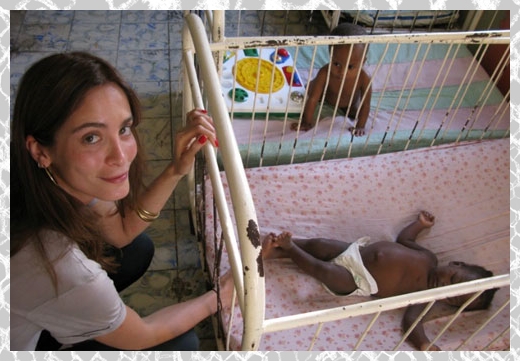
Married to a Haitian and managing an orphanage-school for more than 400 children on the island, model Carolina Bittencourt will never forget January 12: while she was giving birth to her daughter, her husband’s homeland crumbled to pieces.
By Gabriel Ruas Santos Rocha
Carolina Bittencourt knew that January 12, 2010, would be a monumental day. At 2:00 PM, she entered the delivery room at Mount Sinai Hospital in New York to welcome baby Olivia, the first child from her two-year marriage to Haitian businessman Cedrick Roche. What Carolina could never have anticipated was that the day would become unforgettable for two vastly different reasons.
Back in her recovery room—awake and caught between the euphoria of holding her newborn and the physical exhaustion of childbirth—she began receiving a flood of unexpected text messages. Alongside congratulations on Olivia’s arrival, friends sent prayers for Haiti and anxiously asked if Cedrick’s family was safe. At that moment, the messages made no sense. Carolina, who had founded an NGO three years earlier that ran an orphanage-school and a dental clinic on the Caribbean island, found the sudden concern alarming. When she turned on the television, the reality hit immediately. Staring at Cedrick in disbelief, their joy gave way to horror as news broadcasts aired images of widespread devastation and chaos.
Port-au-Prince was in ruins, thousands of lives had been lost, and the couple faced the agonizing uncertainty of not knowing their family’s fate. As journalists struggled to report the full scope of the disaster, Cedrick placed call after call to his parents with no success until a connection finally went through to an uncle. The relief was overwhelming, and the news grew even better: Cedrick’s parents were also alive and unharmed. Cedrick, whose family owns a supermarket chain and lives in an area with sturdier infrastructure, could breathe only a partial sigh of relief. The couple’s primary concern immediately turned to the safety of the children at the orphanage and the condition of their NGO, Lakay Pam. Cedrick made hundreds of calls without answers. The fragile phone line dropped, and night fell with communication entirely cut off.
The bedroom television remained on continuously. Olivia seemed to mirror her parents’ tension, sleeping in only brief stretches. While Carolina remained grateful for her daughter’s safe delivery, the thought of countless Haitian children—including the 400 under her care—injured, displaced, or worse, weighed heavily on her. The Brazilian model had built a deep bond with the children at the facility, watching many arrive at an early age and witnessing their development firsthand while maintaining close relationships with their families.
The following morning, phone service returned briefly. Cedrick reached his family again, though they had no updates on the orphanage, as streets remained blocked by debris and panic. While the family’s supermarkets were partially damaged, Cedrick’s brother-in-law survived with minor injuries after being trapped beneath the wreckage. Shortly after this brief update, the line went dead again.
By this point, international news outlets were broadcasting live coverage to provide clearer assessments of the damage. With New York home to the largest Haitian diaspora in the United States, humanitarian aid initiatives mobilized swiftly around the world. Witnessing the global response brought a measure of comfort to Carolina and Cedrick. Even knowing that logistical hurdles would delay relief supplies, they felt that Haiti might finally receive the sustained global support it had long required. Located just three hours by plane from Miami and New York, the country had endured decades of extreme poverty, rolling blackouts, and limited access to clean water, alongside significant public health challenges. Grassroots NGOs working on the ground had long operated under complex conditions, contending with bureaucratic delays and instability.
Exhausted from sleeplessness and worry, Carolina and Cedrick resolved to take immediate action. From the hospital room, between caring for Olivia and resting, Carolina began reaching out to colleagues across the fashion industry. The response was immediate: top models Raquel Zimmermann, Coco Rocha, Natasha Poly, and Alessandra Ambrosio offered support right away, joined by designers Narciso Rodriguez and Richard Chai.
This marked the start of an extensive recovery effort. For Carolina, the mission became an opportunity to support meaningful, lasting rebuilding: restoring Lakay Pam’s headquarters, reconnecting with the children and their families, and reviving the dental clinic originally established with the Brazilian organization Turma do Bem. Ongoing projects took on renewed urgency. On February 12—when Olivia turned one month old—the couple hosted a benefit in New York’s Meatpacking District, bringing together leading figures across fashion to support relief operations in Haiti. Carolina hopes that her daughter’s arrival will parallel a renewed chapter of resilience and recovery for the country.
Originally featured as a cover story in Vogue Brazil #379 – March 2010.

