Top Agent

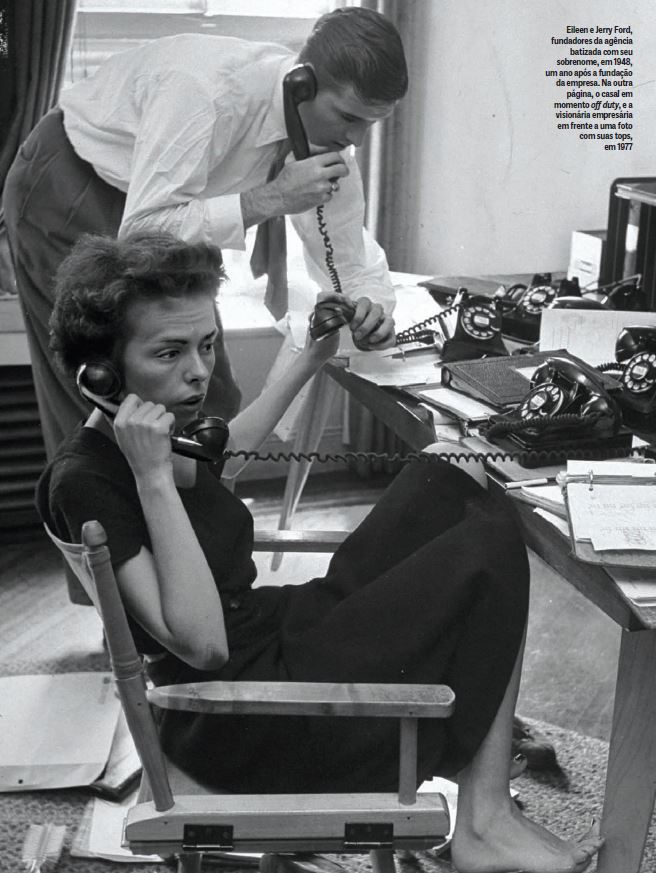
The visionary Eileen Ford created in 1947 the concept of the modeling agency as we know it today. Tough and workaholic, the businesswoman, who passed away this past July at the age of 92, had only one regret: not signing Grace Kelly to her agency

By Gabriel Ruas Santos Rocha

The designer Yves Saint Laurent once said that “a good model can advance fashion ten years”, but a good modeling agency and managing skills have proven to advance an entire industry. Eileen Ford, who passed away, last July at the height of well lived 92 years was the sole creator of the modern day modeling agency. Mrs. Ford’s modeling agency went on to become the biggest modeling agency in the world, representing a roster populated by some of the most famous and recognizable women in the world. Cheryl Tiegs, Christy Turlington, Jerry Hall, Verushka, Naomi Campbell, Twiggy and Christie Brinkley were only a few in that lucky list.

It all began when Eileen was Pregnant and unable to find someone who would hire her. Mrs. Ford began assisting some of her friends who were models in the mid-40’s as their secretary. Eileen organized their schedules, negotiated jobs, chased after payments and by word of mouth became an agency, at a time when modeling agencies weren’t really established. Modeling wasn’t viewed as a serious profession and Eileen Ford helped evolve modeling from a mostly part-time, poorly paid hobby into one of the world’s most glamorous occupations, turning girls next door into multimillionaire celebrity supermodels. When Eileen’s husband, Jerry Ford, returned from war and resume his studies for business at Columbia University he found great potential in what his wife was doing. Jerry cemented the business and took care of the business while Eileen managed and scouted the girls. They were a perfect fit and became an instant hit.

In their first year, the Ford’s accumulated over 250 thousand dollars and by 1966 Forbes reported they were making an average of 100 thousand dollars per week, becoming the most successful agency in the business. That did not happen by chance. Ford had introduced the voucher system, which would guarantee models their earnings even if the client hadn’t yet paid the agency. Models at that time were paid by the hour, at very low fees. Eileen argued that models should earn their paychecks per day, type of work and according to the extent their images were exploited by the clients. This new practice was the page turner, influencing the way advertising works and remains today the lifeline of the business.

The typical Ford model was tall, thin and predominantly blond, with wide-set eyes, beautiful eyebrows and long neck. Very rarely her girls were shorter than 5’7 a cut-off height which luckily included the gap-toothed Lauren Hutton. Ms. Hutton became the highest paid model in the 70’s and alongside Evelyn Kuhn, one of the first two Revlon contract models. In a recent interview with Eileen, she corrected me: “That was not the first contract”! She was firm, and sharp, referring to Yardley’s of London. That was the first ever exclusive contract, designed by Eileen and Jerry so that a model, in this case the iconic Jean Shrimpton, would exclusively represent and endorse a specific brand, securing higher fees and better exposure.

Beauty however, was not everything. Ford demanded the highest level of professionalism from her models, putting them on strict diets and firing those with a taste for partying. Eileen famously used to say “Models are a business, and they have to treat themselves as a business.” Mrs. Ford took models in to live with her and her family, in her home and was adamant about having all the girls sit with the family at the dining table. Models were required to do chores around the house and go to bed at specific times in order to learn about professionalism and respect. “It was my first experience with a dishwasher” Monique adds, “I had no idea how much soap to use, it ended up in disaster, the foam reached all the way to the dining room” she completes with giggles. Anne Anka, then known Anne de Zogheb, recalls how disapproving Eileen was of her relationship with the singer Paul Anka, who she was married with for 38 years. “She thought, ‘Show business, that’s trouble’, but I think she eventually came around.”

Eileen’s hospitality was the first sign of model housing, now largely established for every agency across the world. At the time however, it was a way for her to keep a closer watch at her girls and make sure they were behaving according to good moral standards and staying away from harms way. Supermodel Renee Simonsen recalls “They took me in and made me a part of their family, and I know that the protection of Eileen saved me a lot of [bad] experiences in the modeling business, she was a tough lady with high moral standards, but she had a big heart”.

Ford reigned the industry alone until the late seventies, when the ‘model wars’ ensued with the insurgence of John Casablanca’s Elite and Wilhelmina Models. These were some of the agencies that came on strong, attacking and luring away some of Ford’s top talents. Eileen would not stand and let her business be taken from her. To her defectors, Mrs. Ford would send copies of the bible with passages about Judas highlighted in red.

It was again, time to innovate. She opened offices across the globe, from Europe to Brazil and soon enough established the first worldwide model search. The ‘Ford Supermodel of the World’, became the largest scouting network and modeling competition, making Ford the biggest agency on the planet.

With that, the supermodel factor was born and many successful models owe their careers to this model search. Victoria’s Secret Angels Adriana Lima and Chanel Iman as well as the actress Malin Ackerman and top models Elsa Benitez and Liliane Ferrarezi are probably the most recognizable names from that group. This vast scouting network helped Ford to branch out and establish a more global look.

Mrs. Ford might have been tough as nails, as some will say, but all who worked for her share their memories with fondness. “They were so nice and decent, like a big family; we shared our good times and also went through difficult times together” explains Patty Sicular, who worked for the Fords as an agent for over three decades and currently runs the Legends board at Trump Models, current agency to most of those iconic Ford models who left with Patty after Eileen departed the business for retirement in 1995. “If you worked with Eileen and Jerry you were on your toes, and as hard as we worked, Eileen and Jerry always worked harder, they were in the office when we arrived and still there when we left.” Concludes Mrs. Sicular. “Eileen wielded her power towards the electrician that came in to repair a light switch to the CEO of General Motors” recalls Ms. Beverly Johnson, “I had never seen a woman with that much power and it was intoxicating to my young mind. Eileen is responsible for shaping me into the celebrated fashion model and savvy business woman I am today.” Concludes Ms. Johnson, the first African American model to appear on the cover of American Vogue, in 1974, and today owner of a hair care line.

Ms. Johnson’s first interview with Eileen did not go well. “’Too fat’, those were the two first words Mrs. Ford said to me.” But Ms. Johnson was determined to join the most powerful modeling agency of the time and came back two weeks later, this time she was in. Eileen however didn’t always made the right choices. Among names that were rejected throughout the years, Marisa Berenson and Grace Kelly stand out – she admitted publicly later that not signing the future Princess of Monaco was her biggest professional failure.

This article appeared originally in Vogue Brazil, September 2014
They Rocked the Ball

Vogue follows two top models to the Met Gala 2010 and reveals the backstage preparations for the party—the biggest night in the fashion industry.

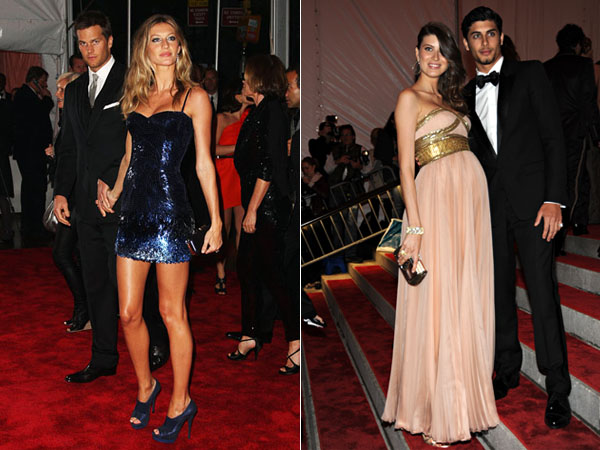
In the two weeks leading up to the Costume Institute Gala—also known simply as the Met Gala to insiders—New York sizzles. The benefit, held annually at The Metropolitan Museum of Art, is co-chaired by American Vogue and is to the fashion world what the Oscars are to Hollywood, especially when it comes to the red carpet. The difference is that instead of actors and directors, the main focus here is on models and designers. Securing an invitation is no small feat: you are either exceptionally influential and invited as a guest at someone’s table, or you have deep pockets. The coveted individual tickets average around $7,500, while tables cost up to $250,000, with all proceeds supporting the museum’s Costume Institute. It is an investment, considering multimillion-dollar deals are brokered at the party, and the who’s who of fashion is in attendance. Everyone wants their turn on the most scrutinized red carpet in the world.

As an agent in the women’s board at Elite Model Management in New York, representing clients such as Alessandra Ambrosio and Charlotte Kemp Muhl (who is engaged to musician Sean Lennon), I witness this high-stakes fashion frenzy up close. The models invited by designers to sit at their tables have the distinct advantage: they are dressed by the fashion houses directly and do not pay for tickets. Leading up to the event, the agency’s phones ring off the hook with inquiries from designers, hairstylists, and makeup artists eager to collaborate. Once the designer pairings are established, creative teams assemble for styling briefings centered around the annual theme. This year’s exhibition, American Woman: Fashioning a National Identity, runs through August 15. Looks are selected and tailored around the model’s silhouette, current color palettes, and upcoming runway trends. The priority is not merely avant-garde experimentation, but effortless elegance.

A week before the gala, countless emails circulate with lookbooks, jewelry options, and makeup references. After extensive deliberations, the selection narrows to roughly ten gowns and twenty pairs of shoes. By the weekend before Monday’s event, the models touch down in New York—often straight from back-to-back international shoots, running on minimal sleep, with immediate fittings on the schedule. By Saturday morning, the choice is down to the final three looks. Inevitably, the favorite might require significant alterations, much like last year with Michelle Alves, who was pregnant at the time and required emergency tailoring across a Sunday—a logistical challenge even in Manhattan. Once the final gown is locked, attention turns to fine jewelry and accessories.

On the day of the event, the pressure peaks. Publicists manage the minute-by-minute schedule: hair and makeup call times, private car dispatch, and exact arrival windows at the Metropolitan Museum steps to ensure maximum press coverage. Red-carpet positioning is crucial. Arriving alongside an A-list Hollywood couple can dilute press attention, whereas posing alongside fellow industry figures and designers generates high-value syndicated imagery for global publications. Beyond the styling, presence matters: every smile, gesture, and arrival photo is recorded and distributed internationally within minutes. The right dress paired with poise creates instant buzz, and landing on the best-dressed lists almost certainly guarantees a return invitation next year.

Article originally featured in Vogue Brazil, June 2010.

Begin Again

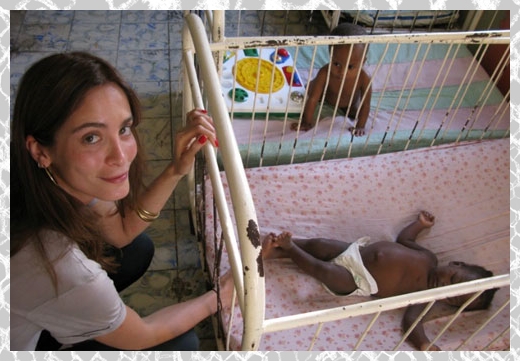
Married to a Haitian and managing an orphanage-school for more than 400 children on the island, model Carolina Bittencourt will never forget January 12: while she was giving birth to her daughter, her husband’s homeland crumbled to pieces.

By Gabriel Ruas Santos Rocha

Carolina Bittencourt knew that January 12, 2010, would be a monumental day. At 2:00 PM, she entered the delivery room at Mount Sinai Hospital in New York to welcome baby Olivia, the first child from her two-year marriage to Haitian businessman Cedrick Roche. What Carolina could never have anticipated was that the day would become unforgettable for two vastly different reasons.

Back in her recovery room—awake and caught between the euphoria of holding her newborn and the physical exhaustion of childbirth—she began receiving a flood of unexpected text messages. Alongside congratulations on Olivia’s arrival, friends sent prayers for Haiti and anxiously asked if Cedrick’s family was safe. At that moment, the messages made no sense. Carolina, who had founded an NGO three years earlier that ran an orphanage-school and a dental clinic on the Caribbean island, found the sudden concern alarming. When she turned on the television, the reality hit immediately. Staring at Cedrick in disbelief, their joy gave way to horror as news broadcasts aired images of widespread devastation and chaos.

Port-au-Prince was in ruins, thousands of lives had been lost, and the couple faced the agonizing uncertainty of not knowing their family’s fate. As journalists struggled to report the full scope of the disaster, Cedrick placed call after call to his parents with no success until a connection finally went through to an uncle. The relief was overwhelming, and the news grew even better: Cedrick’s parents were also alive and unharmed. Cedrick, whose family owns a supermarket chain and lives in an area with sturdier infrastructure, could breathe only a partial sigh of relief. The couple’s primary concern immediately turned to the safety of the children at the orphanage and the condition of their NGO, Lakay Pam. Cedrick made hundreds of calls without answers. The fragile phone line dropped, and night fell with communication entirely cut off.

The bedroom television remained on continuously. Olivia seemed to mirror her parents’ tension, sleeping in only brief stretches. While Carolina remained grateful for her daughter’s safe delivery, the thought of countless Haitian children—including the 400 under her care—injured, displaced, or worse, weighed heavily on her. The Brazilian model had built a deep bond with the children at the facility, watching many arrive at an early age and witnessing their development firsthand while maintaining close relationships with their families.

The following morning, phone service returned briefly. Cedrick reached his family again, though they had no updates on the orphanage, as streets remained blocked by debris and panic. While the family’s supermarkets were partially damaged, Cedrick’s brother-in-law survived with minor injuries after being trapped beneath the wreckage. Shortly after this brief update, the line went dead again.

By this point, international news outlets were broadcasting live coverage to provide clearer assessments of the damage. With New York home to the largest Haitian diaspora in the United States, humanitarian aid initiatives mobilized swiftly around the world. Witnessing the global response brought a measure of comfort to Carolina and Cedrick. Even knowing that logistical hurdles would delay relief supplies, they felt that Haiti might finally receive the sustained global support it had long required. Located just three hours by plane from Miami and New York, the country had endured decades of extreme poverty, rolling blackouts, and limited access to clean water, alongside significant public health challenges. Grassroots NGOs working on the ground had long operated under complex conditions, contending with bureaucratic delays and instability.

Exhausted from sleeplessness and worry, Carolina and Cedrick resolved to take immediate action. From the hospital room, between caring for Olivia and resting, Carolina began reaching out to colleagues across the fashion industry. The response was immediate: top models Raquel Zimmermann, Coco Rocha, Natasha Poly, and Alessandra Ambrosio offered support right away, joined by designers Narciso Rodriguez and Richard Chai.

This marked the start of an extensive recovery effort. For Carolina, the mission became an opportunity to support meaningful, lasting rebuilding: restoring Lakay Pam’s headquarters, reconnecting with the children and their families, and reviving the dental clinic originally established with the Brazilian organization Turma do Bem. Ongoing projects took on renewed urgency. On February 12—when Olivia turned one month old—the couple hosted a benefit in New York’s Meatpacking District, bringing together leading figures across fashion to support relief operations in Haiti. Carolina hopes that her daughter’s arrival will parallel a renewed chapter of resilience and recovery for the country.

Originally featured as a cover story in Vogue Brazil #379 – March 2010.