Meet Me On The Dance Floor

Madonna is not having a “comeback.” She hasn’t gone anywhere. Calling it a comeback is just the music world’s favorite backhanded compliment—a polite little way to write off a legend while pretending to cheer. Sure, maybe the Billboard charts haven’t been in a perpetual chokehold like they were in 1989, but the woman never clocked out. She has spent four decades relentlessly experimenting, testing sonic boundaries, and challenging comfort zones. If her recent eras didn’t resonate with you, that’s fine; they resonated with millions of others.

Nothing about Madonna has fundamentally changed. She is still unapologetic, still fighting for the marginalized, and still reinventing her sound, her aesthetic, and her zip code on a whim. She didn’t disappear—you just got distracted. Or maybe, let’s be honest, you got older and stopped going out. If your feet still touch a dance floor, you know she never left the building. The crown hasn’t been passed down because nobody else can actually carry the weight. Before the 1980s, the blueprint for modern pop dominance simply didn’t exist. Enter Madonna, Michael Jackson, Prince, and George Michael—suddenly, the genre was born. She isn’t just royalty; she is the Mother Superior of pop culture.

What we are witnessing right now isn’t a miraculous resurrection; it’s proof that genius has no expiration date—and that guerrilla marketing is an art form. Coming off a massive global tour that everyone prematurely assumed was her victory lap, she pulled off the ultimate setup. Rumors of new music ignited the internet, and then she went wild: dropping unannounced into sweaty underground clubs in New York, crashing fashion weeks in Paris, popping up at Coachella, and spinning new tracks directly for the night owls getting into the groove, and feeling free. No bloated corporate rollout, just pure bass and sweat. That infectious energy took over, giving us millions of sales, three monster hits, and a summer that belongs entirely to her.

Even my straight friends have surrendered to this record, which should tell you everything. It gives grown adults permission to cut loose again while giving the kids a masterclass in fearless production. Much like Ray of Light dragged electronica into the mainstream spotlight, this record cuts deep because it’s candid, emotionally charged, and unapologetically raw. It captures that same lightning in a bottle as Erotica, holding up a mirror to human desire without flinching.

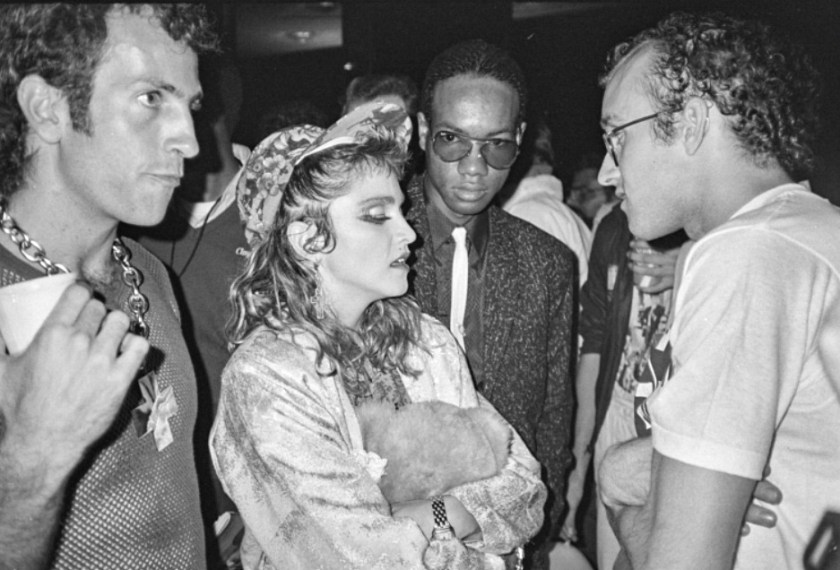
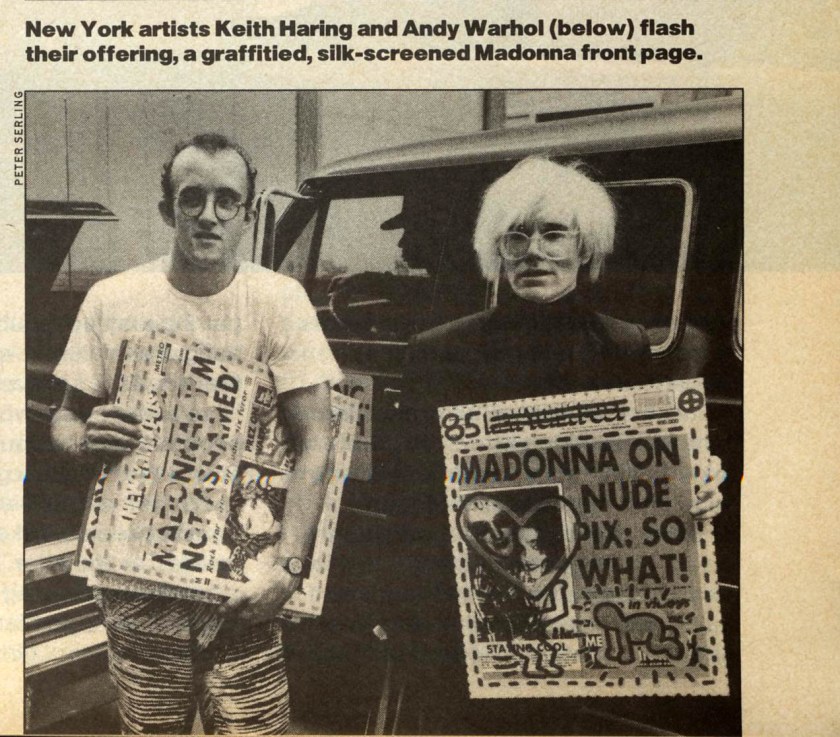
Look past the fan loyalty, and the historical receipts speak for themselves. Long before it was safe or commercially viable, Madonna took direct hits from the Vatican, politicians, and the media so future generations of women wouldn’t have to walk on eggshells. She handed out safe-sex pamphlets during the height of the AIDS epidemic when institutions looked away. She put ball culture center stage with “Vogue,” gave Frida Kahlo’s legacy global gallery recognition, and casually ran with Basquiat, Haring, and Warhol simply because she recognized great art before anyone else caught on.

Without Madonna kicking down the door, you don’t get Shania Twain owning her sexuality, and you certainly don’t get Taylor Swift commanding global stadiums. Every cultural domino falls backward to her feet. Love her or loathe her, one fact remains undeniable: Madonna is a force of nature.

Vogue Spain, 2017

ANTI Management, the agency that defends all, but ALL, models

BY MARÍA CONTRERAS

JULY 10, 2017

Booker Gabriel Ruas Santos Rocha is convinced that there are many things to improve in the fashion industry, and he doesn’t bite his tongue when it comes to listing them

The Brazilian Gabriel Ruas Santos Rocha is a veteran in the world of modeling agencies; he has been a booker at Marilyn, Ford, Elite and Trump Models, and since last March he is CEO of his own agency, ANTI Management, with which he has set out to improve the working conditions of his clients. Santos Rocha believes that the treatment of models has worsened alarmingly in recent years, and the origin of the problem is very clear: “When I started in this business the big agencies still belonged to families or individuals: Marilyn was directed by Marilyn, Ford was directed by the Fords, Beatrice had Beatrice… By crossing the doors of each agency you knew what their values were, the type of work they did and, most importantly, you knew who directed the show. But when they began to withdraw, most of the agencies were sold, and now most of our industry is managed by large faceless corporations in a way that would never have been accepted then.” And what exactly has changed? “Before we promoted careers and supervised everything our models did, from clothing lines to movies. That strengthened the agencies, and generated deeper relationships and careers longer. Some models took 2 to 5 years to get an important contract or make a name for themselves, but we never left them aside after the first season. But today models are often treated as if they were disposable dishes, and I totally disagree with that. I think that by returning the business to its roots, but in an updated and fresh way, we will recover some of the allure that this industry had and strengthen it.”

Your agency’s motto, “our models are our customers,” is a good indicator of the code of ethics that will govern ANTI Management. “The trend now is the power booker. Most agencies today care more about the clients of the models than about them. They are willing to do whatever it takes to take advantage of the money, and that is why – or because of their fears, or their ego… – they often make bad decisions on behalf of their models. Every day a supplier lowers their rates a little more, or adds hours of work without paying extra, or removes breakfast from the set; they do what is necessary to save, but what they do not understand, and what the agencies that bow to it do not understand either, is that this short-sighted vision is killing our industry, and not precisely little by little, but with enough speed. In addition, there is a level of pressure on the agents that escapes reason. If the numbers generated by the team do not meet the forecasts, there are consequences within the agency, so these have tripled the number of models they represent and are operating basically with a production chain mentality. But many of my colleagues forget that our original clients are the models; they forget that it is a privilege and an honor to represent any of these girls; they forget that they have placed their hopes, their dreams and their trust in us, and they also forget that they are the ones who pay our salaries, which is a very important lesson that I learned in Marilyn.”

“Anything you can imagine has happened in this industry,”

Gabriel Ruas Santos Rocha

Over the years, Gabriel has witnessed abuses and injustices towards models, but prefers not to go into details. “Anything you can imagine has happened in this industry,” he limits himself to saying. His last stage in Trump Model Managament was especially hectic; several media echoed an alleged boycott against the agency in retaliation for Trump’s policies and statements as president, and numerous employees and models – Gabriel among them – left the ship. How much truth is there in what is told? “As they say, I refer to the tests,” he points out. What happened to that agency was truly unfortunate. But the past is there, we have all gone ahead and surely in time we will manage to get something positive out of that time. Although it wasn’t really easy at all.”

Headquartered in New York, ANTI already has more than 70 models – many of them, from Trump Models – including Shirley Mallmann or Milana Keller. The agency will not divide them by categories (that is, there will not be the typical tabs of Man, Woman, New Faces, Legends …) to multiply their possibilities and not limit their potential: “For the moment I call it the Anti-Division, but the name could change. I don’t believe in labels, and I think that no model should have to conform to a ‘table’ or a ‘division.‘” The agency also defends an inclusive philosophy that embraces diversity: “Among our models there are gays, lesbians, trans, blacks, Chinese, Jews or Christians. Our job is to represent the talent we believe in with our best abilities, and that begins by respecting who each of them is individually. If we erase labels, we eliminate stigmas, and we are able to see people for who they really are and, consequently, to do a much better job in promoting them.”

On his personal Instagram account, Santos Rocha defines himself as a “writer, model booker and shit shaker.” What else are you determined to shake? “Everything. Believe me, no one can stop me. I always say that all I have is a huge mouth and no shame. And it’s the truth.” We just checked it.

Link to the article here.

Top Agent

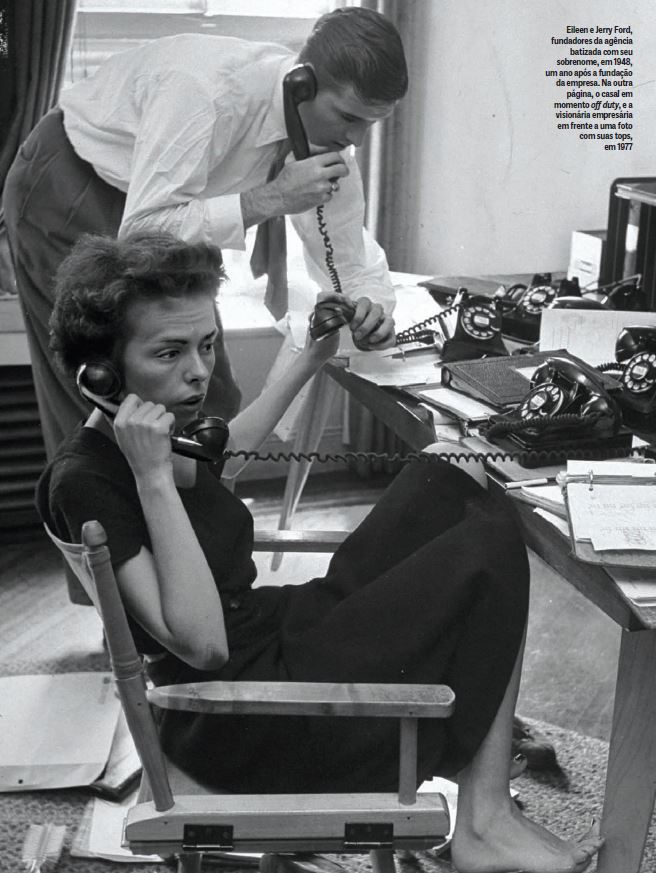
The visionary Eileen Ford created in 1947 the concept of the modeling agency as we know it today. Tough and workaholic, the businesswoman, who passed away this past July at the age of 92, had only one regret: not signing Grace Kelly to her agency

By Gabriel Ruas Santos Rocha

The designer Yves Saint Laurent once said that “a good model can advance fashion ten years”, but a good modeling agency and managing skills have proven to advance an entire industry. Eileen Ford, who passed away, last July at the height of well lived 92 years was the sole creator of the modern day modeling agency. Mrs. Ford’s modeling agency went on to become the biggest modeling agency in the world, representing a roster populated by some of the most famous and recognizable women in the world. Cheryl Tiegs, Christy Turlington, Jerry Hall, Verushka, Naomi Campbell, Twiggy and Christie Brinkley were only a few in that lucky list.

It all began when Eileen was Pregnant and unable to find someone who would hire her. Mrs. Ford began assisting some of her friends who were models in the mid-40’s as their secretary. Eileen organized their schedules, negotiated jobs, chased after payments and by word of mouth became an agency, at a time when modeling agencies weren’t really established. Modeling wasn’t viewed as a serious profession and Eileen Ford helped evolve modeling from a mostly part-time, poorly paid hobby into one of the world’s most glamorous occupations, turning girls next door into multimillionaire celebrity supermodels. When Eileen’s husband, Jerry Ford, returned from war and resume his studies for business at Columbia University he found great potential in what his wife was doing. Jerry cemented the business and took care of the business while Eileen managed and scouted the girls. They were a perfect fit and became an instant hit.

In their first year, the Ford’s accumulated over 250 thousand dollars and by 1966 Forbes reported they were making an average of 100 thousand dollars per week, becoming the most successful agency in the business. That did not happen by chance. Ford had introduced the voucher system, which would guarantee models their earnings even if the client hadn’t yet paid the agency. Models at that time were paid by the hour, at very low fees. Eileen argued that models should earn their paychecks per day, type of work and according to the extent their images were exploited by the clients. This new practice was the page turner, influencing the way advertising works and remains today the lifeline of the business.

The typical Ford model was tall, thin and predominantly blond, with wide-set eyes, beautiful eyebrows and long neck. Very rarely her girls were shorter than 5’7 a cut-off height which luckily included the gap-toothed Lauren Hutton. Ms. Hutton became the highest paid model in the 70’s and alongside Evelyn Kuhn, one of the first two Revlon contract models. In a recent interview with Eileen, she corrected me: “That was not the first contract”! She was firm, and sharp, referring to Yardley’s of London. That was the first ever exclusive contract, designed by Eileen and Jerry so that a model, in this case the iconic Jean Shrimpton, would exclusively represent and endorse a specific brand, securing higher fees and better exposure.

Beauty however, was not everything. Ford demanded the highest level of professionalism from her models, putting them on strict diets and firing those with a taste for partying. Eileen famously used to say “Models are a business, and they have to treat themselves as a business.” Mrs. Ford took models in to live with her and her family, in her home and was adamant about having all the girls sit with the family at the dining table. Models were required to do chores around the house and go to bed at specific times in order to learn about professionalism and respect. “It was my first experience with a dishwasher” Monique adds, “I had no idea how much soap to use, it ended up in disaster, the foam reached all the way to the dining room” she completes with giggles. Anne Anka, then known Anne de Zogheb, recalls how disapproving Eileen was of her relationship with the singer Paul Anka, who she was married with for 38 years. “She thought, ‘Show business, that’s trouble’, but I think she eventually came around.”

Eileen’s hospitality was the first sign of model housing, now largely established for every agency across the world. At the time however, it was a way for her to keep a closer watch at her girls and make sure they were behaving according to good moral standards and staying away from harms way. Supermodel Renee Simonsen recalls “They took me in and made me a part of their family, and I know that the protection of Eileen saved me a lot of [bad] experiences in the modeling business, she was a tough lady with high moral standards, but she had a big heart”.

Ford reigned the industry alone until the late seventies, when the ‘model wars’ ensued with the insurgence of John Casablanca’s Elite and Wilhelmina Models. These were some of the agencies that came on strong, attacking and luring away some of Ford’s top talents. Eileen would not stand and let her business be taken from her. To her defectors, Mrs. Ford would send copies of the bible with passages about Judas highlighted in red.

It was again, time to innovate. She opened offices across the globe, from Europe to Brazil and soon enough established the first worldwide model search. The ‘Ford Supermodel of the World’, became the largest scouting network and modeling competition, making Ford the biggest agency on the planet.

With that, the supermodel factor was born and many successful models owe their careers to this model search. Victoria’s Secret Angels Adriana Lima and Chanel Iman as well as the actress Malin Ackerman and top models Elsa Benitez and Liliane Ferrarezi are probably the most recognizable names from that group. This vast scouting network helped Ford to branch out and establish a more global look.

Mrs. Ford might have been tough as nails, as some will say, but all who worked for her share their memories with fondness. “They were so nice and decent, like a big family; we shared our good times and also went through difficult times together” explains Patty Sicular, who worked for the Fords as an agent for over three decades and currently runs the Legends board at Trump Models, current agency to most of those iconic Ford models who left with Patty after Eileen departed the business for retirement in 1995. “If you worked with Eileen and Jerry you were on your toes, and as hard as we worked, Eileen and Jerry always worked harder, they were in the office when we arrived and still there when we left.” Concludes Mrs. Sicular. “Eileen wielded her power towards the electrician that came in to repair a light switch to the CEO of General Motors” recalls Ms. Beverly Johnson, “I had never seen a woman with that much power and it was intoxicating to my young mind. Eileen is responsible for shaping me into the celebrated fashion model and savvy business woman I am today.” Concludes Ms. Johnson, the first African American model to appear on the cover of American Vogue, in 1974, and today owner of a hair care line.

Ms. Johnson’s first interview with Eileen did not go well. “’Too fat’, those were the two first words Mrs. Ford said to me.” But Ms. Johnson was determined to join the most powerful modeling agency of the time and came back two weeks later, this time she was in. Eileen however didn’t always made the right choices. Among names that were rejected throughout the years, Marisa Berenson and Grace Kelly stand out – she admitted publicly later that not signing the future Princess of Monaco was her biggest professional failure.

This article appeared originally in Vogue Brazil, September 2014

Designing Woman

For my last Model Musing column with Look Books I had the opportunity to speak to one of China’s rising stars, Tian Yi. A smart girl, Tian studied fashion and hopes to take full advantage of her modeling career to eventually go into creating designs of her own.

Have a read and enjoy getting to know this lovely girl by clicking HERE or simply read below.

Model Musing: Tian Yi

  Tian Yi is one of those girls who seem to have luck on her side. She was discovered by her agency on the modeling website models.com by pictures she submitted. Since then her career path was paved with bookings for top fashion magazines and designers. 
From the established brand names, Vogue and Bazaar to the edgy i-D and 10 magazine; the editorial goes hand in hand with the work Tian has been showing on the runway. Valentino, Yves Saint Laurent, Prada and Marc by Marc Jacobs are counterbalanced by rising stars like Alexis Mabille, Phillip Lim, Dries Van Noten and Rad Hourani. Graced this season with the campaigns for Vera Wang and Sephora, Tian’s path in this industry seems to be heading in the right direction and one that will keep her in the center of what she loves the most: fashion. 
Tian has been given the opportunity to see from the inside how it is to create an entire collection and bring it to the runway, an experience that will surely be helpful since she would like to soon start focusing on launching a collection of her own.
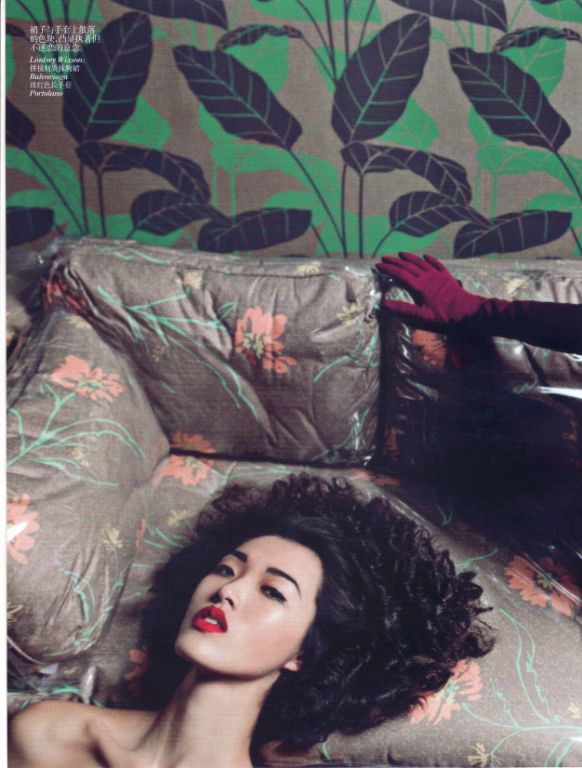
Here Tian picks her favorite modeling image and tells us why it’s so special.
Why do you love this picture?
Because I was happy to be able to work with a great team and these fabulous girls!
Who were the other models in this shoot?
It was me and five other girls: Liu Wen, Xiao Wen, Lindsey, Marie and Daria. They were so nice to me and I has really happy to be able to work with them.
Who took it? Were you excited to work with this photographer?
Inez and Vinoodh . Of course, so excited and I had the opportunity to learn a lot from this shoot!
How long was this shoot?
A day and a half, because i had to leave early on the second day to finish my school exams.
What direction did the photographer give you?
They just let me be myself and were very nice.
What was it for?
It was for the cover of Vogue China’s September issue.
What were you wearing?
I was wearing Louis Vuitton and a huge hat on the cover. I also wore a beautiful skirt for the editorial inside the magazine, I loved it!
What about this profession makes you the happiest?
The opportunity to travel around world and see a lots of different cities and also I really enjoy the opportunities to make new friends, eat some delicious food that I never tried before, that’s the most fun and cool part!
What have you learned from your career that you consider truly valuable?
I learned to be patient. Sometimes you have to wait a long time for things to happen, but you have to be patient and you will have an opportunity to show yourself. You have to be patient about your career.
What advice would you give to aspiring models?
I would tell them to just be themselves and be confident, that is it; and welcome to fashion!
Do you see yourself doing something else in the future?
I love dressing up for the big fashion houses and I love fashion; in the future I would love to be a designer for one of those great brands. 
What were some of the challenges you conquered as a model? 
I’m more confident when I talk to people, I’ve also learned to be comfortable outside of my comfort zone. I actually love when I have challenges to face.
Tian Yi is represented by Fusion Model Management

Biologic Clock

Who could ever imagine that the same model who was once featured on more than 40 covers of Cosmopolitan magazine would turn into a biologist? I certainly couldn’t, but in this week’s Model Musing I had the opportunity to chat with the stunning Fabiana Tambosi to find out what’s so attractive about genes and cells.

Follow the link for the original post or simply read below.

Model Musing: Fabiana Tambosi

Born and raised in a small town in the countryside of Brazil, Fabiana Tambosi wanted to go to school to study biology. While going to etiquette classes when she was fourteen, Fabiana was spotted by the same scouter who discovered Gisele Bundchen and Alessandra Ambrosio, so the outcome could only be one.
With a modeling career that spans more than 12 years, she has become one of the most sought after beauty models in the industry, signing contracts with every major brand in the world: L’Oreal Paris, Elizabeth Arden, Clarins, Garnier, Revlon, Almay and Clairol, to name a few.
Her Brazilian beauty caught the eye of great photography masters like Mario Testino Raphael Mazucco and Ellen Von Unwerth who have shot her for prestigious jobs such as the Victoria’s Secret catalog and campaigns for Tommy Hilfiger, Guess by Marciano and Alfred Dunhill Fragrance. Tambosi has graced the covers of top selling magazines such as Vogue, Elle and Marie Claire in several different countries, but probably one of her most remarkable achievements is having appeared on more Cosmopolitan magazine covers than any other model.
Today, Fabiana pursues her dream of becoming a biologist and proves through very hard work, that it is possible to hold the highest grades in her class and still maintain a successful and fruitful career as one of the world’s top models.
So modeling wasn’t really in your radar?
Not at all, I wanted to be a biologist, but my sisters kept telling me that it would be a great opportunity to travel the world and get to know other cultures and learn other languages as well as making money and becoming a more responsible and independent person, because I was very over protected at home.
How did your parents react when you told them about the opportunity to model?
They didn’t want me to do it at all, but my older sisters reminded them that if I were to go to school for biology I would have to leave home anyway. They gave me a year to try modeling and I started working from the moment I stepped into Sao Paulo.
What have you learned since you embraced your modeling career?
I’ve learned that I have to be in charge of my own life. You have to pick goals and work very hard towards achieving them without ever losing sight of what you want. I love the person I have become, I had financial freedom from a young age and became very responsible early on. Traveling the world has taught me a lot, but above all, it has taught me to be disciplined  because without discipline things don’t always work out. 
Is there a job you absolutely would not do?
I would not be photographed naked, I would feel weird about my family seeing it.
What advice would you give to aspiring models?
I would tell them they should know what they want, they need to be disciplined and have a lot of patience to achieve it.
What is your favorite image from your modeling career?
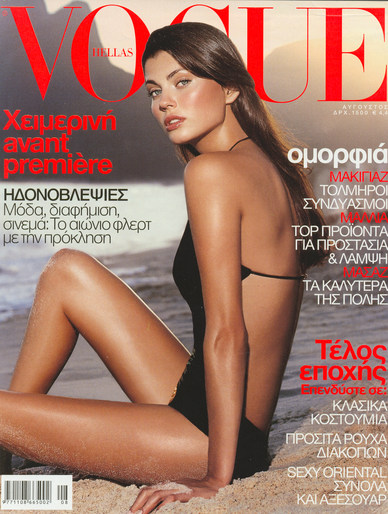
The cover of Vogue Greece, shot in Rio de Janeiro in 2001.
Why do you love it?
Because it was shot in Rio, with beautiful natural light and no retouching.
Who took it?
Thanassis Kaloyannis 
What were you thinking when the picture was taken? 
I was thinking I wanted to look gorgeous for the magazine to sell a lot! (laughs)

Fabiana is represented by Elite Model Management in the United States and Ten Model Management in Brazil.

Light Blue

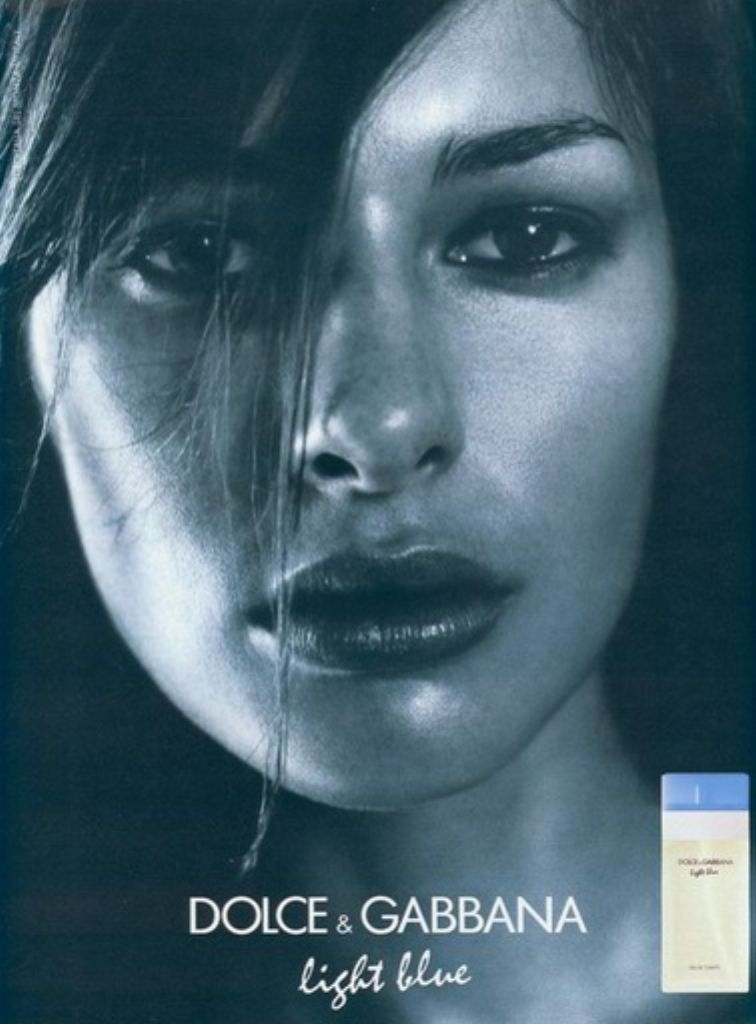
The Model Musing column this week features Daniela Lopes and her memorable ad for Dolce & Gabbana’s fragrance Light Blue, shot by none other than Mario Testino.

Have a read after the jump or below.

Model Musing: Daniela Lopes

Daniela Lopes had never imagined she could be a model. In fact, Daniela wasn’t even aware of what models did or who they were so, naturally, when she was approached on the street by the mother of a model and invited to join a modeling agency she set out to do some research on the subject. As a fourteen year old she was taken by a teenage magazine and immediately swept away by the images in those pages. That was it, a love affair of more than fifteen years with fashion had begun.
With campaigns such as Roberto Cavalli, Alberta Ferretti, D&G and L’Oreal under her belt as well as covers for the top selling magazines like Vogue, W and Elle, Daniela continues to work steadily in an industry that can be ruthless about age. With an appetite for the new, Daniela has also explored possibilities in the fields of interior design and acting, while she works on making time to fully dedicate herself to her true dream: journalism.
Here we explore some of Daniela’s modeling memories and have a look at her favorite image from a long and successful career.
Did you have support from you family?
All the way, my mother especially, she was always there, even when I was miles away, oceans apart, she was there, and the entire family celebrated every new job, a new magazine editorial or an ad.
What about this profession makes you the happiest?
The opportunities I have had so far,  I learned new languages, traveled all over the world, met different people; great people! It has been great to understand and live with different cultures and keep an open mind. It’s a huge opportunity for a girl from Brazil. I also learned a lot about taking care of myself physically and mentally; being away from home for so long can be really hard on us. The financial  side of this profession is also great as it allows me to help my family. But at the end of the day what makes me the happiest is a job well done. 
And the most disappointed?
That even though we travel to the most amazing places in the world, we are always on our own. I wish I could have a loved one with me to share the beauty and experience of those places.
What were your most remarkable experiences as a model?
I can’t pin point a specific job or anything like that, but what the modeling career has provided me. I have to say living in New York and enjoying the practical, fast paced lifestyle that I adore has been fantastic. I have also lived in Paris several years ago, and that was just remarkable, I will always have those years in my heart, forever.
What have you learned from your career that you consider truly valuable?
A sense of fashion? (laughing) Just kidding, but yes that too! But truly, I’ve learned to be humble, always.
What advice would you give to aspiring models?
Do your homework when searching for a modeling agency. Plus, really look into the business you’re getting into in order to find out what it really is like, as it is not for everyone. Can you picture yourself wearing a heavy winter coat on the most hot and humid day of the summer for a shoot? Or being away from your family for months? Being a model is not only what you see in the magazines, there is a lot of hard work behind it, and if you do want to be a model, be yourself, believe in yourself, and always remember where you came from. The world is waiting for you.
What’s your biggest challenge as a model? 
To make time for myself.
So tell me, why do you love this picture?
Because even though it was for a fragrance campaign, it doesn’t look like a fragrance ad. Also, there is just me, my face nude and clean, nothing else to embellish.
Who was the photographer?
Mario Testino was the photographer, and even though I had previously worked with him for V magazine, I was as excited and nervous as the first time.
How long did this shoot last?
The shoot was done in less then  three  hours!
What direction did the photographer give you?
“Think of your boyfriend, think that you are seducing him…”  Or something like that… (laughs)
What was it for?
A new fragrance from Dolce & Gabbana that was coming out, called “Light Blue”
What were you wearing?
My jeans and a bra from D&G. I also had a lot of Vaseline on my face and upper body and my hair kept getting caught on it all the time.
What was the theme of the shoot?
I don’t think there was a theme, I can’t remember, but even if there was one I wouldn’t have known, my English was so limited back then and Mario’s Portuguese too…
Daniela Lopes is represented by Elite Model Management.

Proud Legend

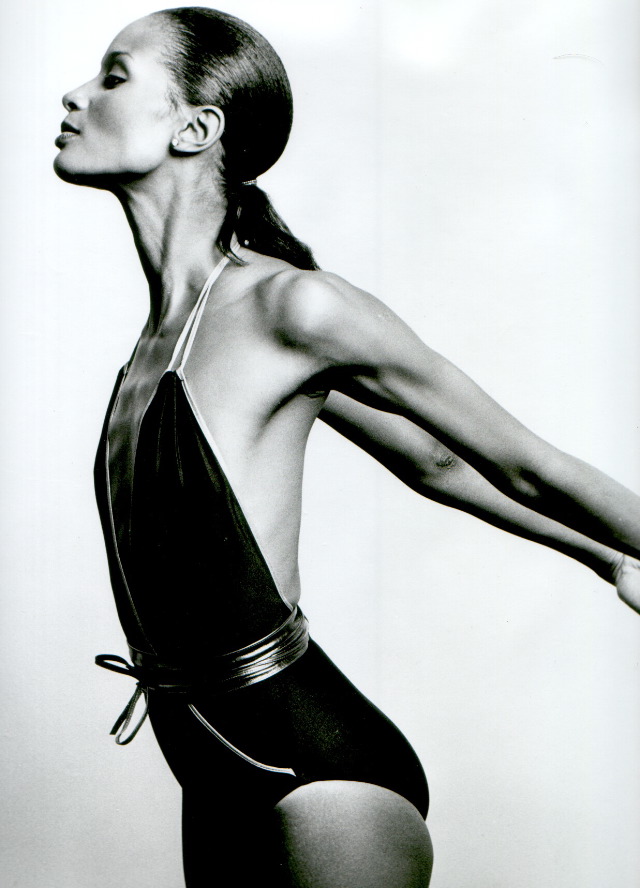
Out today on Look Books is an interview I did with the legendary supermodel Beverly Johnson.

Have a read by clicking here.

Beverly Johnson: Proud to be a Legend

Many people are iconic but only a few are legendary and not many of these legends are alive to tell their stories. Today, Beverly Johnson is more active in her professional and personal life than ever. With a career that spans more than 40 years of history, Mrs. Johnson is a shining beacon of the modeling industry.
Being the first African American woman to be featured on the cover of Vogue, Beverly was given an opportunity to make a difference in the world not only for women of color, but to women in general. Proving that a successful modeling career goes beyond good looks, Beverly became the first “modelpreneur” launching books and a hair care and beauty line in partnership with Target. 
Most recently Beverly added to her credits her very own reality TV show, entitled “Beverly’s Full House”, in which the development of her company and the relationship with her daughter Anansa are open for public viewing in what has become OWN’s second most watched show of the season.
What drove you to do this docu-series on OWN?
It was the perfect opportunity to have my daughter around me. I knew that my daughter would never consent to going into therapy or any of the other things I had been involved with all these years, and she loves reality shows, she got me into reality TV, so she was thrilled with the whole idea, and that’s why I pitched  Oprah , it was a great way to get closer to my daughter and work in our relationship. 
So, now you are working on this docu-series on your life and company, but looking back on your career you have been in film, now you are on TV, you’ve done runway, you’ve done advertising and more. What are the mediums that you worked with throughout your career that excite you the most?
Today digital media is something that really excites me, I love the podcasts, I read several blogs, I tweet, I Facebook; it’s really about sharing your feelings with people and there is a connection there. I believe that the internet has really made us able to connect with each other like we never have before.
Can you point out a moment in your career in which you look back and you say “this is it, now I have everything I could have asked for and I am happy!”?
I knew that being the first woman of color in the cover of Vogue was something that nobody would ever be able to take away from me because I was the first and Vogue was and still is such an important media, not only in fashion but in the culture of America. So I always said that if I never get to do anything else, I have achieved a huge accomplishment! And that was in the beginning of my career, so it was all uphill from there.
How did it make you feel; were you blown away? Because when you went to shoot the editorial, did you know it was going to be a cover? 
No, in those days you never knew you would be the cover until you saw yourself in the stand. But I knew it was a big deal, it still is a big deal to be on the cover of Vogue, but I didn’t know what it meant to be the first woman of color on that cover, and what it meant for people of color around the world. I wasn’t prepared for that kind of responsibility to be thrust upon me at such a young age, but it gave me a purpose and kind of a road map of where I should go and how I should honor that achievement.
How do you feel about being called a legend, are you proud of the title?
What’s not to like!? It’s an honor to be acknowledged for your passion and work in life.
Beverly Johnson is represented by Trump Legends. 
Follow Beverly Johnson on twitter at @BeverlyJohnson1 and check out her website by clicking here

American Beauty

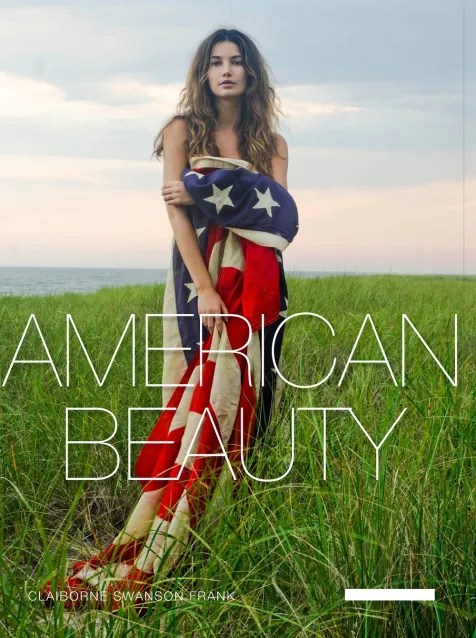
The more you gaze at Claiborne Swanson Frank’s portraits of women, the more your mind wanders: Who are these women? Where do they come from, and what were they trying to convey when they sat for these photographs? An image that might initially appear simple begins to unfold stories—some drawn from what you may know about the subject, and others sparked purely by imagination, as many of the women remain unfamiliar to the viewer. It feels akin to studying the Mona Lisa, wondering about the sitter’s era, what prompted her to pose, and what her world was truly like.

In American Beauty, Swanson Frank shares stories of accomplishment—of women who excel in their fields, pursued their visions, and embody a sense of authentic beauty that the photographer sees in women everywhere. Across the more than one hundred portraits collected in this volume, readers gain insight into the lives of these subjects and understand why they inspired the photographer. Along the way, the portraits also reveal much about the artist herself, whose passions and sensibilities are mirrored in the people she documents.

Here, Claiborne shares her thoughts on her landmark monograph, American Beauty.

In your book, there is a quote by Carrie Latet about never waking up from the American dream. Do you feel you are living the American dream—or at least what that dream represents today?

I feel very fortunate and honored. I am definitely living my dream, but I believe the American dream is fundamentally about striving for your greatest potential. Each of the women in this book, for instance, is the product of her own version of that dream, and that is the central message. I have never met two women with the exact same aspiration; they come from diverse backgrounds and have distinct stories to tell. I tell those stories through portraiture.

What were your criteria when choosing your subjects?

As an artist, I need to feel inspired. All of these women contribute to society in meaningful ways, but ultimately it came down to intuition and the creative spark I felt when learning about them.

Through the process of documenting these women, did you discover things about yourself that you were previously unaware of?

Definitely! This project began as a personal portfolio, which grew into an exhibition and eventually evolved into this book. Because I wanted it to be a genuine collaboration that captured who these women truly are, the process also helped me discover my own artistic identity—I truly became an artist through it. It has been a wonderful gift to follow my intuition and realize how much I had yet to learn about myself.

Did you anticipate from the beginning that the project would feature such a diverse group of women?

I was very intentional about celebrating diversity. The country is in a dynamic place, and over the past decade, the role and representation of women in society have evolved significantly. Looking at my own heritage, I am American with a blend of Cuban, Swedish, German, and French roots. That is why I enjoy asking people about their backgrounds—our unique mix is what makes us distinctive.

What about the men in your life? Will they have the opportunity to sit before your lens?

Probably not. I have an amazing husband and great respect for men, but my creative focus and passion lie in capturing the beauty of women. To me, women are the ultimate expression of that elegance, and that is what drives my work. Furthermore, I find that many men today are hesitant in front of the camera. That feels like a missed opportunity, as portraiture was once widely embraced by men, and I do believe every remarkable man deserves a timeless portrait.

American Beauty is published by Assouline and is available at Assouline boutiques worldwide and online.

*Originally published on Lookbooks.

Pilgrimage

West Chelsea saw a true fashion pilgrimage last night as figures like Tory Burch, Marina Muñoz, and Jamie Johnson flocked down 22nd Street, navigating around a film shoot for the TV series Damages that had brought local traffic to a standstill. Nothing deterred them from their mission: attending the opening of Annie Leibovitz’s Pilgrimage exhibition at The Pace Gallery, hosted by none other than Anna Wintour, the formidable editor-in-chief of Vogue.

Expectations for the event were high. This marks Leibovitz’s first entirely digital project, and the subjects of her photographs are not the famous faces typically seen across the pages of Vanity Fair or Vogue, but rather places and inanimate objects that hold personal resonance for the photographer and cultural significance in history.

Surrounded by images of Emily Dickinson’s last remaining dress, Elvis Presley’s television, Sigmund Freud’s couch, and Abraham Lincoln’s hat, photographer Claiborne Swanson Frank shared details about her forthcoming debut book, while “It girl” Lily Kwong laughed about sourcing an evening dress on a strict budget for an upcoming Vogue.comfeature: “Give me 200 bucks and I’ll make it work!” Coco Rocha made a brief appearance alongside husband James Conran en route to a dinner party. The couple is preparing to host a benefit next week for Lakay Pam, a nonprofit dedicated to supporting children in Haiti. Marking Rocha’s third fundraiser for the organization, the evening will feature the premiere of the documentary Letters to Haiti alongside an exhibition of photographs taken by Victoria’s Secret Angel Behati Prinsloo during their visit to the country last year.

On an evening where fine art shared the spotlight with fashion, Chuck Close’s presence served as an anchor for the night’s core purpose: celebrating art and historical memory. Close reflected on Leibovitz’s latest direction: “It’s interesting to see an artist of her caliber step out of her comfort zone to shoot inanimate objects. The result is beautiful. I’ve never been someone who takes casual photographs—I don’t think I’ve ever taken a picture on vacation. I prefer keeping those moments in memory, so seeing these personal subjects documented this way is fascinating.”

The reception unfolded seamlessly in the gallery’s warm atmosphere. Over white wine and canapés, Karen Elson, Narciso Rodriguez, and Prabal Gurung mingled alongside Catherine Newell-Hanson, Eugenia Gonzalez, and Michelle Harper. Leibovitz signed monographs for friends and guests, and right around 8:00 PM, the gallery began to empty promptly—an understated departure typical of such an exclusive crowd.

Photographs from Pilgrimage will be on view in New York at The Pace Gallery on December 1, 2, and 3, and will travel to the Smithsonian American Art Museum in Washington, D.C., running from January 20 to May 20, 2012. The accompanying book, Pilgrimage, is published by Random House and available now.

*Originally published on Lookbooks.

Eye of the Beholder

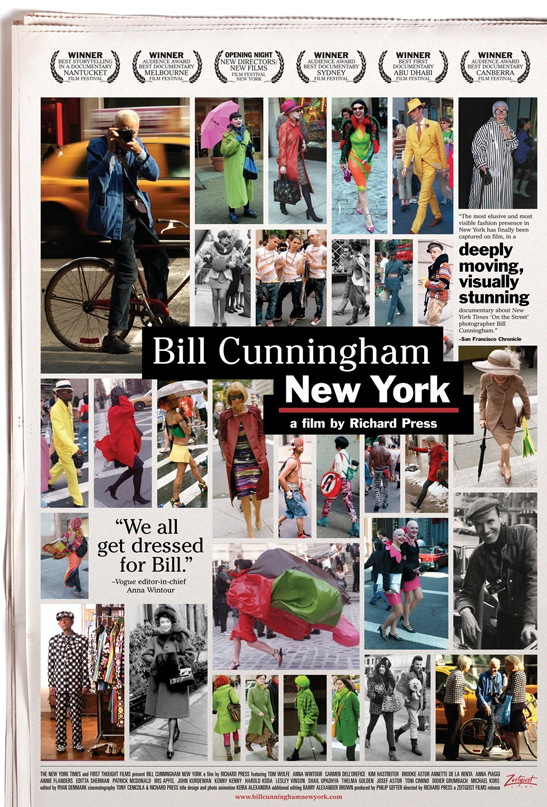
I just finished watching the glorious documentary “Bill Cunningham New York”, and it brought me to my knees. This 84 minute movie contained such a powerful and touching story that it took me to a place – which is how I like to call a certain type of feeling – where I very rarely go to, and it is my dearest and most special place to be. Only two times before had I been this moved, and when that happened I also wrote about it.

One of them, and probably the most mind-blowing one, was in early 2010 when Patti Smith delivered the book “Just Kids”, one of the most beautiful books I ever read. The minute I learned this book was coming out I had a strong feeling, I didn’t read the review, I didn’t know exactly what it was about, but I literally, got up from my chair and went to Barnes and Noble; only to find that the release date would be in another two weeks. Well, eventually I got it, and I cried copiously as I saw my love for the arts was coming alive through those pages.

With Bill Cunningham’s documentary it was my love for beauty that came tearing out through the screen, it was my love for all that is or can be beautiful in this world. Bill said it himself – “if you seek beauty you will find it” – and I could not agree more, it brought tears to my eyes as it did to his, and I felt the most extraordinary connection to this man who is a living legend and a visionary. Bill’s story, like Patti’s, is of a person who feels love through every pore of their bodies, it’s intangible, you can’t explain it, but its there like nobody’s business.

As I watched Bill Cunningham’s life, work, and passion unfolding before my eyes I couldn’t stop the tears from rolling down, what I had before me was a man absolutely in love with life, fashion and beauty, a man who didn’t need another person or loads of money in the bank to have happiness, he had it right there, and he lived a full and happy life, with no regrets and many accomplishments.

There is a certain calm and peacefulness that I get from staring at a certain picture sometimes, and I know, that this feeling is all I want to achieve. I know that sometimes, in order to get there i will have to go through some rough patches, and that’s ok, I am not looking for an entire life of fulfillment, love, passion and happiness, but what I want is as many of those “picture staring” moments as possible, I want to feel my heart beating fast and my eyes tearing up as many times as possible, I want to be able to see in other people’s lives what I aim to get for my own, it makes it all more realistic, it makes it less of a fairy tale.

I recently met some very interesting and loving people, they happened in my life like the big bang to earth, and I just accepted them, just like the universe accepted earth when it turned up. One of these marvelous people invited me to a “vision board” party, where they would build vision boards for what they wanted for their future. I could not understand the concept: cutting from magazines and gluing to a cardboard didn’t seem much to me; but I went anyway. What happened to me was an epiphany, I had all these images inside my heart and they simply appeared to me in magazines, and from there they jumped into a board, and that board looks exactly like my life! So, it was just like that, I realized that I do have a full life, and that I do have plenitude and that all I need is in front of me.

I won’t lie to you though: it would be lovely to achieve something really pivotal for mankind… or maybe even just my neighborhood; you know!? And for at least once have someone look at all the things I did and lived through and feel their heart fill up with joy and peacefulness and have their eyes fill up with tears and their hearts fill up with joy; nothing would make me happier than to be able to inspire someone, that would probably be my greatest accomplishment, and also a great compliment.

But you know what!? If that moment never happens, I am totally cool with that, because the tears that rolled down my cheeks today, watching Bill’s life in the movie, were also of recognition of all that I have achieved in my life, and I am a lucky bastard for being able to look inside myself and recognize that, and to see that I am living a full life right now, filled with love, joy and strength; and for all my blue and trying moments I can save a pitiful laughter, for they are powerless in front of my beautifully accomplished vision board of a life.

Take a look at the trailer by clicking HERE.

They Rocked the Ball

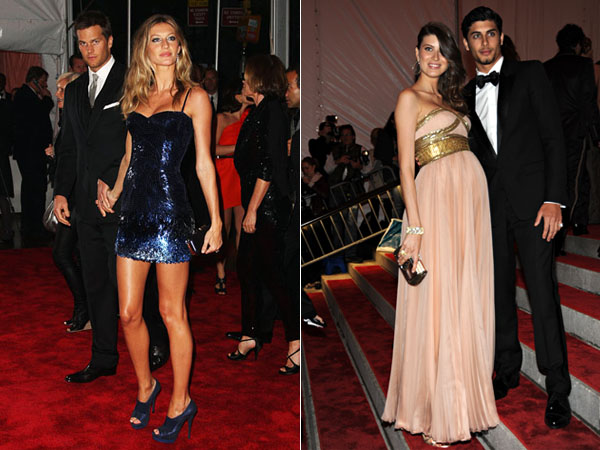
Vogue follows two top models to the Met Gala 2010 and reveals the backstage preparations for the party—the biggest night in the fashion industry.

In the two weeks leading up to the Costume Institute Gala—also known simply as the Met Gala to insiders—New York sizzles. The benefit, held annually at The Metropolitan Museum of Art, is co-chaired by American Vogue and is to the fashion world what the Oscars are to Hollywood, especially when it comes to the red carpet. The difference is that instead of actors and directors, the main focus here is on models and designers. Securing an invitation is no small feat: you are either exceptionally influential and invited as a guest at someone’s table, or you have deep pockets. The coveted individual tickets average around $7,500, while tables cost up to $250,000, with all proceeds supporting the museum’s Costume Institute. It is an investment, considering multimillion-dollar deals are brokered at the party, and the who’s who of fashion is in attendance. Everyone wants their turn on the most scrutinized red carpet in the world.

As an agent in the women’s board at Elite Model Management in New York, representing clients such as Alessandra Ambrosio and Charlotte Kemp Muhl (who is engaged to musician Sean Lennon), I witness this high-stakes fashion frenzy up close. The models invited by designers to sit at their tables have the distinct advantage: they are dressed by the fashion houses directly and do not pay for tickets. Leading up to the event, the agency’s phones ring off the hook with inquiries from designers, hairstylists, and makeup artists eager to collaborate. Once the designer pairings are established, creative teams assemble for styling briefings centered around the annual theme. This year’s exhibition, American Woman: Fashioning a National Identity, runs through August 15. Looks are selected and tailored around the model’s silhouette, current color palettes, and upcoming runway trends. The priority is not merely avant-garde experimentation, but effortless elegance.

A week before the gala, countless emails circulate with lookbooks, jewelry options, and makeup references. After extensive deliberations, the selection narrows to roughly ten gowns and twenty pairs of shoes. By the weekend before Monday’s event, the models touch down in New York—often straight from back-to-back international shoots, running on minimal sleep, with immediate fittings on the schedule. By Saturday morning, the choice is down to the final three looks. Inevitably, the favorite might require significant alterations, much like last year with Michelle Alves, who was pregnant at the time and required emergency tailoring across a Sunday—a logistical challenge even in Manhattan. Once the final gown is locked, attention turns to fine jewelry and accessories.

On the day of the event, the pressure peaks. Publicists manage the minute-by-minute schedule: hair and makeup call times, private car dispatch, and exact arrival windows at the Metropolitan Museum steps to ensure maximum press coverage. Red-carpet positioning is crucial. Arriving alongside an A-list Hollywood couple can dilute press attention, whereas posing alongside fellow industry figures and designers generates high-value syndicated imagery for global publications. Beyond the styling, presence matters: every smile, gesture, and arrival photo is recorded and distributed internationally within minutes. The right dress paired with poise creates instant buzz, and landing on the best-dressed lists almost certainly guarantees a return invitation next year.

Article originally featured in Vogue Brazil, June 2010.

Begin Again

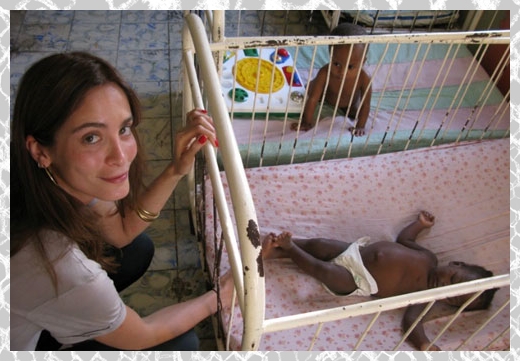
Married to a Haitian and managing an orphanage-school for more than 400 children on the island, model Carolina Bittencourt will never forget January 12: while she was giving birth to her daughter, her husband’s homeland crumbled to pieces.

By Gabriel Ruas Santos Rocha

Carolina Bittencourt knew that January 12, 2010, would be a monumental day. At 2:00 PM, she entered the delivery room at Mount Sinai Hospital in New York to welcome baby Olivia, the first child from her two-year marriage to Haitian businessman Cedrick Roche. What Carolina could never have anticipated was that the day would become unforgettable for two vastly different reasons.

Back in her recovery room—awake and caught between the euphoria of holding her newborn and the physical exhaustion of childbirth—she began receiving a flood of unexpected text messages. Alongside congratulations on Olivia’s arrival, friends sent prayers for Haiti and anxiously asked if Cedrick’s family was safe. At that moment, the messages made no sense. Carolina, who had founded an NGO three years earlier that ran an orphanage-school and a dental clinic on the Caribbean island, found the sudden concern alarming. When she turned on the television, the reality hit immediately. Staring at Cedrick in disbelief, their joy gave way to horror as news broadcasts aired images of widespread devastation and chaos.

Port-au-Prince was in ruins, thousands of lives had been lost, and the couple faced the agonizing uncertainty of not knowing their family’s fate. As journalists struggled to report the full scope of the disaster, Cedrick placed call after call to his parents with no success until a connection finally went through to an uncle. The relief was overwhelming, and the news grew even better: Cedrick’s parents were also alive and unharmed. Cedrick, whose family owns a supermarket chain and lives in an area with sturdier infrastructure, could breathe only a partial sigh of relief. The couple’s primary concern immediately turned to the safety of the children at the orphanage and the condition of their NGO, Lakay Pam. Cedrick made hundreds of calls without answers. The fragile phone line dropped, and night fell with communication entirely cut off.

The bedroom television remained on continuously. Olivia seemed to mirror her parents’ tension, sleeping in only brief stretches. While Carolina remained grateful for her daughter’s safe delivery, the thought of countless Haitian children—including the 400 under her care—injured, displaced, or worse, weighed heavily on her. The Brazilian model had built a deep bond with the children at the facility, watching many arrive at an early age and witnessing their development firsthand while maintaining close relationships with their families.

The following morning, phone service returned briefly. Cedrick reached his family again, though they had no updates on the orphanage, as streets remained blocked by debris and panic. While the family’s supermarkets were partially damaged, Cedrick’s brother-in-law survived with minor injuries after being trapped beneath the wreckage. Shortly after this brief update, the line went dead again.

By this point, international news outlets were broadcasting live coverage to provide clearer assessments of the damage. With New York home to the largest Haitian diaspora in the United States, humanitarian aid initiatives mobilized swiftly around the world. Witnessing the global response brought a measure of comfort to Carolina and Cedrick. Even knowing that logistical hurdles would delay relief supplies, they felt that Haiti might finally receive the sustained global support it had long required. Located just three hours by plane from Miami and New York, the country had endured decades of extreme poverty, rolling blackouts, and limited access to clean water, alongside significant public health challenges. Grassroots NGOs working on the ground had long operated under complex conditions, contending with bureaucratic delays and instability.

Exhausted from sleeplessness and worry, Carolina and Cedrick resolved to take immediate action. From the hospital room, between caring for Olivia and resting, Carolina began reaching out to colleagues across the fashion industry. The response was immediate: top models Raquel Zimmermann, Coco Rocha, Natasha Poly, and Alessandra Ambrosio offered support right away, joined by designers Narciso Rodriguez and Richard Chai.

This marked the start of an extensive recovery effort. For Carolina, the mission became an opportunity to support meaningful, lasting rebuilding: restoring Lakay Pam’s headquarters, reconnecting with the children and their families, and reviving the dental clinic originally established with the Brazilian organization Turma do Bem. Ongoing projects took on renewed urgency. On February 12—when Olivia turned one month old—the couple hosted a benefit in New York’s Meatpacking District, bringing together leading figures across fashion to support relief operations in Haiti. Carolina hopes that her daughter’s arrival will parallel a renewed chapter of resilience and recovery for the country.

Originally featured as a cover story in Vogue Brazil #379 – March 2010.