The Naked Truth: How Stripping Down Built My Self-Confidence


In my first foray into the world of Folsom Street East (the largest fetish block party on the East Coast), I didn’t know what to expect. A friend of mine had asked me to go with him. Upon our arrival, one of the first tents we encountered was of the Visual AIDS — an organization that utilizes art to provoke dialogue and supports HIV+ artists. A (very) handsome semi-naked man greeted us cheerfully and invited us to support the cause: “Do you want to take a Polaroid for Benjamin’s project?” I was in for the thrill of the ride and had promised myself I would let whatever happened, happen. We signed a waiver (which we didn’t read) and as we headed down the cue my friend started stripping down. Was there a memo I never got? We were in the middle of the street in broad daylight.

Being naked in public was basically my worst fear, coming to life. “Well, if you can go surfing, you can get naked in front of hundreds of people, it’ll be a nice test!” — I figured. I took my clothes off, leaving on only the skimpy jockstraps I was wearing. Onlookers immediately complimented me for keeping it classic and not branching out with one of those more recent, colorful designs. “Wow, the real sports jock, that’s hot!” Parents and their young children walked by as I laid my clothes down on the foldable table; it was all vonnegutesque.

I had never experienced such freedom. I had never felt so proud about myself, my sexuality, and my body, no matter how imperfect it is. Believe me, I was still petrified, but somehow, it clicked. I was finally able to accept my body image for what it is. I felt I could stop comparing myself to all the hot bodies I see in the gym, or the porn stars in the movies that everyone watches, but no one cares to admit. I felt like one of them, not apart from them. There was nothing so terrible about my figure. No, I don’t have a six pack, yes, there are muffin tops (perhaps from eating too many muffins), and my hair doesn’t always have the perfect wave, but that’s all me.

On my walk home, I wondered: Do these so-called “hot bodies” feel 100% confident about themselves? Or do they, too, sometimes look at people like me and find something they would like to have? Do they also compare and despair?

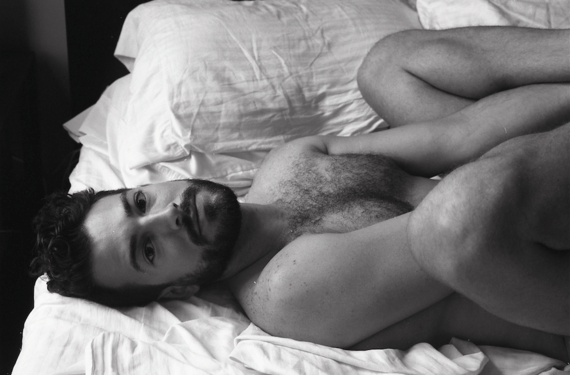
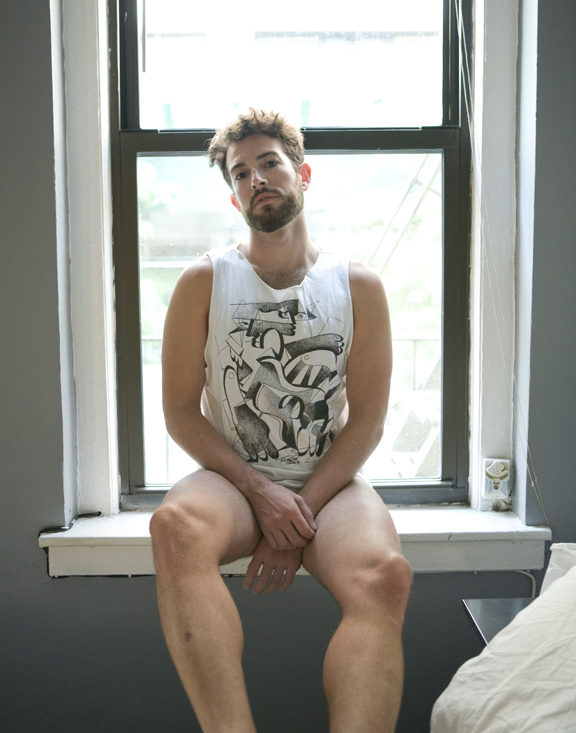
After turning down a couple of post-Folsom festivities (the polaroid shot was enough of a thrill), I could not stop thinking of how fun it was to let go of all my fears for that moment, to be (semi) naked in front of other people. I thought about Nodeth Vang, a photographer who had once asked if I would pose for him. “I love your hair and how you look in your apartment,” he said. I sent him a message; he was thrilled to hear from me. We set a date for our photoshoot. This was an opportunity to see myself as others see me. I wanted to discover how I looked on camera. No, I wanted to find out how I looked naked, on camera. I needed to know whether all my self-criticism was a reality or a fantasy.
2015-08-13-1439433981-5992932-IMG_2627.JPG

I will tell you that the photoshoot was one of the most exciting and sensual experiences I have ever had. I was in love with myself and my body for the first time in my life. I was completely comfortable naked in whatever scenario imaginable.

A few weeks passed, and I received an email from the artist from Folsom, Benjamin Fredrickson. I recalled he was a very sweet guy, talented too; “a real artist” I thought. His work had been shown in museums and art galleries, there was nothing gauche about it. Benjamin sent the polaroid from the fair to my friend and I. We were both happy with the result. The picture was adorable, not at all sleazy (as it could have been) and it absolutely captured our friendship and our relationship: two grown men who deeply cared (and perhaps had the hots) for each other. In the email, he ended with “if you would like to pose for another portrait, don’t hesitate to contact”. So I did.

Benjamin and I met for coffee one afternoon after work, we talked for over an hour and shared so many interests. He was definitely not a pervert, I felt safe. We set a date and time for our shoot, shook hands and went our separate ways. I couldn’t wait to contribute with him as an artist. I wanted to understand what different interpretations might arise from different shoots and artistic visions. Moreover, I wanted to feel that same thrill I’d felt before.

What happened for me that day was cathartic, I learned to let go of all the shame I had been carrying since my years as a fat kid, and just have fun. Benjamin put me in the most unexpected positions; I simply followed his lead. He told me to bend over, push my ass up, bend my legs over my head, stand up, sit down… I did it all! I felt complete serenity and connected with what those models must have felt when posing for Picasso. There is a connection that occurs, a fire that sparks in the eye of the artist and the way he thinks and interprets your beauty is so personal and unique to him. That is what I wanted to see in the film. At that moment I had no judgement; at that moment I was certain I would never feel ashamed of what I was doing. Whether those images ended in a magazine or an art show, it all made sense to me. At that moment I finally understood the difference between nudity for art and pornography. I know, this could unleash a long drawn-out conversation, but in my head it became simple and neither are bad or wrong — they simply are.

The last five years of my life have been all about self-acceptance and discovery, I’ve done things I never believed were possible. I learned surfing, I jumped from the top of a waterfall, I wrote a screenplay and I fell in love. Twice. Loving myself and my body, as it is, was probably my last threshold. I am happy to say I crossed it and will hopefully never go back again. First, I had to come out of the closet, then, I had to be accepted by my gay peers and live up to unrealistic beauty standards. Most of those standards however, lived in my head. Today all I want is to be real and happy. We are all different from each other, there is definitely room for everyone.

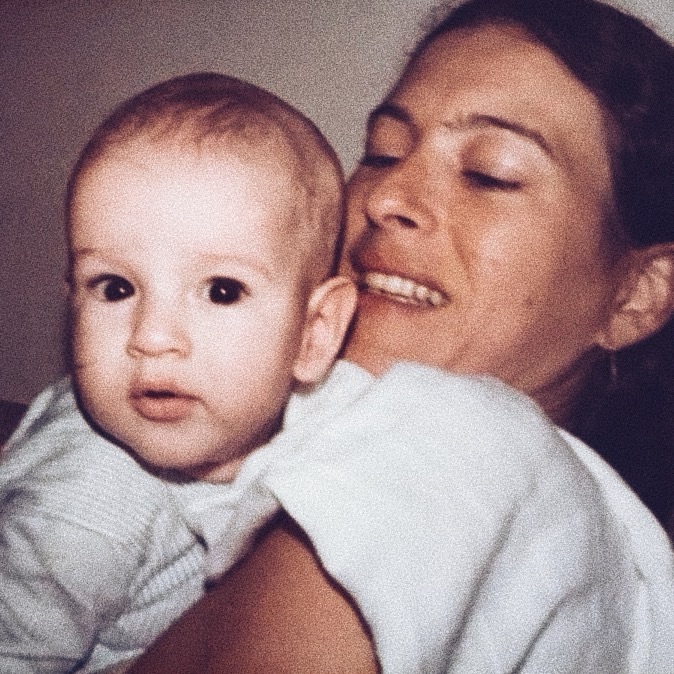
My Mother, Still.

Despite her hardships, my mother remained steadfast, dreaming of a better future for herself and her kids. She wanted love, companionship, and a life filled with happiness. However, the expectations of her children led to a never-ending cycle of unmet desires.

My mother is sick. She is thousands of miles away in a hospital bed, lying in agony and fear. My mother is probably thinking of all the things she wanted to do, but could never do or accomplish. She’s probably thinking of all the years wasted on meaningless things, on men who did not deserve her, on jobs that were unfulfilling, and drugs that were depleting. She probably wonders about what paths could’ve opened up for her had she not married so young, twice. She probably wonders what would have happened had she been more present in the life of her kids rather than the life of her boyfriends.

The many years of inward and outward destruction wore her down. They also fractured her family, creating a space that is now impossible to fill, not just for her, but for all around her.

Her health was always a challenge: multiple illnesses, disease, endless trips to the hospital, painful treatments, exploratory surgeries, heartbreaking diagnoses. She never had a break. In all this, my mother remained steadfast in knowing that she would someday conquer that pesky to-do list that she carried around in the confines of her mind.

She wanted to take water aerobics classes, she wanted to make enough money to fix her teeth and have the perfect smile, she wanted a new closet, preferably a walk-in. My mother wanted romance, companionship (this she never dared speak of out loud), to last a lifetime. She also wanted a boob job (because we sucked her breasts out of her, as she said). Mom dreamt big for herself and for us, her kids. She wanted us to be happy, she wanted us to be a family, like the ones in the movies. She provided for us to the best of her imperfect ability, and from where I stand today I can see that we were never satisfied. Not for the material things, but for what we felt she should be like. Of all her three kids, all three spent their entire lives wishing their mother was someone else. One wanted a mother who gave freely and also held tight in love and attention. One wanted a mother who was responsible and mature, like the one their friends had. The other wanted a mother who gave a shit and believed in them, and listened to them, and followed their advice. The three thought they knew better, they thought that if only she would’ve done what they wanted, she would be in a much better place. They never asked what she wanted. They never asked what was the source of her hurt, the hurt that lived so deep and quietly within her, but that by the end, grew tall and loud, like a hungry Godzilla.

I wonder, still, how my mother feels. I wonder what worries her, I wonder if she feels she lived a life she is proud of. I wonder what she thinks she could have done differently if she had the chance. I wonder what she would do if I could give her a fairy godmother to make all her wishes come true; what would she ask for?

Would it be for family reconciliation? More understanding and acceptance among siblings? Would it be for forgiveness? Would it be the closet she always dreamt of? Would it be to get some of her old friends back alive so they could catch up and hang out? Would she have asked for a romance to end all romances? Would she have asked for a trip around the world? Or maybe the chance to visit me one last time? Or make peace with my sister? Or would she ask for all the pain and suffering to end? 

I wonder about these things, I think about them in my sleep. I regret not spending more time with her, listening and keeping note of all the things she wanted me to know. I regret never asking her about her cooking, or what life was like for her before we all came along. I regret never allowing myself to be forgiving, less angry, less selfish, less entitled. I wish I had texted her more, I wish I had allowed her to rant a little longer about politics, even when the theories sometimes veered into conspiracies.

I regret never asking her about her regrets.

I have tried to change, I have tried to be better, but every step I take forward feels like a million miles and as time passes the path just grows wider and wider and longer and longer, and the thought of being close again, like when I was a little kid, running to the bodega to buy her a pack of cigarettes, the most important thing I could be asked to do in a day, it just seems impossible. I am covered in muck from all the crap I allowed myself to believe in about her and about us over the years. 

If I carry all this angst inside me, it is only my fault, not hers. It’s time to change things, while there’s still time, even though it feels like a mountain to climb just to say the words “I love you” or “I miss you”. 

How did I get here, I don’t know. I do know that while there’s still time, it’s entirely up to me to chase change and to do better. It’s the least I can do, maybe along with some prayers for her recovery; at the end of the day, she’s still my mother.

How Models Taught Me it is OK to Miss Home

One of my assignments in fourth grade was to read a book about a girl who traveled abroad on an exchange student program. This was a thoroughly engaging tale of chasing independence, dealing with a language barrier, new cultures, and experiencing feeling homesick for the first time. After the class had read the book and turned in the essays, the school arranged for the author to come in to give a lecture. The girl was probably no more than ten years our senior and had attended our school. I had a transcendental experience; it was the first time I had met someone who had actually left home and gone somewhere else. Everything started to make sense to me. Everything, but the idea of feeling homesick.

“Why would she be crying just because she wasn’t home?” I didn’t get it. To me, getting out should feel more like a blessing than a curse. There was nothing wrong with my family or my upbringing, but I felt a longing for life abroad ever since I could remember. It made no sense, and I could not explain it; I only knew how I felt.

A few years later, when I was eighteen, I finally got my first opportunity to go somewhere. I didn’t exactly make it out of Brazil, but I was moving from Porto Alegre to São Paulo, which was significant. I was the first in my family to take such a big step and one of my first friends to go anywhere, for good. Think of it as moving from Charleston to New York. It was huge!

I remember dealing with models who were very young (but not much younger than I was), most of them between 14 and 16 years old. Many girls adjusted well to life in the biggest metropolis of Brazil, pounding the pavement trying to make it in the world of modeling. A few others, however, had terrible bouts of depression and loneliness and broke down quickly. Every now and then, a girl would come into the office crying and desperate to get on the phone with her mother, just because she missed her parents or felt overwhelmed by the size of the city. I couldn’t relate to that feeling. I never cried, I never felt separated, I never felt distant. I was happy. What could be better than pursuing a career in one of the best modeling agencies in the world?

The first few months in my new city went by smoothly. I had to travel down south a couple of times to gather more of my belongings, so I still maintained a fairly close connection with my family. I didn’t have a place of my own; I was couch surfing with a friend of a friend until I figured things out. The distance from where I was staying to work was enormous. I had to take two buses, and the journey could last anywhere from 45 minutes to an hour, and that’s not counting the late nights. The neighborhood was not only dangerous, but the buses took longer than usual, as they ran more infrequently. As the challenges grew, I began to understand, to a small degree, what some of those girls might have felt too.

Many years have passed since those first months in São Paulo. I now live in New York and find myself experiencing unique layers of emotional pain. It’s been three years since the last time I was home. A series of events kept me from making the trip back from New York, including a breakup, a green card, and a new apartment. Life happened, and before I knew it, I found myself feeling anxious and irritable. I became an emotional wreck. I watch cartoons, and I cry; the Lipitor commercials come on TV, and I cry; I listen to music, and I cry; heck, even Homeland has been making me cry. I have become a running joke among the people who know me.

I send Christmas cards with corny pictures of my cat and me, I write letters, I FaceTime. I used to denounce the holidays; now I love them. These days I celebrate tradition, and all I long for is a home of my own. For this person, who always believed in being independent and in belonging to the world, it’s quite a change. Could I be homesick?

Through a very painful process of shedding layers of pride and old resentments I believe I finally got to a point where I am able to accept my roots for what they are. I can finally admit that indeed I do miss home and all the drama that can be attached to it. My life may not be in the south of Brazil, but that doesn’t mean I have to abandon it all behind.

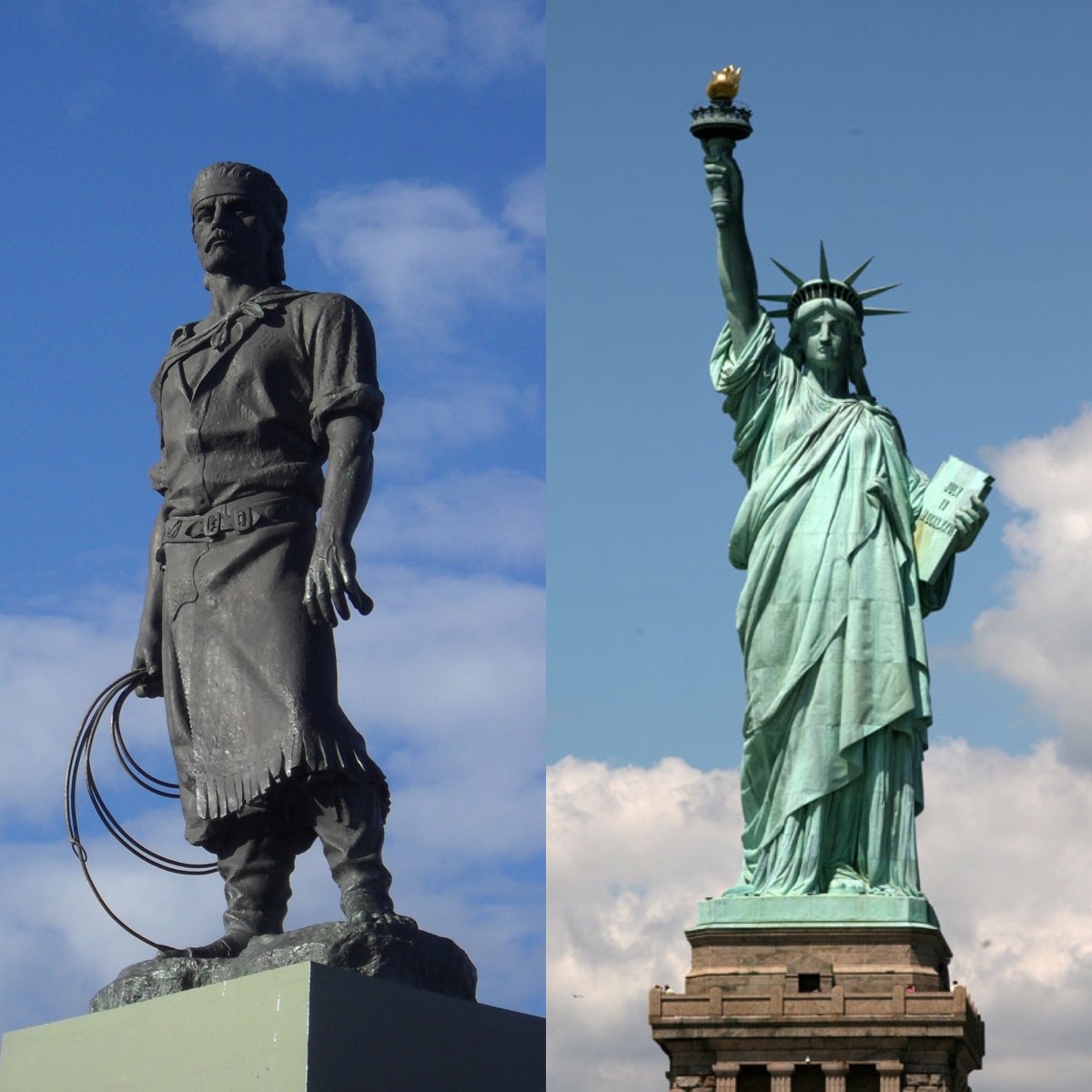
I’ve grown to admire and enjoy some of the traditions from my home country and state. I am proud of our beautiful sunsets, the tree-lined streets, the quality of life, the cultural vain that beats stronger than in most parts of that country. I celebrate the gaucho culture, our funny musical accent and even our orange (or is it red?) taxi cabs.

Being home is an opportunity to remember, recharge and reconnect. Going back gives me the chance to look at how far I’ve come and how capable I am of chasing dreams and goals that sometimes feel unsurmountable. When I’m homesick I realize that all those things were possible because of where I came from. The fact that I came from a reality so distant from the goals I was looking to achieve made me even more resilient. Home may be difficult, but it’s unlike any other place I’ve been to. Home is provincial, but it’s where some of my most special memories and connections are. As I age and experience life on life’s terms, I also realize that home is always going to be the place I turn to for reference and support, no matter where I end up.