Born into a family led by an artistic matriarch and raised by parents who shared an artistic sensibility, Nick Turner grew up surrounded by creativity and visual expression—influences that fundamentally shaped his identity. Born in Boston, Nick was raised in Maine and homeschooled until age fifteen. His next chapter took him to France, where he completed his International Baccalaureate at the International School of Toulouse.
Nick went on to study at Parsons Paris, packing his bags for the City of Light. During his time at Parsons, he navigated a debilitating period of depression, finding solace and direction through his artwork. It was during this period that he met photographer François Rousseau, who was working on the monograph Atelier, inspired by Patrick Grainville’s novel L’Atelier du peintre. Rousseau cast Nick as one of the central figures in the book, portraying the archetype of the tortured artist—a natural role for Turner at the time. Their connection developed into a close mentorship that solidified Nick’s commitment to pursuing art as a serious lifelong path.
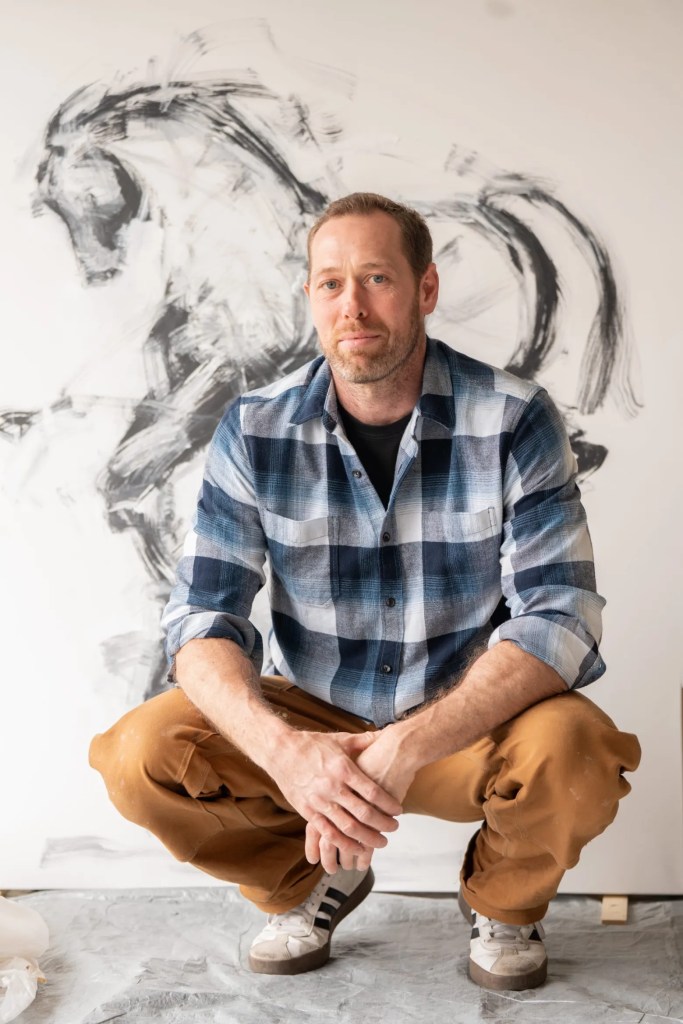
Shortly after, Nick relocated to New York to finish his degree at Parsons. Arriving in Manhattan was a sensory shock; having never visited before, he was struck by the city’s relentless pace, flashing lights, crowds, and ambient noise. He recalled “walking in the shadow of so many tall buildings and places I’d only seen in films”—life suddenly felt cinematic.
In New York, Turner’s career quickly gained momentum. He began photographing models in his preferred aesthetic: raw, candid, and often set within untouched natural landscapes. His evolving body of work soon caught the eye of prominent figures in the art scene, including Clic Gallery, which began showcasing his prints in both Manhattan and East Hampton.
Now preparing for his second solo exhibition alongside his debut book project—both centered on his signature raw, organic visual language—Turner shares insights into his creative vision.
Who are some of the artists who influence your work, and why?
I grew up around artists. My grandmother was a painter, and I spent a great deal of time watching her work; as I get older, I can distinctly feel her presence in how I create and think. Naturally, there are several well-known artists I deeply admire. Jenny Saville is by far one of my favorite painters; I recently saw her work at Gagosian in New York and was blown away by her portraits in person. I am also very inspired by Peter Lindbergh’s photography—it feels grounded, often with a documentary sensibility that I love. Russell James is another photographer I respect; there is something remarkably clean and elegant about the way he captures women.
Your work reveals an intimate relationship with horses. Why horses?
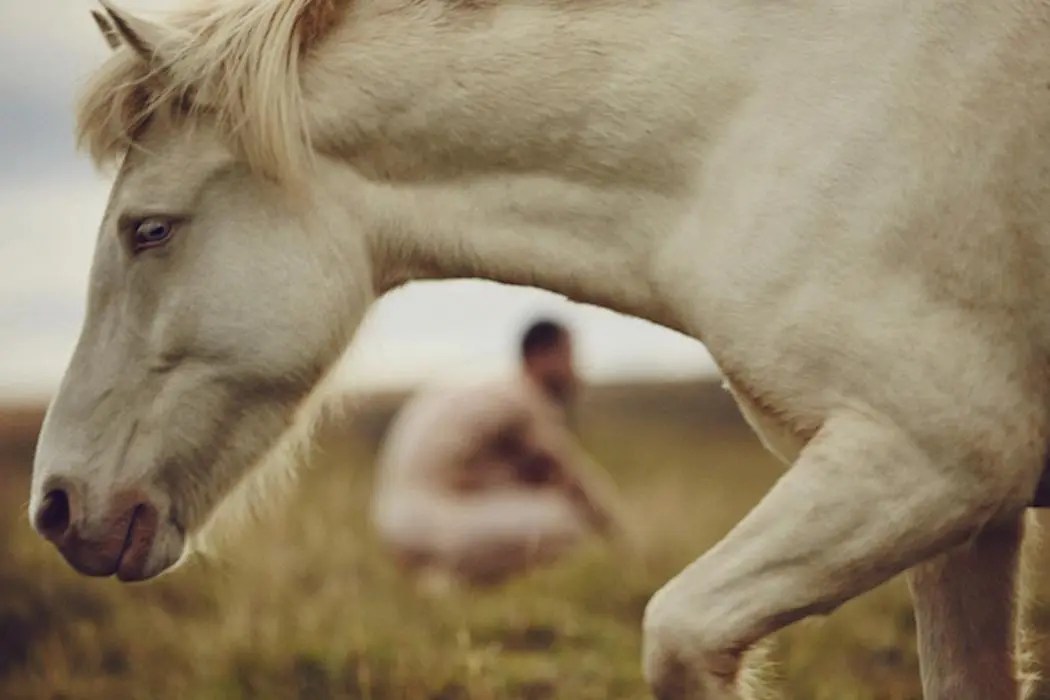
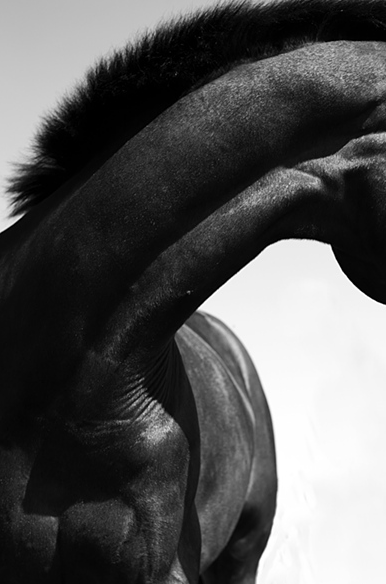
I grew up riding competitively in Maine. I’ve always felt grounded around horses and share an instinctual bond with them. I am deeply affected by the people and energy around me, and horses are similarly perceptive creatures that respond directly to emotional nuance. Growing up, I rode with a formal saddle and traditional attire. Today, I ride bareback most of the time. There is nothing more invigorating than sensing the power of a horse moving beneath you. To me, they embody purity, truth, strength, and beauty all at once. A quote often attributed to Winston Churchill always resonates with me: “There is something about the outside of a horse that is good for the inside of a man.”
What is the connection between the women you portray and horses?
Humans are not as detached from nature as we often like to believe; we are still animals at our core. Women and horses share striking parallels: grace, resilience, power, and sensitivity. I continually look for those qualities when photographing either subject, whether together or independently. Capturing that visceral dialogue between a horse and a woman has been a driving concept for me, even if the exact emotion can be difficult to articulate in words.
You are primarily known for painting and photography. Are there other mediums you wish to explore?
Definitely. My formal training is in drawing and painting; photography evolved naturally along the way. Film is the medium I want to pursue next—starting with short films and gradually moving toward larger cinematic projects. When working on location, I tend to visualize scenes through a cinematic lens rather than as static frames.
You have traveled to remote coastlines in Iceland and Scotland. What draws you to these environments?
I am instinctively drawn to desolate, stark, empty landscapes. The energy in those places is quiet and inspiring; it makes me feel alive to experience nature in its raw, unmediated state. Whether looking at a scene through an artistic or aesthetic lens, that elemental beauty in both humans and nature is the most compelling thing to capture. In the black sand beaches of Iceland, the ocean, and the volcanic peaks, you feel the weight of the landscape rather than merely seeing it. Art requires that kind of depth. Spending too much uninterrupted time in studios or cities tends to make me feel claustrophobic.
What qualities do you look for when directing your subjects?
Sincerity and unforced moments. I avoid overly theatrical poses or having models simply act out a generic concept. I want to photograph the authentic person. A shoot becomes difficult if there isn’t genuine trust and openness between us. Through the camera, you register whatever the subject is feeling, so establishing an honest rapport is essential. I prefer an organic process where the session unfolds naturally, very much like building a painting without forcing the outcome.
If you could collaborate with any woman as the subject of your photography and painting, who would it be?
Lara Stone. Her presence and features have an elemental, magnetic quality unlike anyone else. Given my current work exploring strength and raw beauty through women and horses, she stands out as an exceptional muse.
What is your primary ambition as an artist?
To bring the concepts in my head to fruition with complete creative freedom, and ultimately to create work that connects with people on an emotional level.
Do you believe there are limits to creative ambition?
Not inherently—only the boundaries you place on yourself. However, realizing long-term goals requires immense patience, which is something I am continually learning. Every shoot and project is an opportunity to refine the process and push past previous benchmarks. That drive to improve is what constantly expands the scope of what I want to create.
Visit Nick Turner’s website to explore more of his portfolio, and follow him on X and Instagram: @nickodt.
- Originally published on Lookbooks.

