
The year was 1983, and the collaboration between Maripol and Madonna would go down in history as one of the era’s most iconic fashion partnerships. The punk-influenced look—composed mainly of rubber jewelry and crucifixes created by Maripol for Madonna’s Like a Virgin album cover and music video—became a global phenomenon. However, that was just one among many projects Maripol brought to life.
With a sharp eye for style and innovation, Maripol was not only styling looks but also generating original art and concepts. Working as the creative director for Fiorucci, she drove the buzz surrounding the brand’s legendary New York store, catapulting their designer jeans into the mainstream. “We brought in lamé jeans on Monday, and by Wednesday, we had none left. Even Calvin Klein said he was inspired by Fiorucci to design jeans,” the artist notes.
The innovative rubber jewelry worn by cultural icons like Madonna and Grace Jones was designed entirely by Maripol in the NoHo apartment where she still lives today. The pieces became a sensation: Maripol opened her own boutique and developed custom merchandise for Madonna’s tour. However, rising to prominence before robust copyright and patent protections existed ultimately led to the closure of her company.
“How can you survive when millions of people start making terrible knockoffs out of cheap plastic? Mine was genuine rubber. I had a factory in Hong Kong and wanted to support the rubber industry in Malaysia by creating ethical jobs. Nobody else cared about that—it was pure greed. Now I understand what it feels like for brands like Prada when their designs are copied everywhere.”
Though closing the business was a setback, it did not slow Maripol down. Positioned at the very heart of the downtown New York art scene alongside Andy Warhol, Jean-Michel Basquiat, Keith Haring, and Debbie Harry, she and her peers created whatever felt urgent and authentic.
She went on to produce and direct documentaries like Crack Is Wack and music videos for artists such as Elton John and Cher, continuing to experiment across different media. With the feature film Downtown 81—which she produced alongside Glenn O’Brien and Edo Bertoglio—she captured a definitive cultural artifact. Depicting a day in the life of a then-emerging Basquiat, the film stands as a vivid, honest portrait of their era.
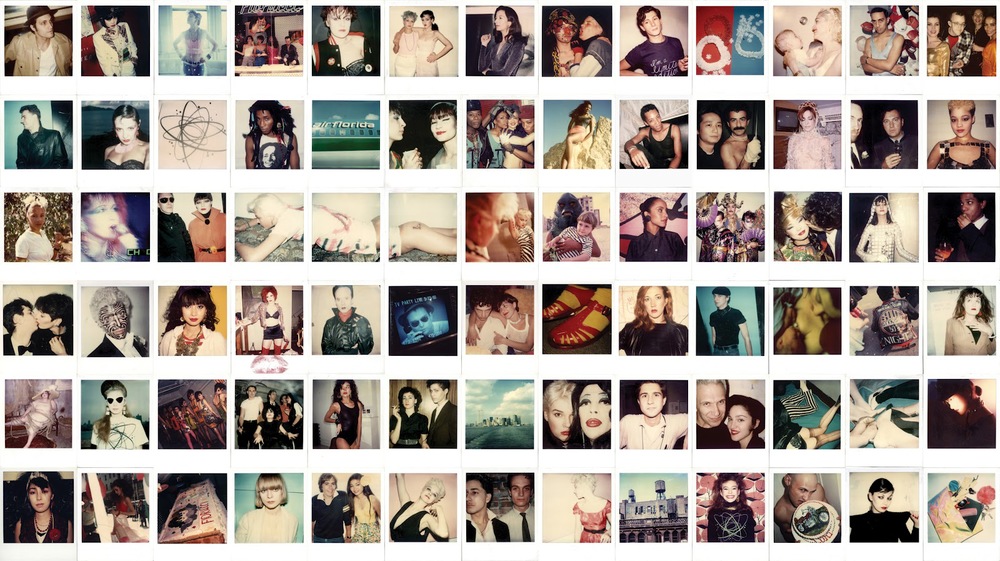
Two constants have anchored Maripol’s career: relentless curiosity and a Polaroid camera. Widely recognized for her instant photography, her work has been exhibited in international museums and featured across leading art and fashion publications. In 2005, she released the monograph Maripolarama, followed in 2010 by Little Red Riding Hood(published by Damiani), which offered a comprehensive look into her extensive body of work.
Her journey with Polaroid photography and design remains ongoing. In 2010, inspired by an ’80s revival while compiling Little Red Riding Hood, Maripol partnered with Marc Jacobs on a capsule collection for Marc by Marc Jacobs, drawn to how his Bleecker Street boutique echoed the energy of Fiorucci. The 17-piece collection of jewelry and apparel introduced her distinct aesthetic to an entirely new generation.
Now focused on independently relaunching her namesake line, Maripol shows no signs of slowing down. Few artists can genuinely claim to have shaped the visual identity of a generation, but Maripol did exactly that.
- Originally published on Lookbooks.

